

MATHEMATICS - EQUATION OF A LINE
Slope Intercept Form Worksheet
- Focuses on identifying gradients and y-intercepts in linear equations
- Covers rearranging equations into slope-intercept form
- Includes interpreting changes in line equations
- Emphasizes understanding of coordinate graph representations
Start the 10-question quiz
Free, no sign-up needed. Your score shows instantly.
Here are the first 3 questions. Click “View all questions” to see the complete assessment.
Q1.
Q2.
A straight line has gradient 4 and y-intercept −7. Which equation represents the line?
Q3.
A straight line crosses the y-axis at 6. Its y-value decreases by 2 whenever its x-value increases by 1. Which equation represents the line?
Q4.
The equation of a straight line is y = 5x − 4. Which point is the y-intercept of this line?
Q5.
The equation y = 8 − 3x is rearranged into the form y = mx + c. What are the values of m and c?
Q6.
Which equation has the same gradient as y = − 4x + 1 but a different y-intercept?
Q7.
A straight line passes through the points ( − 2, − 1 ), (0,3 ), and (3,9 ). Which equation represents the line?
Q8.
The equation of a line changes from y = 3x − 2 to y = 3x + 4. Which statement correctly describes the change?
Q9.
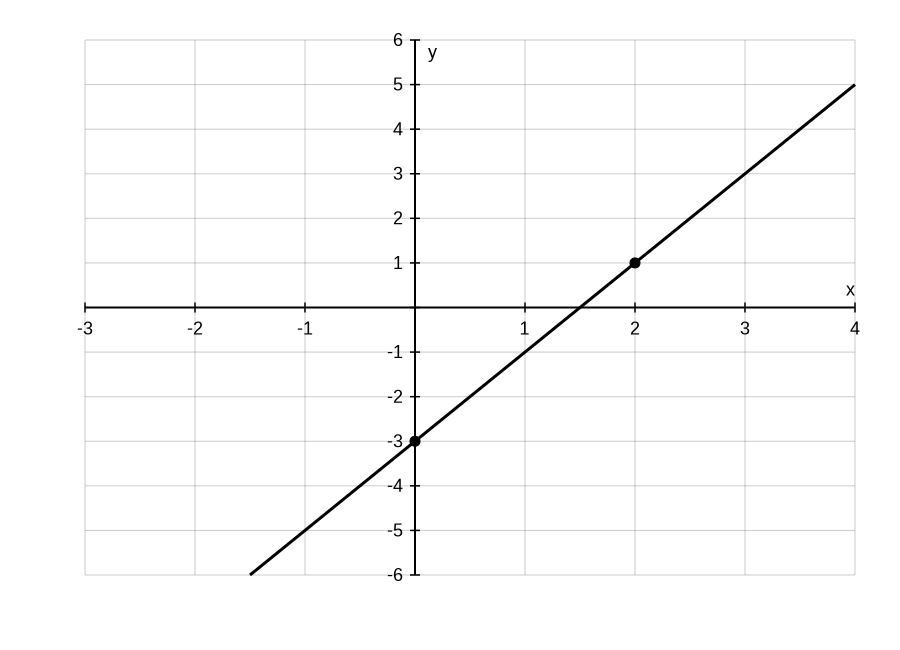
Which equation represents the straight line shown on the coordinate graph?
Q10.
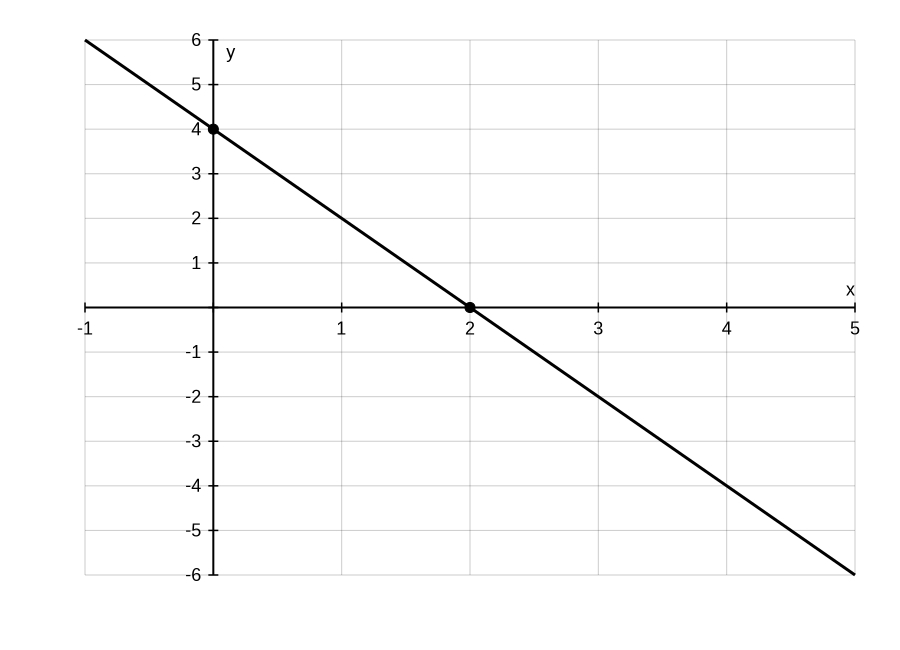
Which pair gives the gradient m and the y-intercept c of the line shown?
What this assessment covers
Concepts tested
- Identifying the gradient and y-intercept from equations
- Writing equations of lines given gradient and y-intercept
- Rearranging equations to slope-intercept form
- Understanding changes in y-intercept values
- Interpreting line equations from coordinate points
Question Mix
- Medium questions included
Skills you build
- Determine the gradient and y-intercept from equations
- Convert equations to slope-intercept form
- Analyze changes in linear equations
- Identify line equations from graph points
- Apply knowledge of linear equations to solve problems
Related assessments
More practice
Other assessments in this subject
