

MATHEMATICS - ADDING AND SUBTRACTING FRACTIONS
Subtracting Fractions Quiz
- 10 questions
- Estimate, add and subtract proper and improper fractions, and mixed numbers, using the order of operations.
- Difficulty: Medium
- Board: CAIE
- Attempt online on the examination portal
Start the 10-question quiz
Free, no sign-up needed. Your score shows instantly.
Here are the first 3 questions. Click “View all questions” to see the complete assessment.
Q1.
Q2.
Which expression has the same value as 7/4 − (2/3 + 1/4 )?
Q3.
A learner wants to subtract 23/5 from 41/5. Which rewriting exchanges one whole for fifths without changing the calculation?
Q4.
Estimate 311/12 − 11/8 by rounding each mixed number to the nearest whole number before subtracting. Which estimate results?
Q5.
A learner writes 7/9 − 1/3 = (7 − 1)/(9 − 3) = 1. Which explanation correctly identifies the mistake?
Q6.
Consider A = 5/6 − 1/4 and B = 5/6 − 1/3. Which statement correctly compares the differences without calculating both answers?
Q7.
A ribbon is 21/2\ m long. A piece of length 3/4\ m and then a piece of length 5/6\ m are cut off. Which expression represents the length remaining, in metres?
Q8.
In 11/6 − □ = 3/4, the box represents the amount removed. Which statement correctly explains how to find this amount?
Q9.
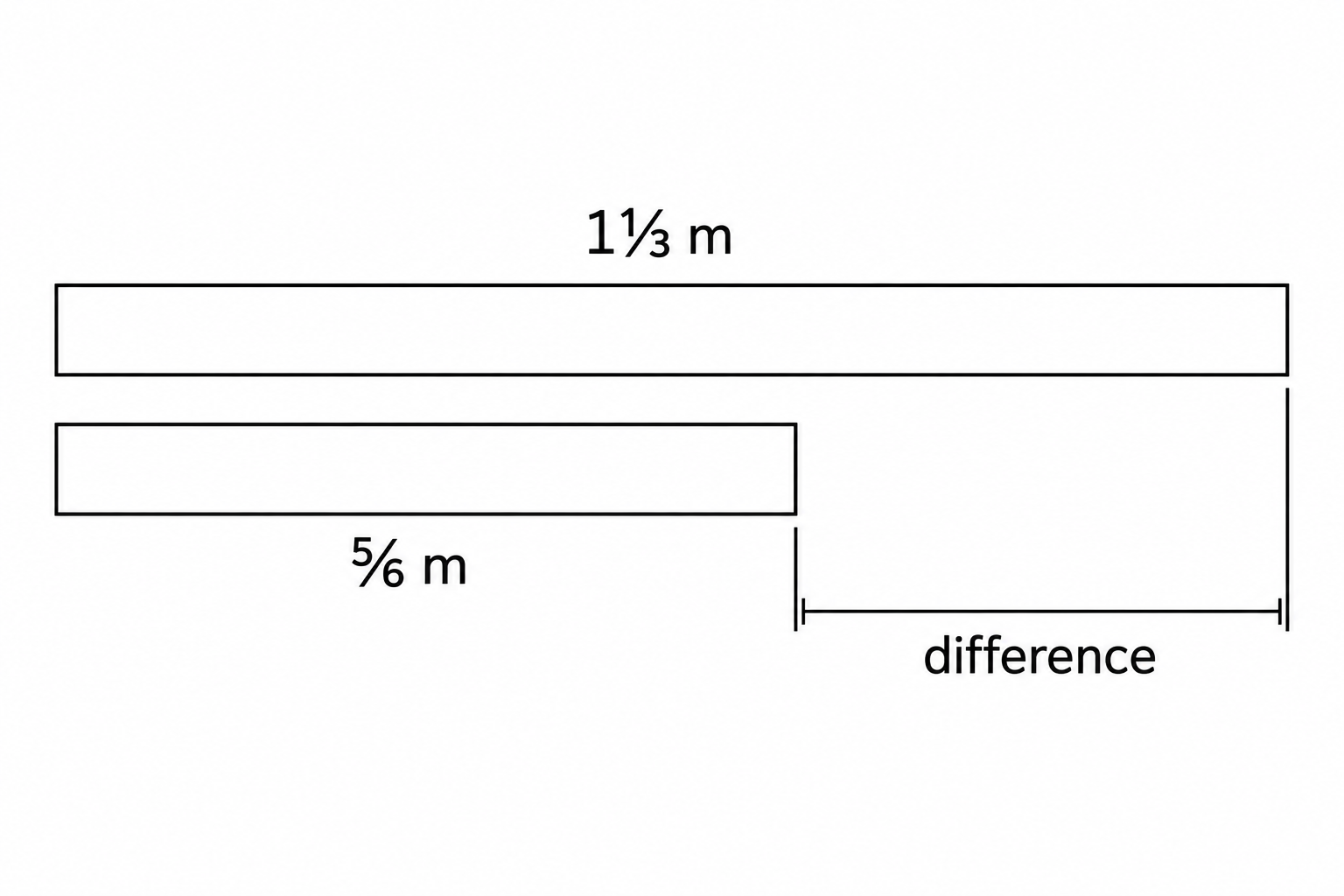
The diagram shows two strips with their left ends aligned. Which statement correctly explains the difference between their lengths?
Q10.
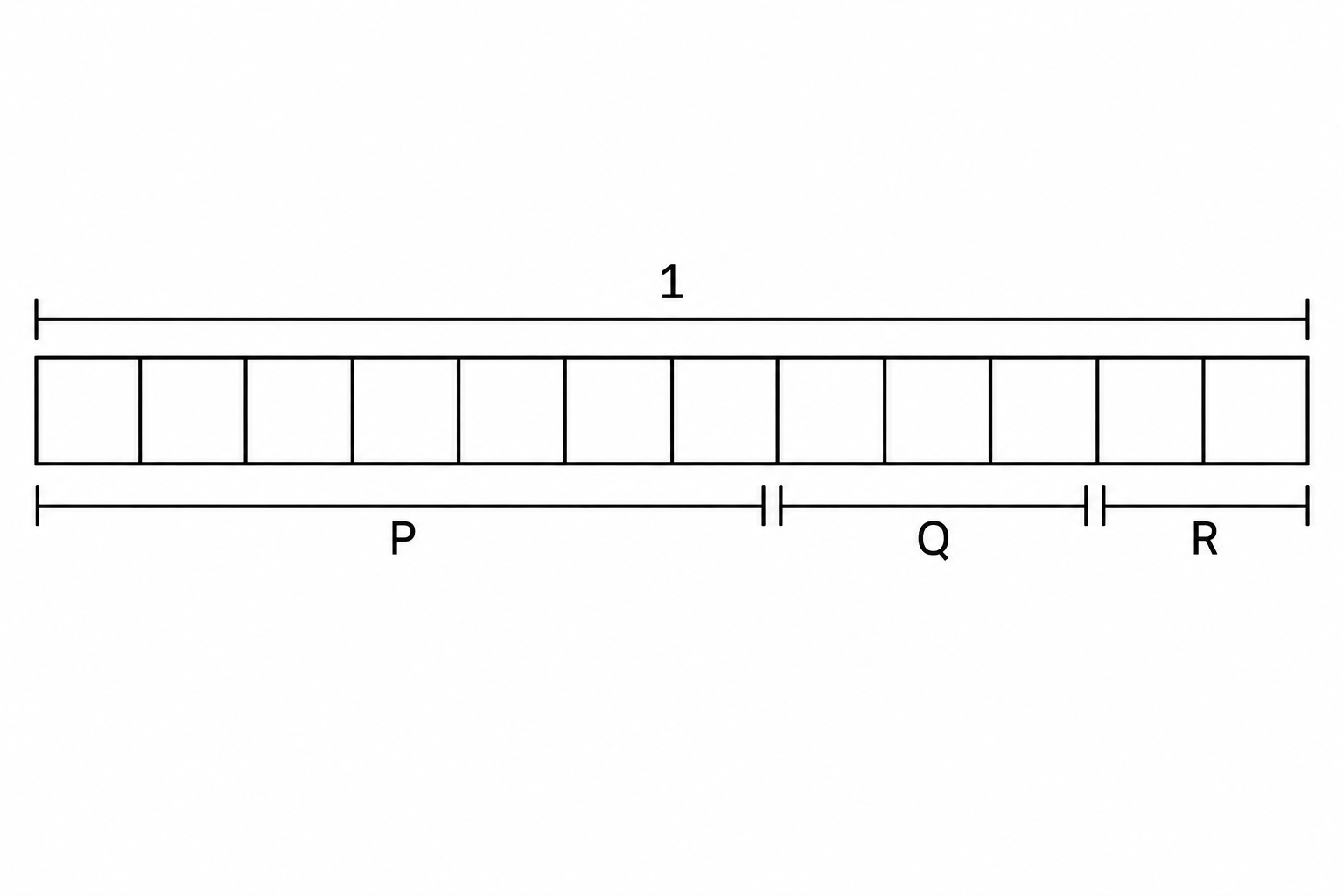
The whole strip represents 1. It is divided into equal cells and grouped into sections P, Q and R. Which calculation gives the fraction of the whole strip in section R?
What this assessment covers
Concepts Tested
- Adding and Subtracting Fractions
- Estimate, add and subtract proper and improper fractions, and mixed numbers, using the order of operations.
Question Mix
- Medium questions included
Skills you build
- Understand
Related assessments
More practice
Other assessments in this topic
