

ECONOMICS - SCARCITY AND OPPORTUNITY COST

Opportunity Cost Practice Problems

  • 10 questions
  • examples of opportunity cost in different contexts
  • Difficulty: Medium
  • Board: CAIE
  • Attempt online on the examination portal
Start the 10-question quiz Free, no sign-up needed. Your score shows instantly.

Here are the first 3 questions. Click “View all questions” to see the complete assessment.

Q1.

A student can spend Saturday afternoon revising, playing basketball or watching a film. She chooses revision. If revision were not possible, she would prefer basketball to the film. What is the opportunity cost of her decision?

  1. A) The enjoyment she would receive from both basketball and the film
  2. B) The money already spent on her school books
  3. C) The improvement in her understanding from revision
  4. D) The enjoyment she would receive from playing basketball

Q2.

A local government has enough funding for either a new library or a new health clinic, but not both. It chooses the clinic. Which statement correctly explains the opportunity cost?

  1. A) It is the total tax revenue collected by the government.
  2. B) It is the benefit residents receive from better healthcare.
  3. C) It is the library services residents must go without.
  4. D) It is the number of patients who will use the clinic.

Q3.

A baker owns an empty shop. She could rent it to another business for $600 per month, but instead uses it to sell her own bread. Why does using the shop have an opportunity cost even though she pays no rent?

  1. A) She must count all the money originally paid for the shop as a monthly cost.
  2. B) She receives revenue from selling bread in the shop.
  3. C) She owns the shop rather than borrowing it.
  4. D) She gives up the rental income she could have received.

Q4.

A worker accepts an extra evening shift. Otherwise, she would have spent the evening with her family. Her employer provides free transport and a free meal. Which statement about this choice is correct?

  1. A) The opportunity cost is the extra pay she receives.
  2. B) The opportunity cost includes the family time she gives up.
  3. C) There is no opportunity cost because transport and food are free.
  4. D) There is no opportunity cost because she chooses to work voluntarily.

Q5.

A factory increases production using only idle machines, previously unused materials and workers who would otherwise remain unemployed. These resources have no alternative productive use during this period. Which statement best describes the opportunity cost in terms of other output?

  1. A) It must equal the selling price of the extra goods.
  2. B) It is zero because no other output is given up.
  3. C) It must equal all the factory's spending on wages.
  4. D) It is all the output the factory was already producing.

Q6.

A forest owner chooses to preserve a forest as a wildlife habitat. The next best alternative is to harvest its timber for sale. Which statement best explains the opportunity cost of preservation?

  1. A) It is the net income forgone from harvesting the timber.
  2. B) It is zero because no trees are being cut down.
  3. C) It is the wildlife habitat that remains protected.
  4. D) It is the total value of every possible use of the forest.

Q7.

A school-leaver receives a scholarship covering all university fees and living expenses. She studies full-time instead of accepting a paid job. Which statement explains why attending university still has an opportunity cost?

  1. A) The university pays some of its staff to teach her.
  2. B) Her future earnings after university are guaranteed.
  3. C) The scholarship removes every alternative use of her time.
  4. D) She gives up the earnings she could have received from the job.

Q8.

Two countries agree to exchange 200 tonnes of wheat for 100 tonnes of coffee. The wheat-exporting country could otherwise keep the wheat for domestic consumption. What is its opportunity cost of obtaining the coffee?

  1. A) The 100 tonnes of coffee it receives
  2. B) Both the wheat exported and the coffee imported
  3. C) The domestic consumption of the 200 tonnes of wheat it gives up
  4. D) The money consumers will spend on the imported coffee

Q9.

The table shows two production choices for a bakery using the same resources for one day. The bakery changes from choice P to choice Q. Which statement correctly identifies the opportunity cost of this change?
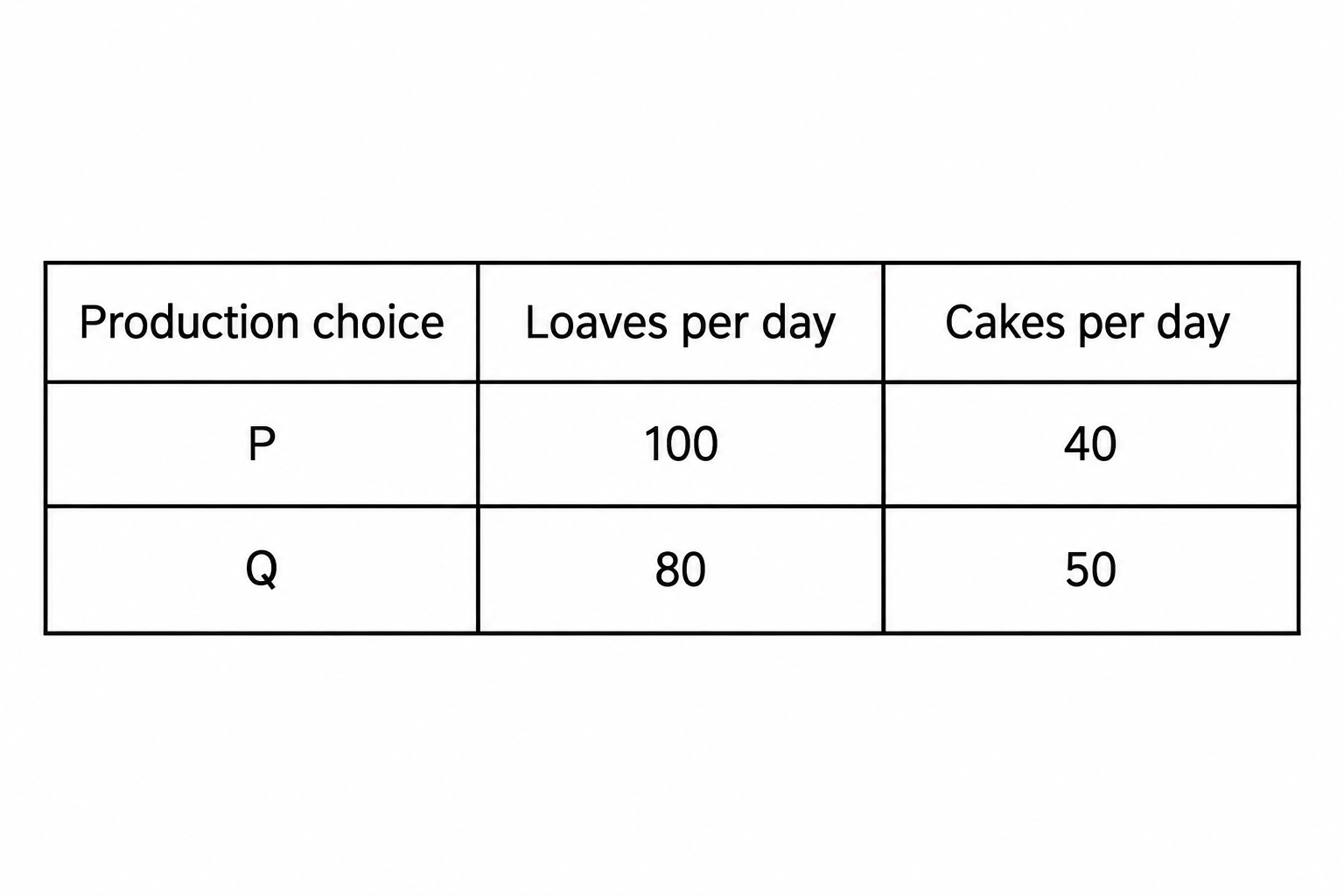
Diagram for question 9: The table shows two production choices for a bakery using the same resources for one day. The bakery changes…
  1. A) It gives up 20 loaves to produce more cakes.
  2. B) It gives up 50 cakes to produce more loaves.
  3. C) It gives up 10 cakes to produce more loaves.
  4. D) It gives up 80 loaves to produce more cakes.

Q10.

The plan shows a proposed railway crossing farmland. Only the land inside the dashed strip would be converted to railway use. Without the railway, this land would continue to grow crops. Which is an opportunity cost of using this strip for the railway?
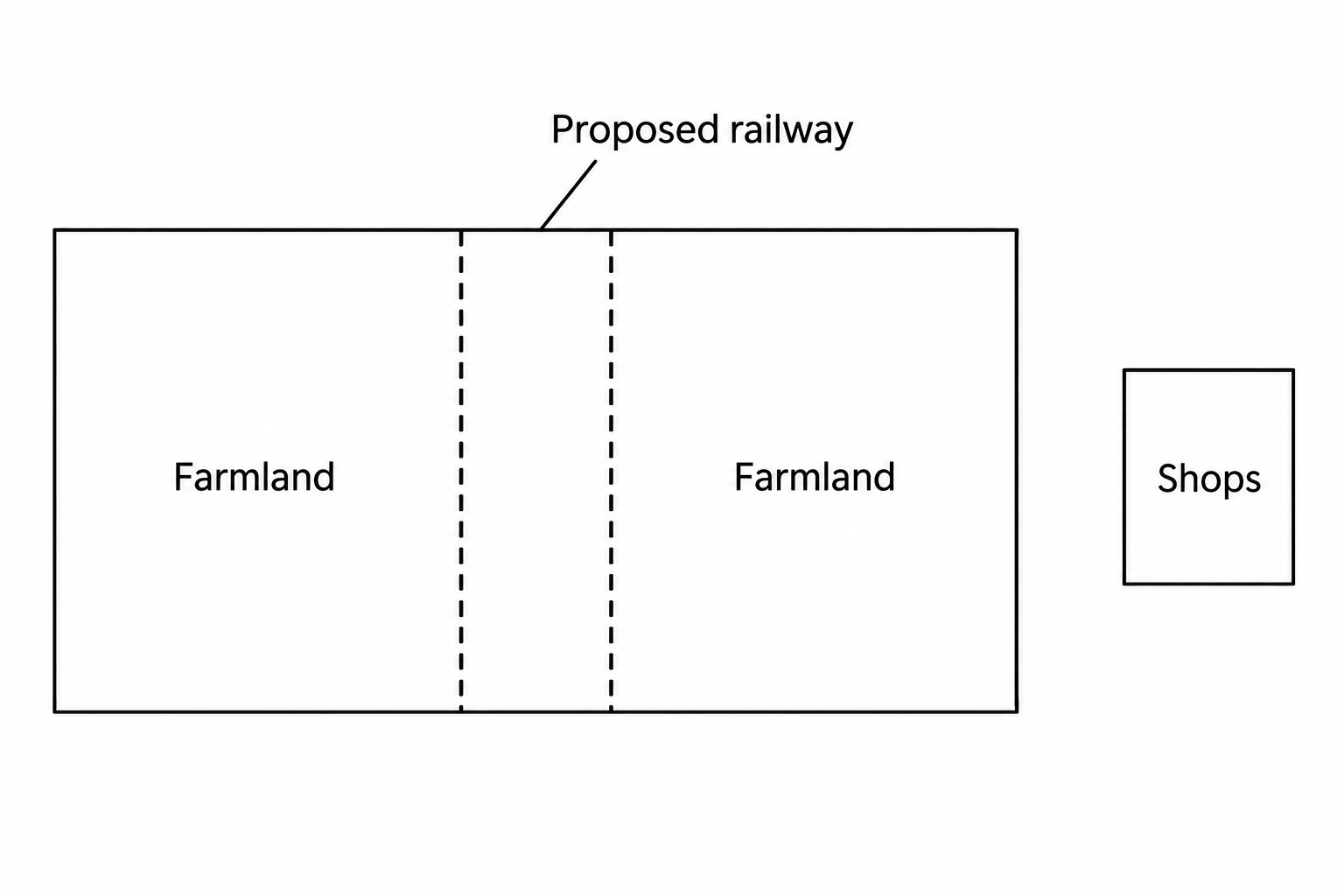
Diagram for question 10: The plan shows a proposed railway crossing farmland. Only the land inside the dashed strip would be…
  1. A) The crop production lost from all the farmland shown
  2. B) The shop sales lost because all shops must close
  3. C) The passenger journeys made possible by the railway
  4. D) The crop production lost from the land inside the strip

What this assessment covers

Concepts Tested

  • Scarcity and Opportunity Cost
  • examples of opportunity cost in different contexts

Question Mix

  • Medium questions included

Skills you build

  • Understand