

ECONOMICS - ELASTICITY
Price Elasticity of Demand Practice Questions
- 10 questions
- definition of PED
- Difficulty: Hard
- Board: CAIE
- Attempt online on the examination portal
Start the 10-question quiz
Free, no sign-up needed. Your score shows instantly.
Here are the first 3 questions. Click “View all questions” to see the complete assessment.
Q1.
Q2.
A shop increases the price of a bag from $25 to $30. As a result, weekly quantity demanded falls from 800 to 680 bags, with other influences unchanged. Using the original values as the bases for percentage changes and ignoring the negative sign, what is PED?
Q3.
A bus operator estimates that the magnitude of PED for its journeys is 0.5. It plans to raise fares by 12%, with all other influences unchanged. If the estimate applies to this change, what will happen to an initial quantity demanded of 1500 journeys per day?
Q4.
An analyst correctly calculates a PED magnitude of 2 for rice using prices in dollars per kilogram and quantities in kilograms. A second analyst records exactly the same observations using prices in dollars per gram and quantities in grams. Which conclusion follows from applying the definition of PED?
Q5.
The magnitude of PED for a product is 1.5. A price reduction causes quantity demanded to rise by 18%, with other influences unchanged. If the original price was $50, what was the new price? Use percentage changes based on the original values.
Q6.
A researcher must design an investigation that directly measures the price elasticity of demand for bottled juice. Which design correctly applies the definition and isolates the response being measured?
Q7.
A theatre reduces its ticket price by 5%. As a result, the number of tickets customers are willing and able to buy rises from 400 to 460. However, the theatre has only 400 seats, so actual ticket sales remain at 400. Other influences are unchanged. Which statement correctly applies the definition of PED, ignoring its negative sign?
Q8.
A café keeps the price of its coffee unchanged. A nearby rival raises its coffee price by 10%, causing quantity demanded at the first café to rise by 8%. A student reports that the first café's PED is 0.8. Why does this calculation fail to measure its PED?
Q9.
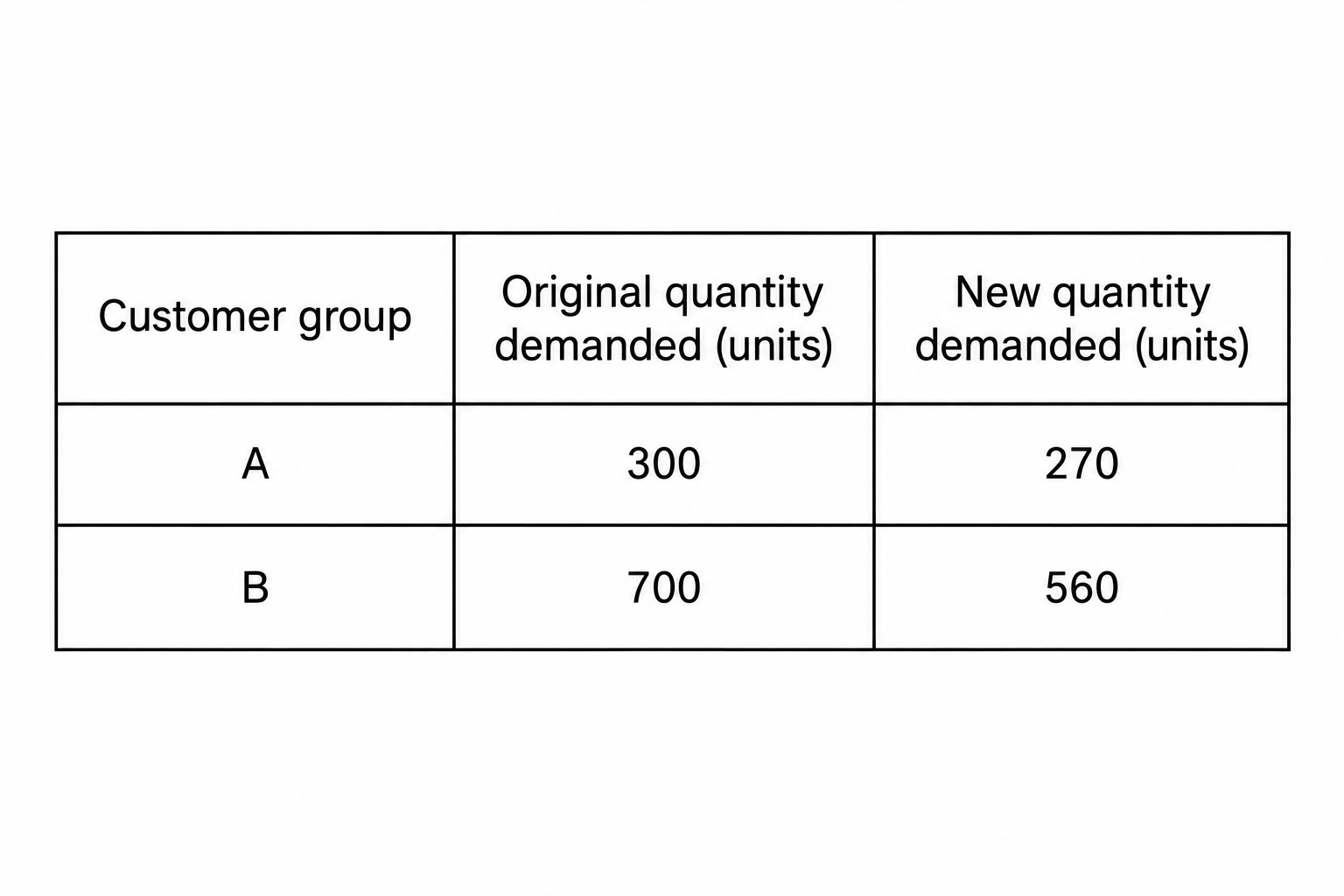
The table shows demand from the only two customer groups buying a product. Its price rises from $10 to $11 for both groups, and no other influences change. Using the original values as the bases, what is the magnitude of PED for the two groups combined?
Q10.
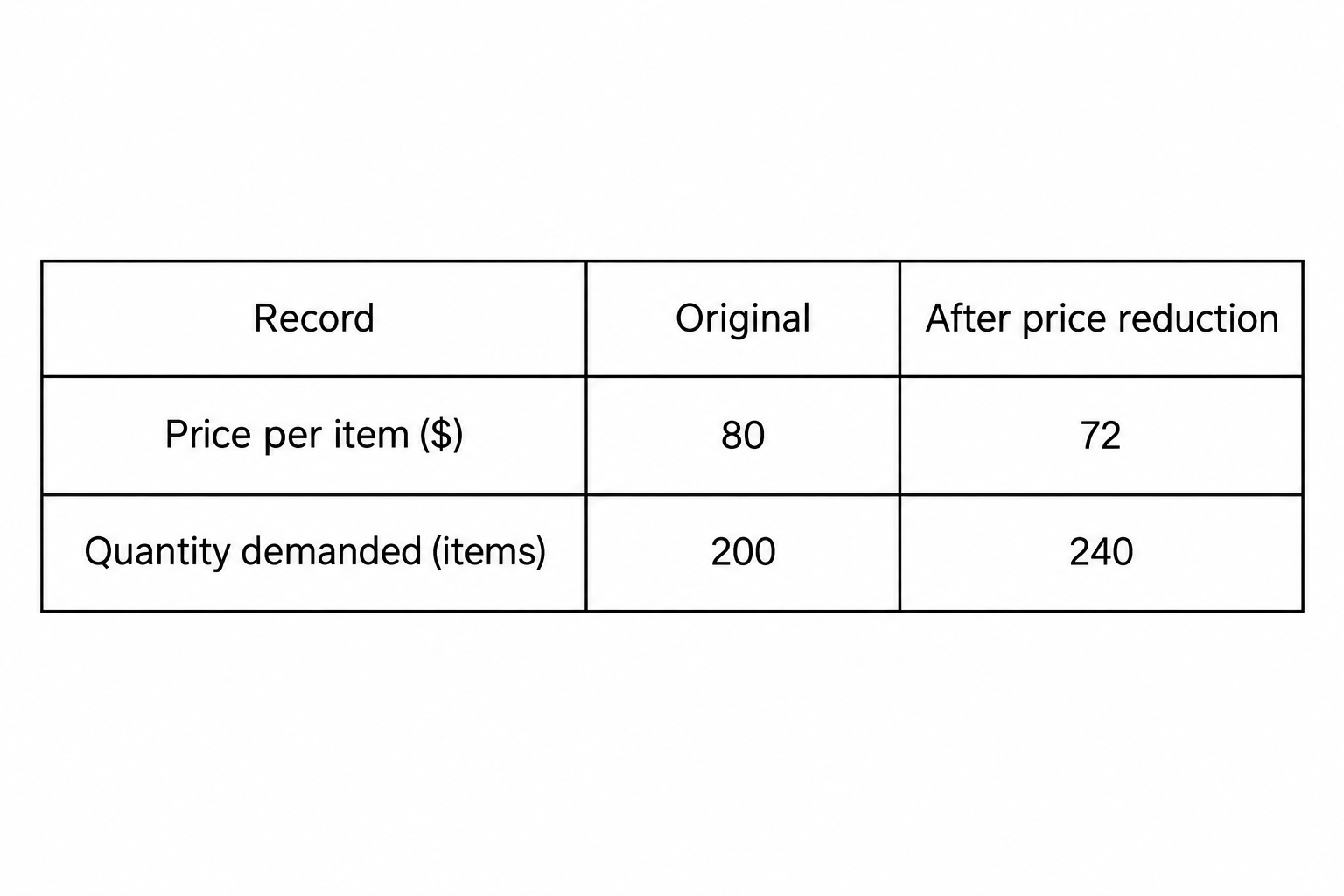
The records show the effect of a price reduction, with other influences unchanged. A student proposes calculating PED as (40 ÷ 80) ÷ (8 ÷ 200). Which replacement correctly applies the definition of PED using the original values as the bases and ignoring the negative sign?
What this assessment covers
Concepts Tested
- Elasticity
- definition of PED
Question Mix
- Hard questions included
Skills you build
- Apply
Related assessments
More practice
Other assessments in this subject
