A cinema raises its ticket price from $10 to $11. Its daily ticket revenue rises from $2000 to $2200. All tickets have the same price, demand is fully satisfied, and other influences on demand remain unchanged. Using the original values as the bases for percentage changes, what is the price elasticity of demand?
Options:
Showing question 1 of 10
Q2 QuestionPoints: 1
Choose the correct answer:
A shop increases the price of a bag from $25 to $30. As a result, weekly quantity demanded falls from 800 to 680 bags, with other influences unchanged. Using the original values as the bases for percentage changes and ignoring the negative sign, what is PED?
Options:
Showing question 2 of 10
Q3 QuestionPoints: 1
Choose the correct answer:
A bus operator estimates that the magnitude of PED for its journeys is 0.5. It plans to raise fares by 12%, with all other influences unchanged. If the estimate applies to this change, what will happen to an initial quantity demanded of 1500 journeys per day?
Options:
Showing question 3 of 10
Q4 QuestionPoints: 1
Choose the correct answer:
An analyst correctly calculates a PED magnitude of 2 for rice using prices in dollars per kilogram and quantities in kilograms. A second analyst records exactly the same observations using prices in dollars per gram and quantities in grams. Which conclusion follows from applying the definition of PED?
Options:
Showing question 4 of 10
Q5 QuestionPoints: 1
Choose the correct answer:
The magnitude of PED for a product is 1.5. A price reduction causes quantity demanded to rise by 18%, with other influences unchanged. If the original price was $50, what was the new price? Use percentage changes based on the original values.
Options:
Showing question 5 of 10
Q6 QuestionPoints: 1
Choose the correct answer:
A researcher must design an investigation that directly measures the price elasticity of demand for bottled juice. Which design correctly applies the definition and isolates the response being measured?
Options:
Showing question 6 of 10
Q7 QuestionPoints: 1
Choose the correct answer:
A theatre reduces its ticket price by 5%. As a result, the number of tickets customers are willing and able to buy rises from 400 to 460. However, the theatre has only 400 seats, so actual ticket sales remain at 400. Other influences are unchanged. Which statement correctly applies the definition of PED, ignoring its negative sign?
Options:
Showing question 7 of 10
Q8 QuestionPoints: 1
Choose the correct answer:
A café keeps the price of its coffee unchanged. A nearby rival raises its coffee price by 10%, causing quantity demanded at the first café to rise by 8%. A student reports that the first café's PED is 0.8. Why does this calculation fail to measure its PED?
Options:
Showing question 8 of 10
Q9 QuestionPoints: 1
Choose the correct answer:
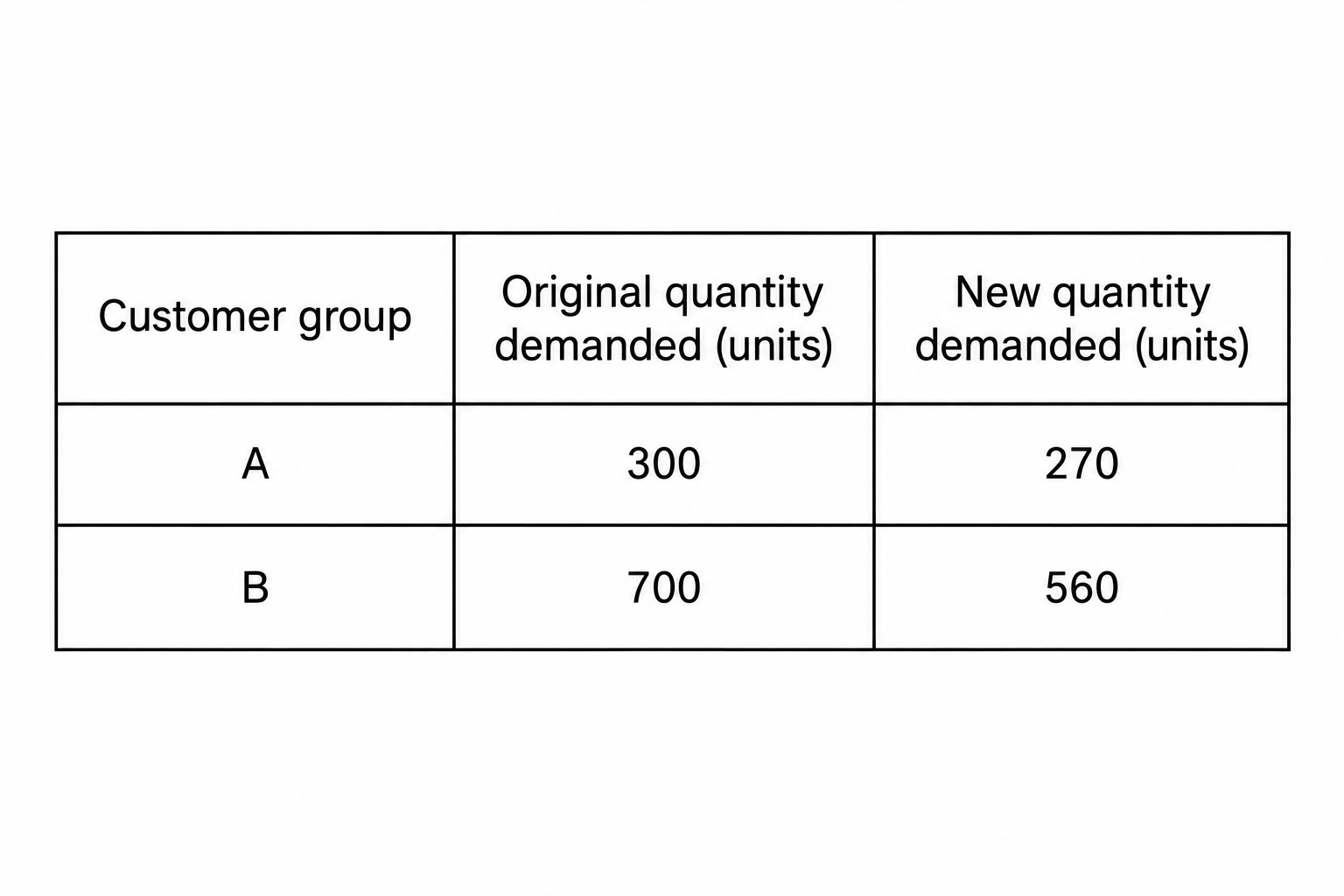
The table shows demand from the only two customer groups buying a product. Its price rises from $10 to $11 for both groups, and no other influences change. Using the original values as the bases, what is the magnitude of PED for the two groups combined?
Options:
Showing question 9 of 10
Q10 QuestionPoints: 1
Choose the correct answer:
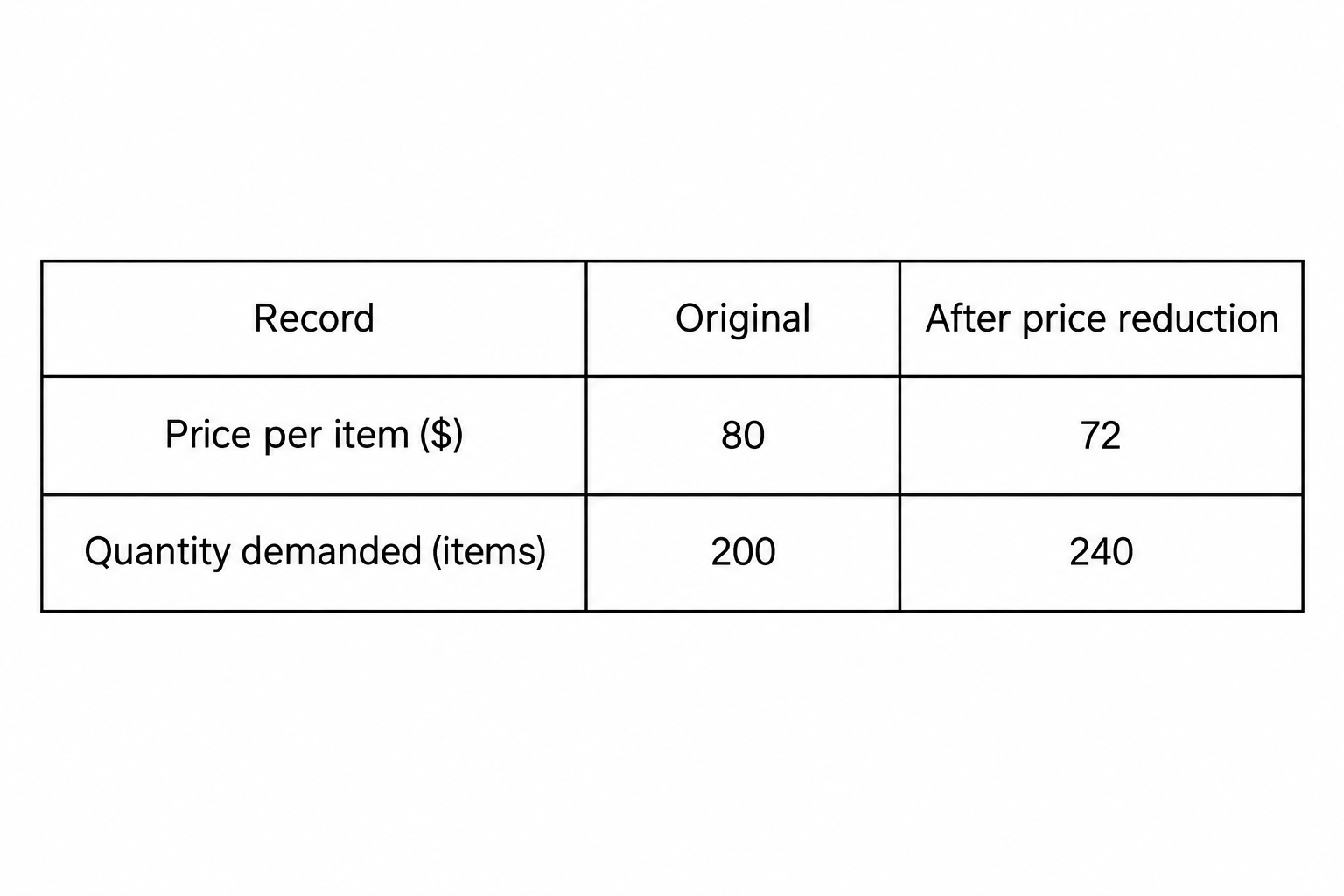
The records show the effect of a price reduction, with other influences unchanged. A student proposes calculating PED as (40 ÷ 80) ÷ (8 ÷ 200). Which replacement correctly applies the definition of PED using the original values as the bases and ignoring the negative sign?