Choose the correct answer:
Two towns use the same amount of energy per person, but one town has twice as many residents. If both towns obtain energy from the same sources, why will the larger town probably have a greater total carbon footprint?
Choose the correct answer:
Two towns use the same amount of energy per person, but one town has twice as many residents. If both towns obtain energy from the same sources, why will the larger town probably have a greater total carbon footprint?
Choose the correct answer:
A city's population stays nearly constant, but its total carbon footprint increases over several years. Which change best explains this pattern?
Choose the correct answer:
A student lives close enough to school to travel by bicycle safely. How would choosing a bicycle instead of riding alone in a gasoline-powered car most directly reduce the student's carbon footprint?
Choose the correct answer:
A school cafeteria sends large amounts of uneaten food to a landfill. Which explanation best connects this practice to the school's carbon footprint?
Choose the correct answer:
Four households use the same amount of electricity. Which household is likely to have the smallest carbon footprint from electricity use?
Choose the correct answer:
A growing community wants to meet the needs of more residents without greatly increasing its carbon footprint. Which plan best addresses both population growth and per-person consumption?
Choose the correct answer:
A company claims that replacing disposable water bottles with refillable bottles will reduce carbon emissions. Which evidence would best support this claim?
Choose the correct answer:
Why can high consumption of newly manufactured products increase a person's carbon footprint even if the products do not burn fuel while being used?
Choose the correct answer:
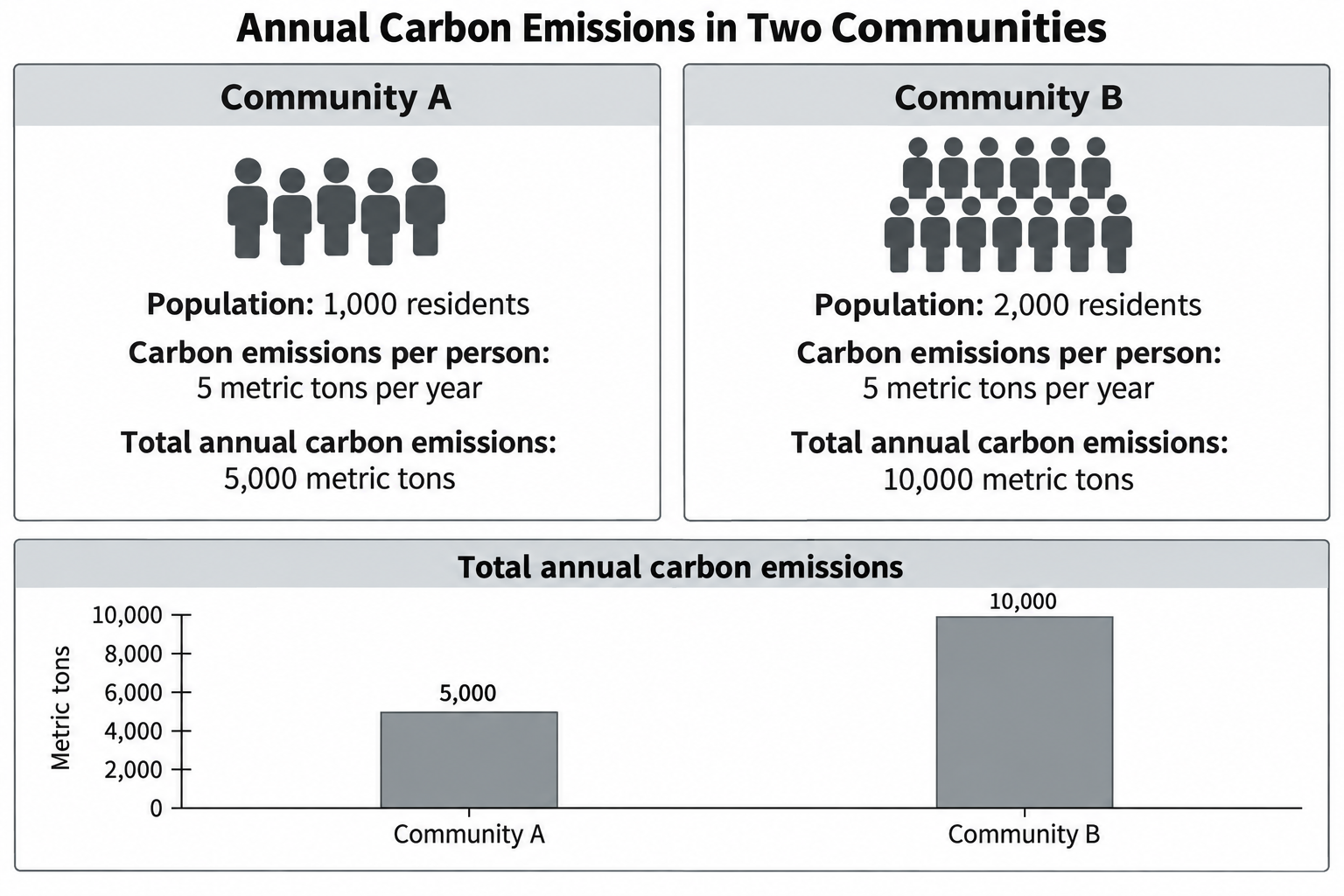
Study the graph comparing two communities. Which statement best explains the difference in their total annual carbon emissions?
Choose the correct answer:
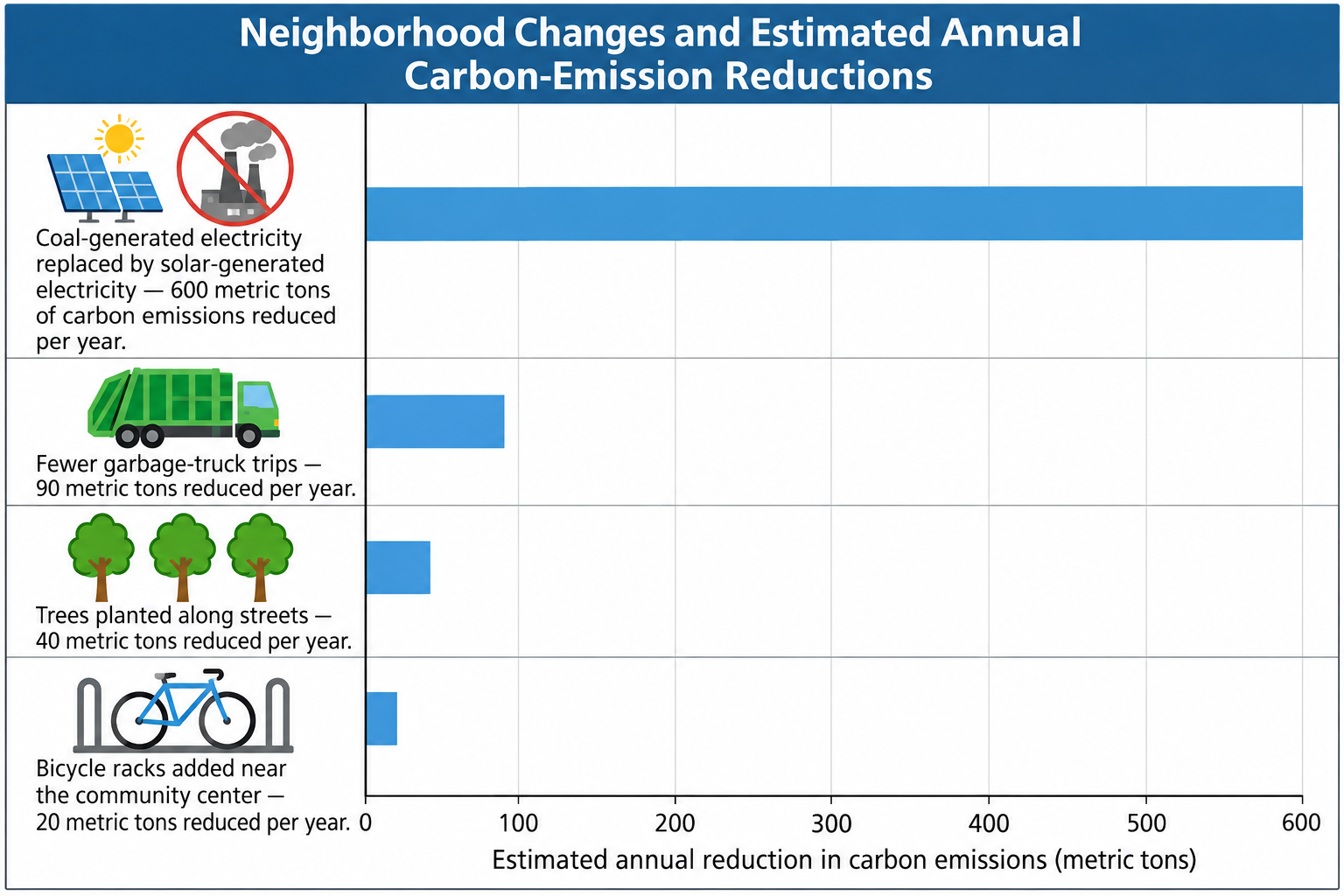
The diagram shows changes a neighborhood made during one year. Which change most directly explains the largest reduction shown in the neighborhood's carbon emissions?