
Traditional tests often cause panic among students. Test-taking anxiety itself can trigger a powerful “fight or flight” stress response in the body. Panic attacks are often reported, and the ensuing ramifications of poor test scores (missing academic opportunities, retaking the test, etc) can all cause compounding anxiety. High‑pressure formats drain motivation and disengage learners.
So, are fewer assessments the solution, as many claim? Probably not a panacea! However, smarter ones can make every test purposeful without overwhelming students. For example, gamified assessments use game mechanics to turn evaluation into an interactive and immersive experience. This helps students stay motivated and engaged and leads to better learning outcomes.
What are Gamified Assessments in Education?
Gamified assessments use game mechanics, like points and challenges, to help tutors evaluate their students. It’s a modern-day approach that allows teachers to create educational experiences that are interactive and fun, making students more motivated and well-informed than before.
Learners actively participate in gamified assessments, as compared to traditional methods. Gamified challenges and point scoring in these assessments make learning more inviting and entertaining for students.
Strategies to Bring Gamification Into Your Assessments
Integrating gamification in education means adding game mechanics that turn assessments into engaging, goal-driven experiences. Students are inherently attracted to point scoring, gamified challenges, and classic game elements in e-quizzes. They tend to enjoy the “friendly competition” aspect, and quiz contests after lectures often motivate them to try harder against peers.
A tutor can convert traditional assessments into more engaging assessments with a gamified approach to improve student learning and motivation.
Below are some key strategies to introduce gamified assessments in your teaching approach:
01: Define Goals and the Point System
Every approach toward change and advancement needs a goal to begin with. As a tutor, you have to ask yourself, “What’s my goal in creating gamified assessments?” The primary goal of gamifying assessments should be to create a customized and playful learning experience for students that not only enhances their learning but also motivates them. Then design a point system that rewards participation and progress. For example, awarding points for each correct step in a math problem encourages persistence,
02: Create Challenges Backed by Rewards
An important part of gaming is solving challenges. Such characteristics of a game build interest among the game players and make them want to play more. Similarly, gamified assessments make the students want to engage more. Creating game-like challenges helps tutors enhance their instruction and allows students to practically apply what they have learnt theoretically.
03: Innovative Feedback Delivery
Feedback shouldn’t be a red mark on paper. A grade feels like a final judgment on the past, while feedback is meant to be information you can act on going forward. Gamified assessments use leaderboards and progress bars to show growth. This interactive feedback loop motivates students to improve and compete in healthy ways.
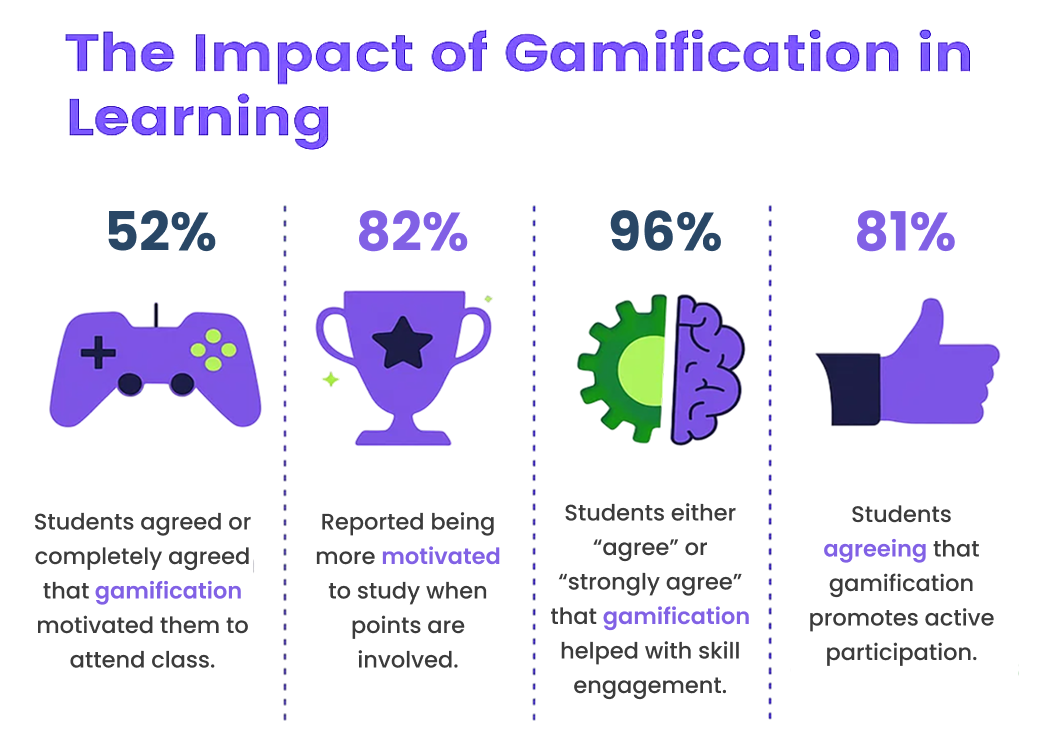
Benefits of Gamified Learning
In this era of innovation, with technology taking over most of the manual and repetitive work, educational institutions are lagging and not abreast of the latest advancements. Hiring qualified tutors and introducing content-rich study material only takes you so far. What truly makes a difference is adopting a gamified approach to test students and make learning fun.
Below are the benefits of gamified learning:
1. Enhanced Learning Outcomes
Students stay motivated with regular feedback in the form of points or rewards. This motivation pushes them to aim higher and study smarter, in search of more rewards. Bringing gamification into the classroom allows you to encourage students to be more driven, competitive, and thoughtful in their learning journey. Studies show gamification can increase knowledge retention by up to 90% compared to traditional methods.
2. Student Drive
Gamified assessments spark healthy competition among students, motivating them to keep pushing for better results. There are no more delayed assessments when you introduce game mechanics in the classroom. The dynamic learning experience not only nurtures students but also equips them with the essential skills required to thrive in the modern world.
3. Boosts Student Engagement
Turning routine tests into games boosts participation. A gamified quiz can double engagement rates compared to standard formats.
Make Teaching More Impactful with A Personalized Approach
Gamified assessments allow personalized learning for students. The learners receive tasks tailored to their preferences and earn points, badges, or scores. For large classes, this ensures every learner feels recognized and motivated.
Final Thoughts
Building gamified assessments will help schools increase student engagement and learning. As traditional methods of assessment continue to lose relevance, it’s time for schools to take a bold step and shift towards gamification in education using an appropriate assessment tool. It is an excellent way to prepare students for real‑world challenges. By integrating game mechanics into classrooms or learning platforms, schools can transform testing from a source of stress into a driver of growth.