A plane mirror is tilted so that its reflecting surface is not horizontal. Which description correctly identifies the normal at the point where a light ray strikes the mirror?
Options:
Showing question 1 of 10
Q2 QuestionPoints: 1
Choose the correct answer:
A student says, “The angle of incidence is the angle between the incoming light ray and the mirror surface.” Which change makes this statement correct?
Options:
Showing question 2 of 10
Q3 QuestionPoints: 1
Choose the correct answer:
After striking a plane mirror, a light ray travels away from the mirror. Which angle is the angle of reflection?
Options:
Showing question 3 of 10
Q4 QuestionPoints: 1
Choose the correct answer:
A student has traced an incident ray and a normal on paper. To read the angle of incidence directly with a protractor, how should the student position it?
Options:
Showing question 4 of 10
Q5 QuestionPoints: 1
Choose the correct answer:
A ray strikes a plane mirror at point P. A student draws a line perpendicular to the mirror at a different point, Q, and calls it the normal for this ray. Why is the student's label incorrect?
Options:
Showing question 5 of 10
Q6 QuestionPoints: 1
Choose the correct answer:
In a ray diagram, the angle of incidence and the angle of reflection are both labelled 40^(\)circ. A student says they are therefore two names for the same angle. Which explanation is correct?
Options:
Showing question 6 of 10
Q7 QuestionPoints: 1
Choose the correct answer:
A light ray approaches a plane mirror along the normal. Which statement correctly describes its angle of incidence?
Options:
Showing question 7 of 10
Q8 QuestionPoints: 1
Choose the correct answer:
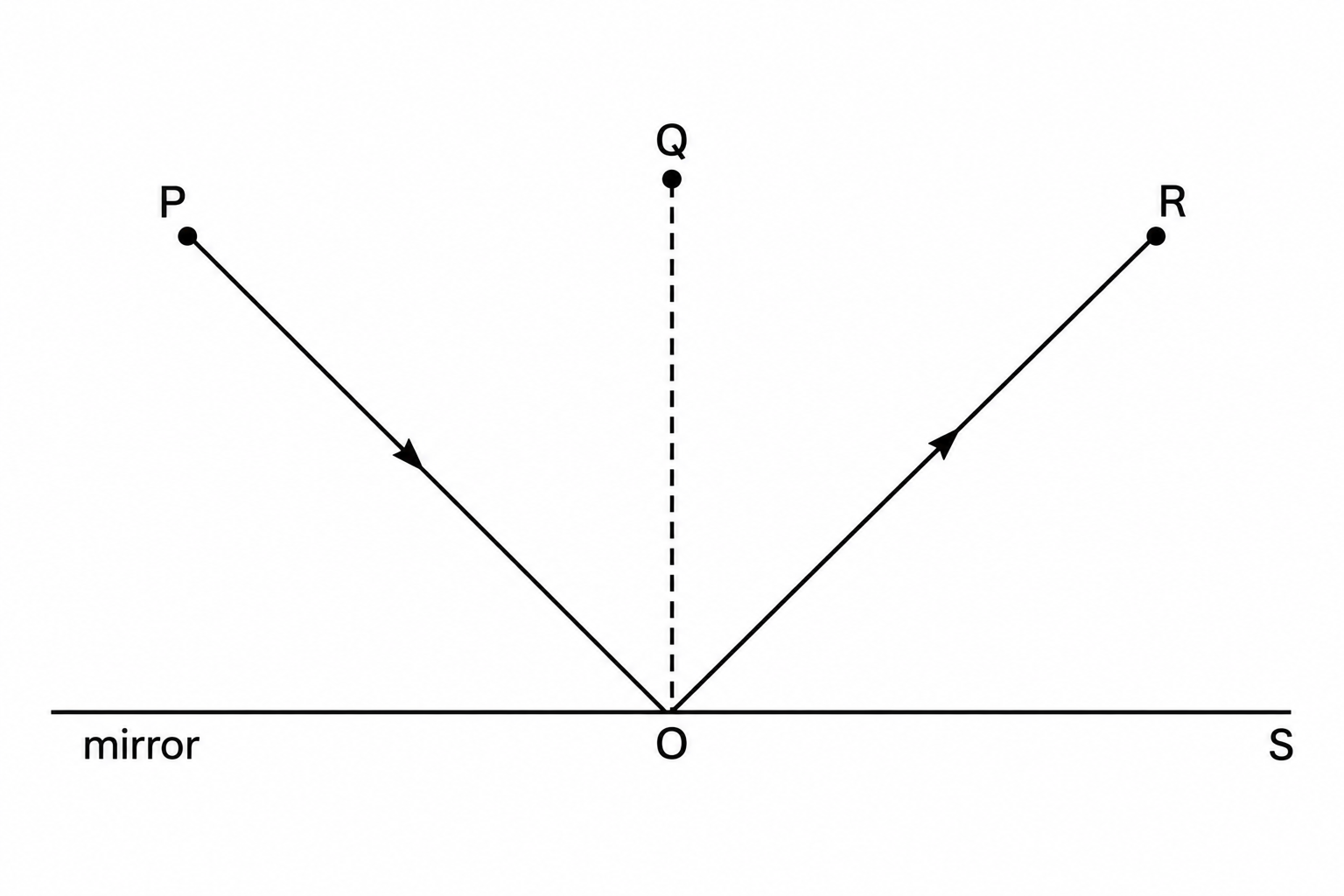
The diagram shows a light ray striking a plane mirror at O. Which labelled line is the normal used to define the angles of incidence and reflection?
Options:
Showing question 8 of 10
Q9 QuestionPoints: 1
Choose the correct answer:
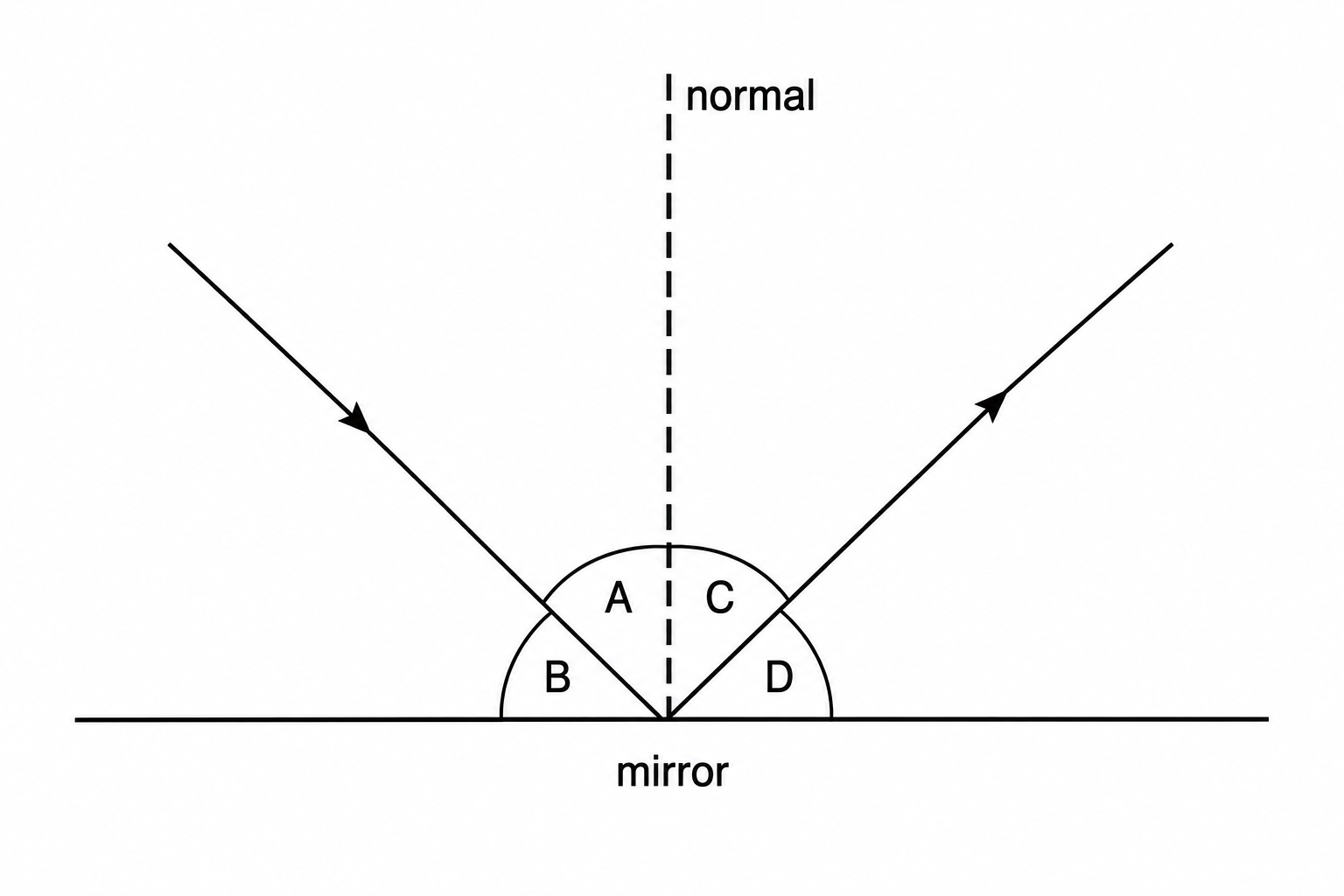
Four angles are labelled in the diagram. Which labelled angle is the angle of reflection?
Options:
Showing question 9 of 10
Q10 QuestionPoints: 1
Choose the correct answer:
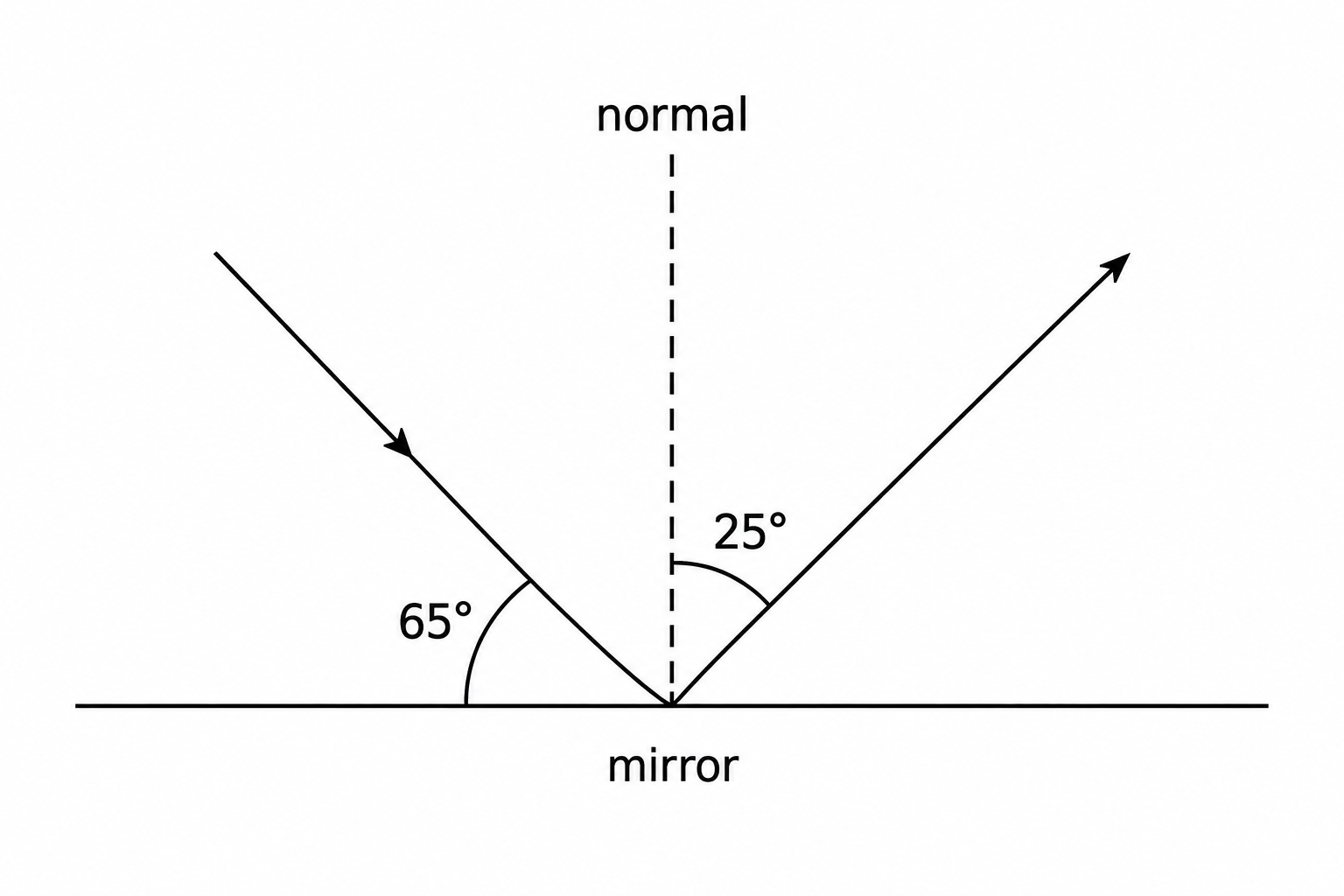
The diagram shows two measured angles for a light ray reflecting from a plane mirror. Which pair gives the angle of incidence and the angle of reflection, in that order?