A worker pulls a wooden crate across a stationary floor at constant speed. The bottom of the crate and the part of the floor it passes over become warmer. Which explanation accounts for both the steady motion and the warming?
Options:
Showing question 1 of 10
Q2 QuestionPoints: 1
Choose the correct answer:
A drawer initially remains stationary when it is pulled gently. A stronger pull makes it slide, and repeated opening and closing warms its wooden runners. Which statement correctly describes friction in these observations?
Options:
Showing question 2 of 10
Q3 QuestionPoints: 1
Choose the correct answer:
A box rests on a horizontal conveyor belt. The belt gradually speeds up towards the right, and the box speeds up with it without slipping. There is no other horizontal contact with the box. Which statement correctly applies the idea of solid friction?
Options:
Showing question 3 of 10
Q4 QuestionPoints: 1
Choose the correct answer:
A rope is pulled towards the right through a fixed clamp whose jaws press against it. After a long length has passed through, the jaws and rope near the clamp are warmer. Which statement identifies the action of solid friction?
Options:
Showing question 4 of 10
Q5 QuestionPoints: 1
Choose the correct answer:
A plate is initially at rest on a tablecloth. The cloth is pulled quickly towards the right and slides beneath the plate. During the short interval when the cloth is moving right faster than the plate, which statement is correct?
Options:
Showing question 5 of 10
Q6 QuestionPoints: 1
Choose the correct answer:
A student rubs a sanding block repeatedly backwards and forwards over a fixed piece of wood. The block returns to its starting position after each complete stroke. Which prediction correctly describes friction and heating?
Options:
Showing question 6 of 10
Q7 QuestionPoints: 1
Choose the correct answer:
A sledge slides downhill over hard, dry snow at a steady speed. Air resistance is negligible. A student claims that friction cannot be acting because the sledge does not slow down. Which response is correct?
Options:
Showing question 7 of 10
Q8 QuestionPoints: 1
Choose the correct answer:
Two identical pairs of wooden blocks begin at the same temperature. In one trial, a student presses a pair together without rubbing. In the other, the student presses equally hard and repeatedly slides one block over the other for the same time. Only the rubbed contact surfaces show a noticeable temperature rise. Which explanation best accounts for this difference?
Options:
Showing question 8 of 10
Q9 QuestionPoints: 1
Choose the correct answer:
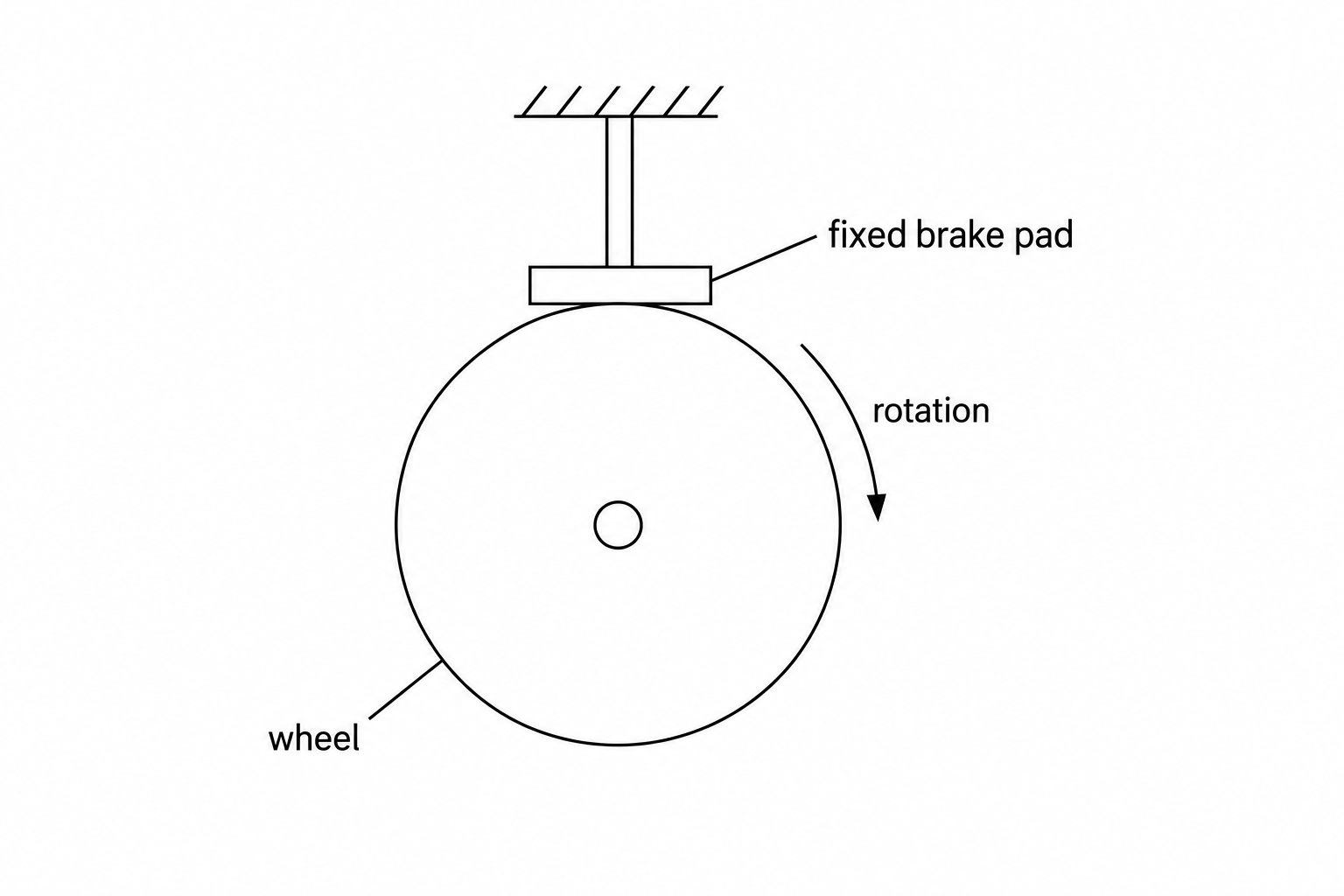
The diagram shows a wheel rotating clockwise while a fixed brake pad presses against its top edge. The wheel continues rotating as the pad rubs against it. Which statement correctly describes the friction forces at the contact and the possible heating?
Options:
Showing question 9 of 10
Q10 QuestionPoints: 1
Choose the correct answer:
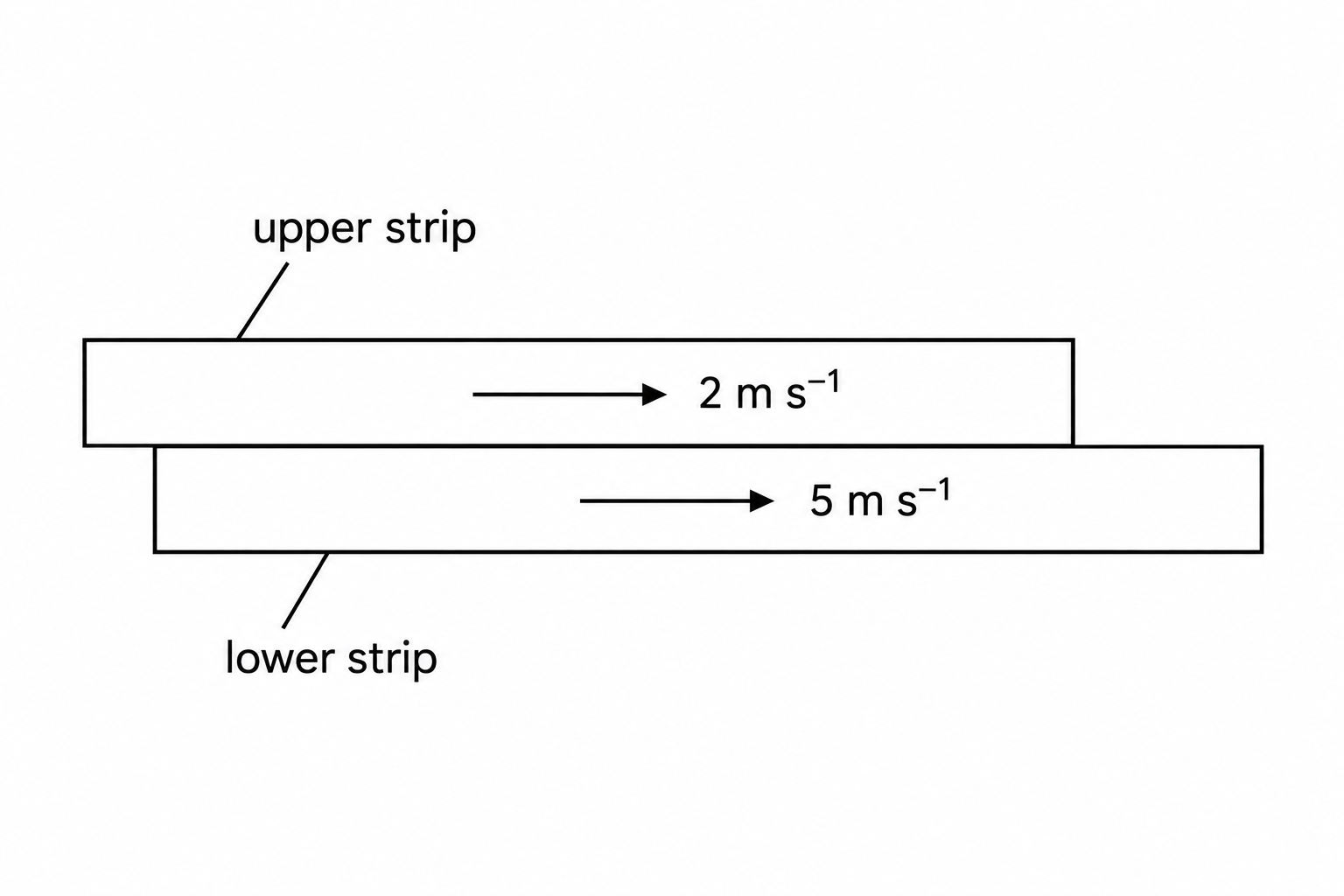
The two solid strips shown are pressed together and driven towards the right at the speeds indicated. They slide against each other. Which statement correctly describes friction at their shared contact surface?