Q1 Question
Points: 1
Choose the correct answer:
Point P(4, − 2) is reflected in the x-axis and then translated by beginpmatrix − 3\\1endpmatrix. What are its final coordinates?
Showing question 1 of 10
Choose the correct answer:
A triangle is rotated 90^(\)circ anticlockwise about the origin and then reflected in the y-axis. Which single transformation has the same effect?
Choose the correct answer:
A shape is translated 5 units to the right and then reflected in the y-axis. Which pair of transformations, applied in the stated order, always produces the same final image?
Choose the correct answer:
A triangle has vertices A(1,1), B(4,1) and C(1,3). It is rotated 180^(\)circ about the origin and then translated by beginpmatrix2\\2endpmatrix. Which vertex finishes at its own original position?
Choose the correct answer:
A shape is reflected in the line y = 2 and then rotated 90^(\)circ clockwise about the origin. Which sequence will always return the final image to the original shape?
Choose the correct answer:
A quadrilateral has its vertices labelled in clockwise order. It is reflected in a line, translated, and then reflected in another line. Which statement about the final image must be true?
Choose the correct answer:
A shape is reflected in the line x = 2 and then reflected in the line y = − 1. Which single transformation has the same effect?
Choose the correct answer:
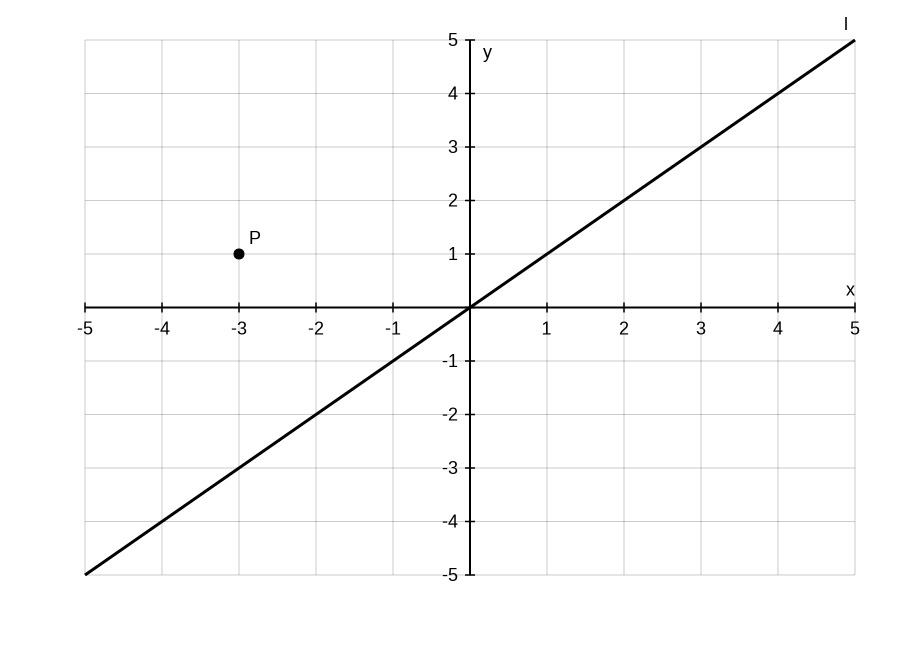
The graph shows point P and the line l. Point P is reflected in l and then translated by beginpmatrix2\\ − 1endpmatrix. What are its final coordinates?
Choose the correct answer:
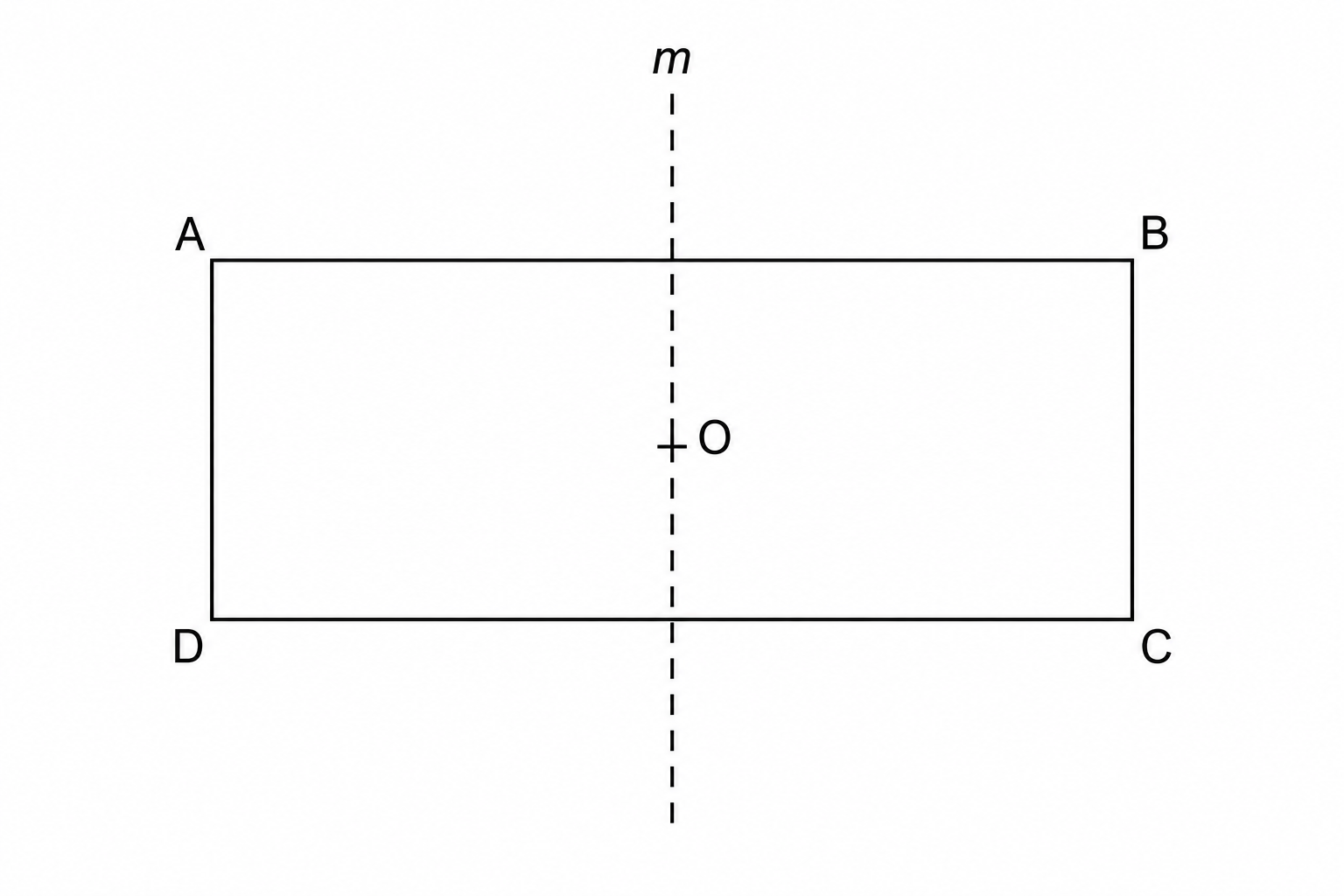
The labelled rectangle is reflected in the vertical line m and then rotated 180^(\)circ about its centre O. Which original vertex finishes at the upper-left corner?
Choose the correct answer:
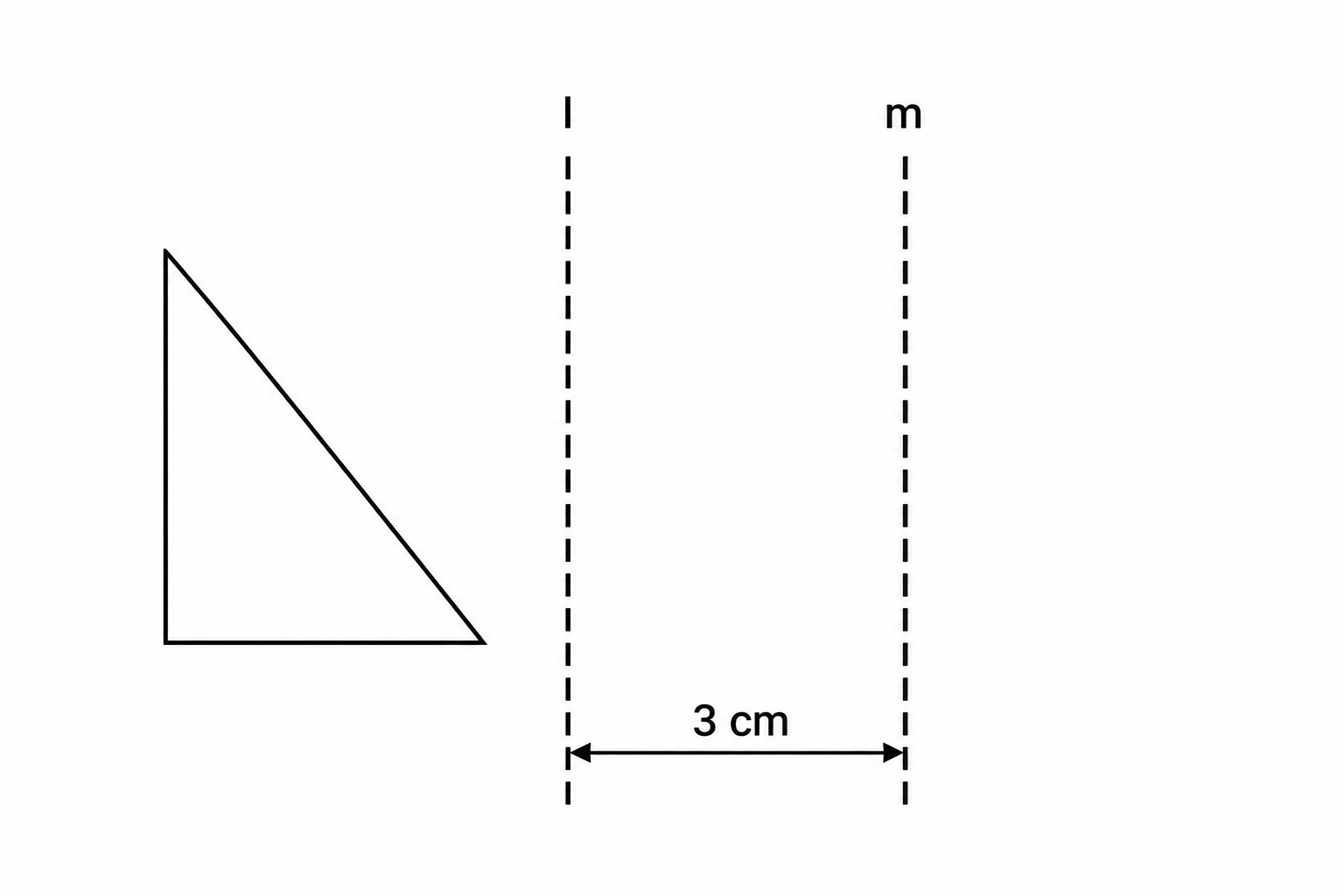
The triangle is reflected first in line l and then in line m. Which single transformation has the same effect?