Choose the correct answer:
A point has coordinates ( − 3,2). It is translated by the vector beginpmatrix5\\ − 1endpmatrix and then reflected in the y-axis. What are its final coordinates?
Choose the correct answer:
A point has coordinates ( − 3,2). It is translated by the vector beginpmatrix5\\ − 1endpmatrix and then reflected in the y-axis. What are its final coordinates?
Choose the correct answer:
Point P = (2, − 3) is rotated 90^(\)circ clockwise about the origin. Its image is then translated by the vector beginpmatrix1\\4endpmatrix. Where does P finish?
Choose the correct answer:
A triangle is reflected in the x-axis and then in the y-axis. Which single transformation always produces the same final image?
Choose the correct answer:
A point is translated by the vector beginpmatrix − 2\\3endpmatrix and then rotated 180^(\)circ about the origin. Its final coordinates are (4, − 1). What were its original coordinates?
Choose the correct answer:
A triangle is translated by beginpmatrix4\\ − 3endpmatrix and then by beginpmatrix − 6\\5endpmatrix. Which statement describes the final position of every vertex compared with its original position?
Choose the correct answer:
Point (4,2) is rotated 90^(\)circ anticlockwise about (2,2). The resulting point is then reflected in the line y = 1. What are the final coordinates?
Choose the correct answer:
A shape is reflected in the line x = − 1 and then in the line x = 2. Which single translation has the same effect?
Choose the correct answer:
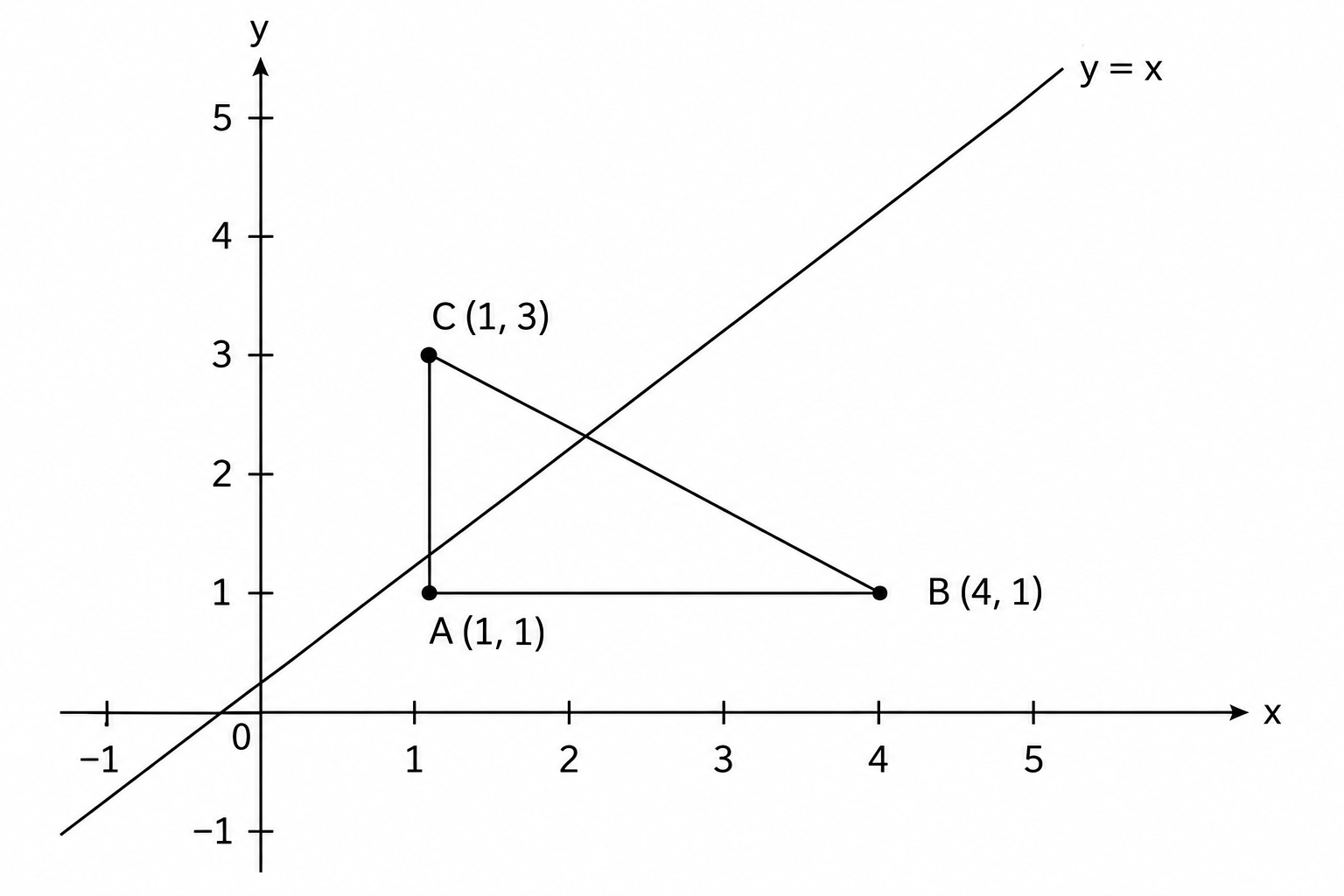
The triangle shown is reflected in the line y = x and then translated by beginpmatrix − 2\\1endpmatrix. What are the final coordinates of the vertex labelled C?
Choose the correct answer:
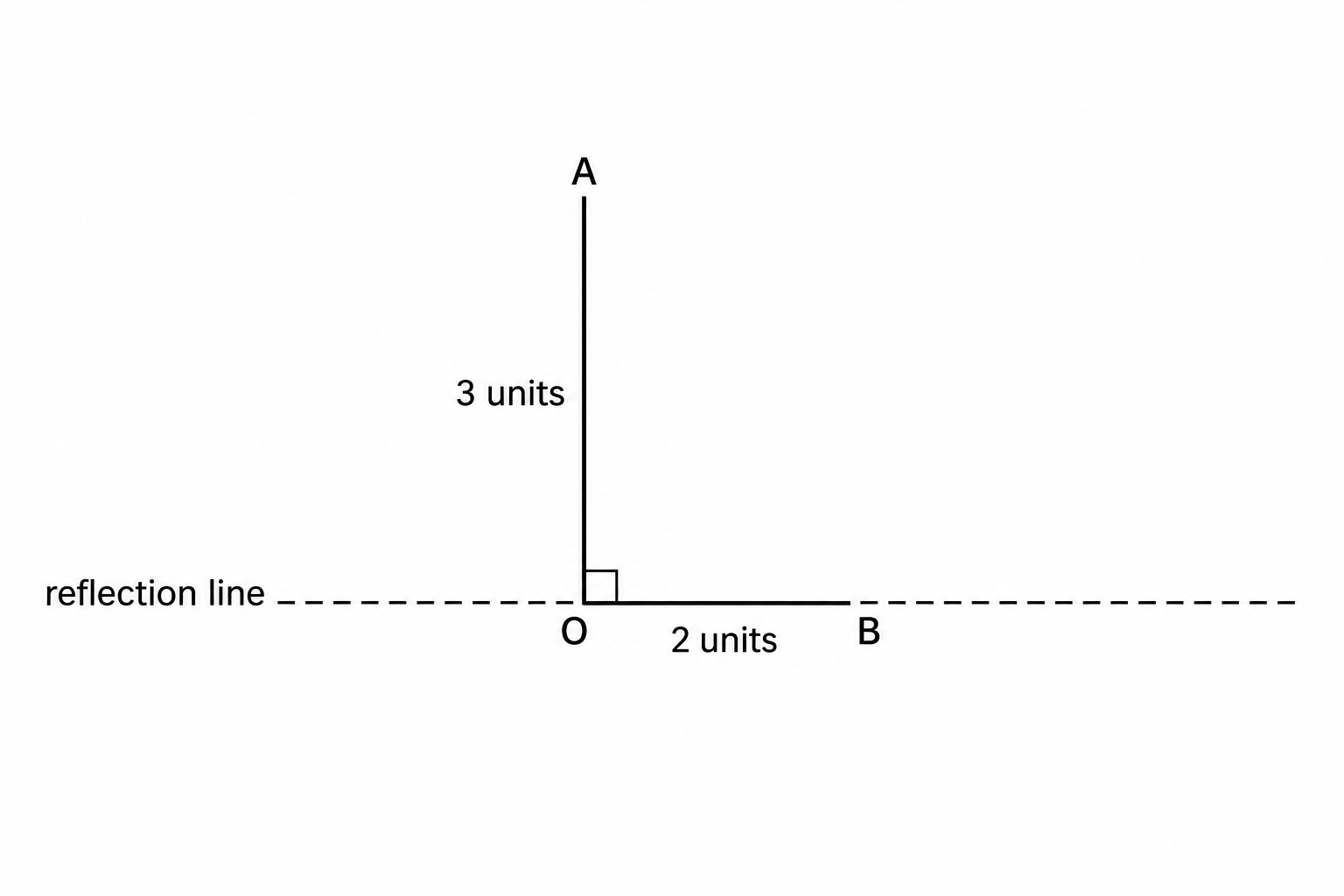
The diagram shows two perpendicular arms meeting at O. The whole figure is reflected in the horizontal line through O, then rotated 90^(\)circ clockwise about O. In which directions do the long arm and the short arm point in the final image?
Choose the correct answer:
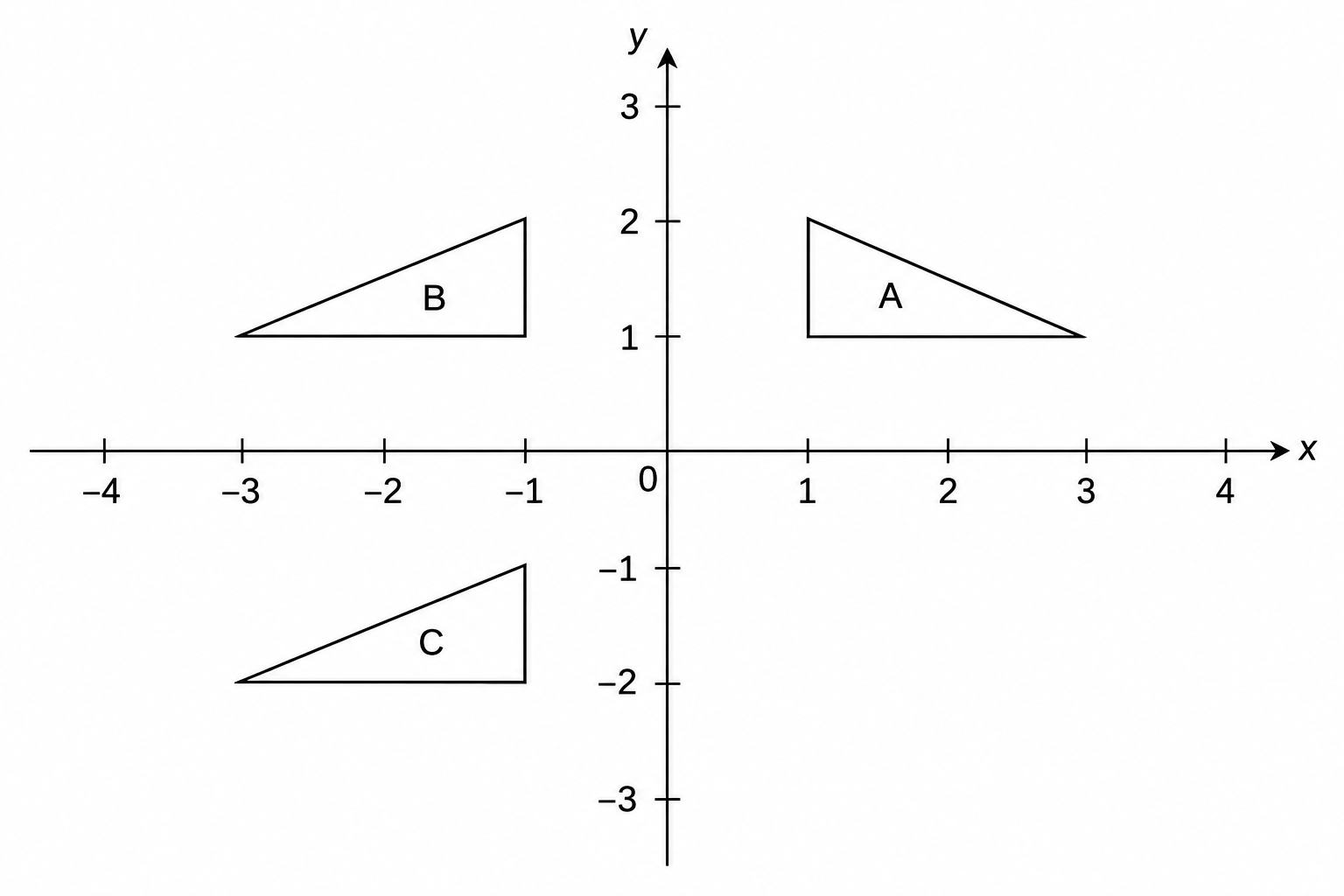
The diagram shows a triangle in three positions, labelled A, B and C. Which sequence maps A onto B, then maps B onto C?