Choose the correct answer:
A prism has a trapezium-shaped cross-section. The parallel sides are 7 cm and 13 cm, and their perpendicular separation is 6 cm. The prism is 18 cm long. What is its volume?
Choose the correct answer:
A prism has a trapezium-shaped cross-section. The parallel sides are 7 cm and 13 cm, and their perpendicular separation is 6 cm. The prism is 18 cm long. What is its volume?
Choose the correct answer:
A cylinder has volume 1232 cm³ and height 8 cm. Using π = 22/7, calculate its radius.
Choose the correct answer:
A prism has a rectangular cross-section measuring 12 cm × 9 cm. A rectangular section measuring 5 cm × 4 cm is removed from one corner along the full length of the prism. If the prism is 15 cm long, what is the volume that remains?
Choose the correct answer:
A triangular prism has volume 756 cm³. Its triangular cross-section has base 9 cm, and the prism is 14 cm long. What is the perpendicular height of the triangular cross-section?
Choose the correct answer:
A prism has a regular hexagonal cross-section that can be divided into six congruent triangles. Each triangle has base 6 cm and perpendicular height 5.2 cm. The prism is 10 cm long. Calculate its volume.
Choose the correct answer:
A cylinder has volume 450 cm³. A second cylinder has twice the radius and 3/4 of the height of the first cylinder. What is the volume of the second cylinder?
Choose the correct answer:
A cylindrical tank has diameter 1.2 m and length 2.5 m. Using π = 3.142 and 1 m³ = 1000 L, calculate its capacity in litres.
Choose the correct answer:
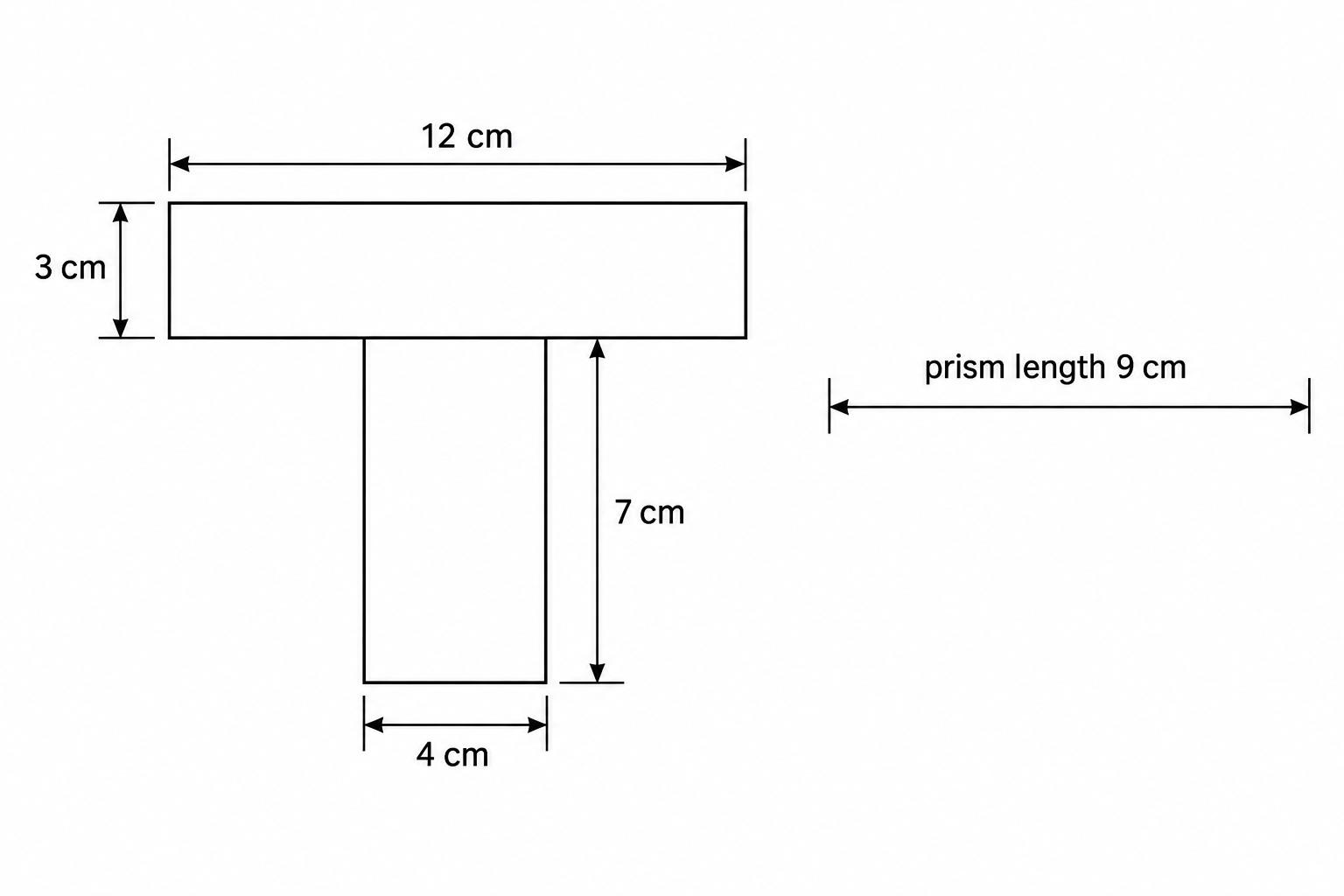
The diagram shows the cross-section and length of a prism. Calculate the volume of the prism.
Choose the correct answer:
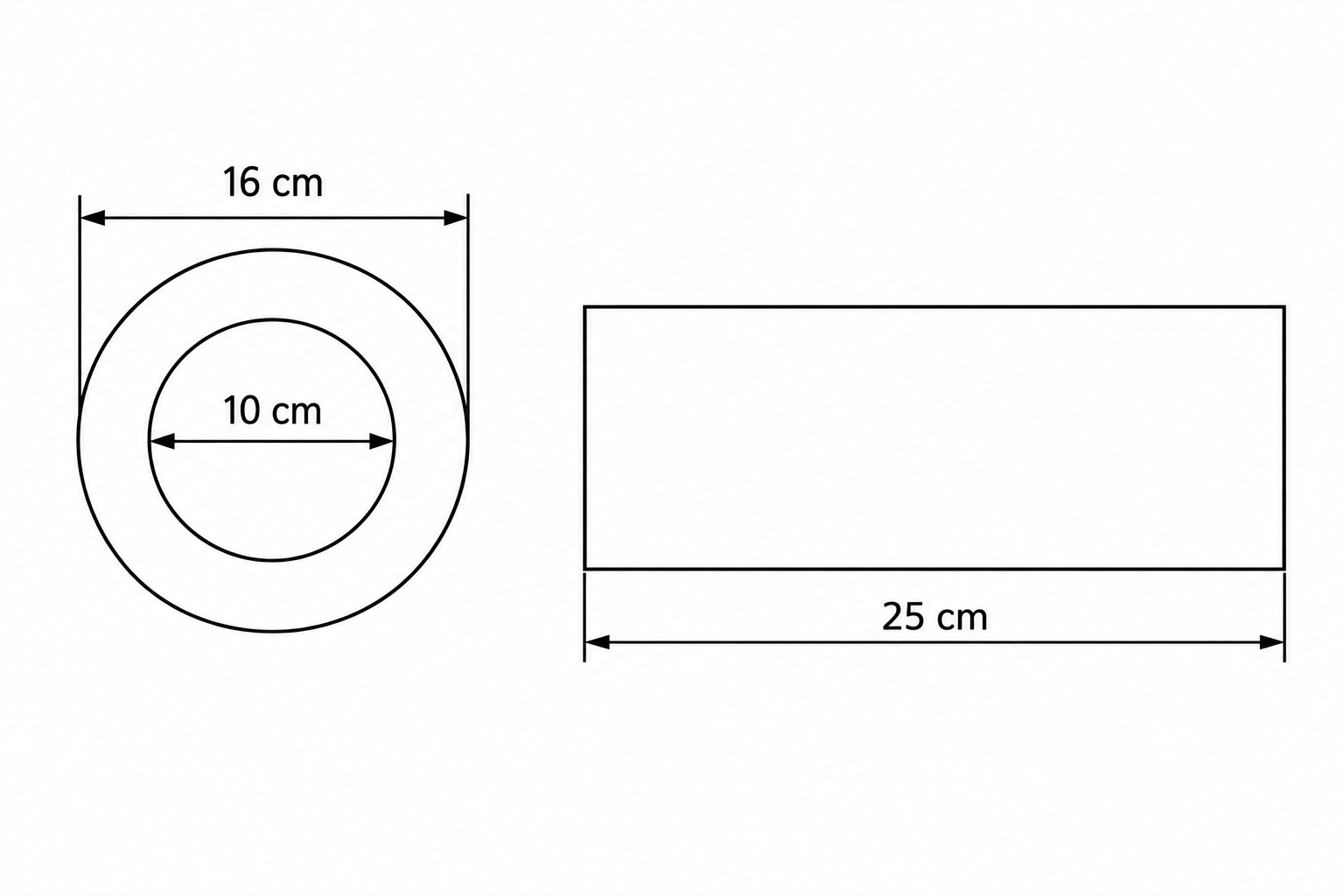
The diagram shows a hollow cylinder. Using π = 3.142, calculate the volume of material in the cylinder.
Choose the correct answer:
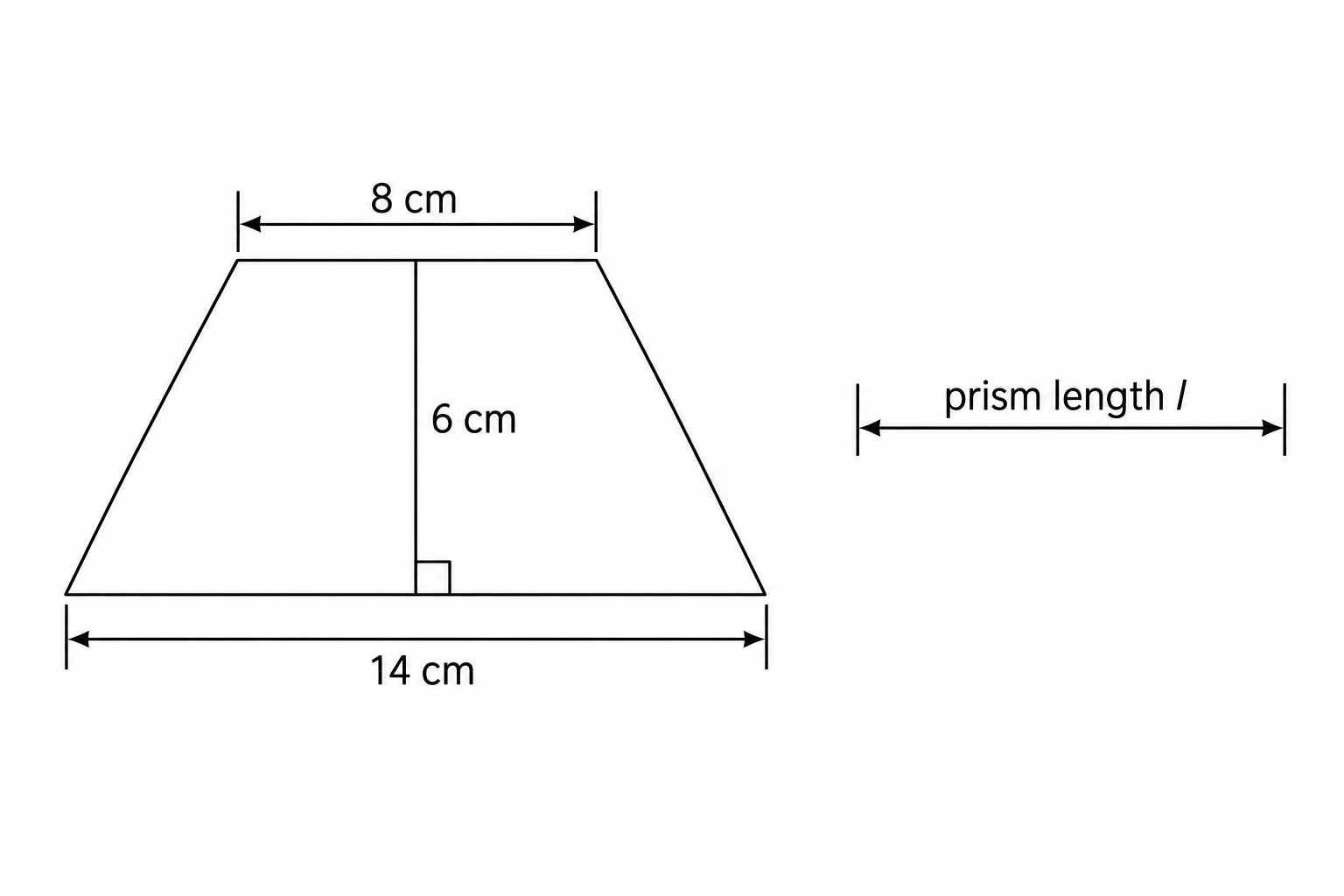
The prism shown has volume 990 cm³. Calculate its length, l.