Q1 Question
Points: 1
Choose the correct answer:
When all outcomes are equally likely, which rule gives the theoretical probability of an event?
Showing question 1 of 10
Choose the correct answer:
A fair coin has a head on one side and a tail on the other. What is the theoretical probability of getting a tail in one toss?
Choose the correct answer:
A fair six-sided die is numbered from 1 to 6. What is the theoretical probability of rolling 7?
Choose the correct answer:
A bag contains only 5 identical red counters. One counter is chosen at random. What is the theoretical probability that it is red?
Choose the correct answer:
To find theoretical probability by counting favourable outcomes and dividing by the total number of outcomes, what must be true about the individual outcomes?
Choose the correct answer:
A box contains 3 blue balls and 2 yellow balls. The balls are identical except for colour. One ball is chosen at random. What is the theoretical probability of choosing a blue ball?
Choose the correct answer:
One day is chosen at random from the seven days of the week, with each day equally likely. To find the probability of choosing a weekend day, which total number of outcomes should be used as the denominator?
Choose the correct answer:
A fair six-sided die is numbered from 1 to 6. Which event has theoretical probability 1/6?
Choose the correct answer:
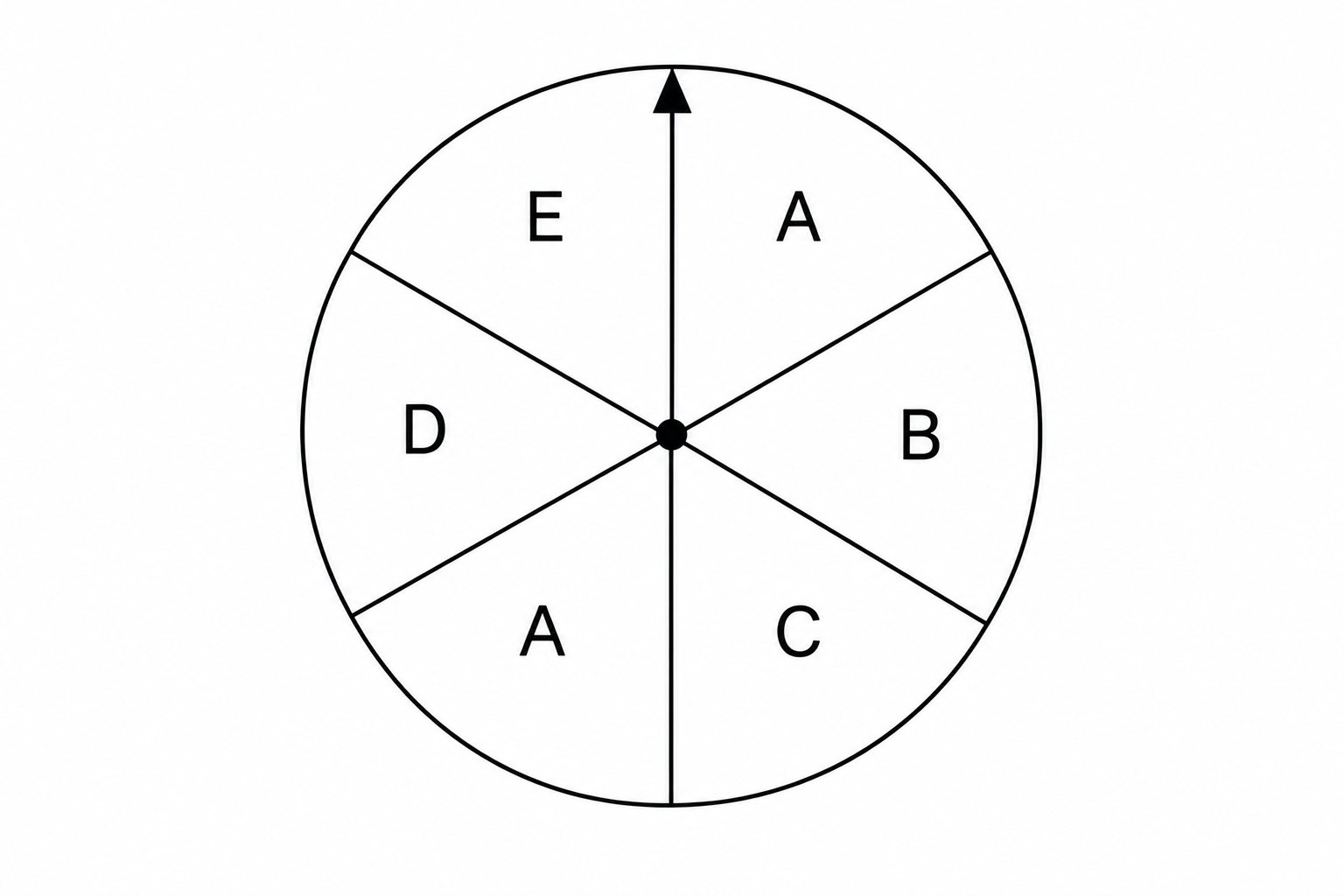
The fair spinner shown has equal-sized sectors. What is the theoretical probability that it lands on A?
Choose the correct answer:
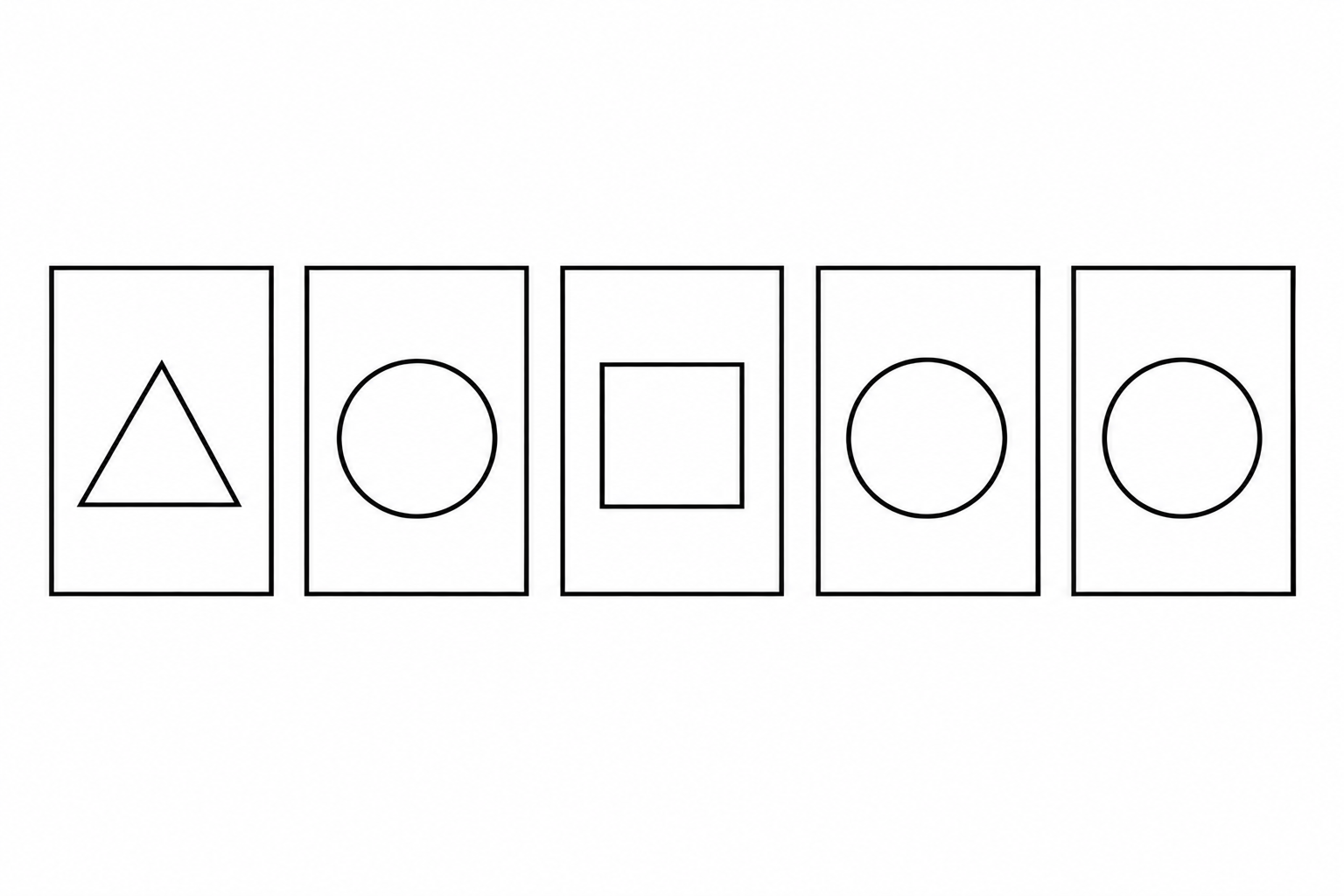
The diagram shows all the cards in a set. The cards are identical on the back and are shuffled face down. One card is chosen at random. What is the theoretical probability that its shape is not a circle?