Q1 Question
Points: 1
Choose the correct answer:
Which identity states the product law of logarithms? Assume b>0,\ b ≠ 1,\ x>0,\ y>0.
Showing question 1 of 10
Choose the correct answer:
Which expression completes the quotient law log_a (m/n ) = \;?\;? Assume a>0,\ a ≠ 1,\ m>0,\ n>0.
Choose the correct answer:
According to the power law, which expression equals log_b(x^(k))? Assume b>0,\ b ≠ 1,\ x>0.
Choose the correct answer:
Which expression is the change-of-base form of log_3 11 using logarithms to base 10?
Choose the correct answer:
What is the value of log_7 7?
Choose the correct answer:
Which value completes log_9 1 = \;?\;?
Choose the correct answer:
Which identity gives the reciprocal relationship when the base and argument of a logarithm are interchanged? Assume a>0,\ b>0,\ a ≠ 1,\ b ≠ 1.
Choose the correct answer:
Which expression completes the inverse identity b^(log_b x) = \;?\;? Assume b>0,\ b ≠ 1,\ x>0.
Choose the correct answer:
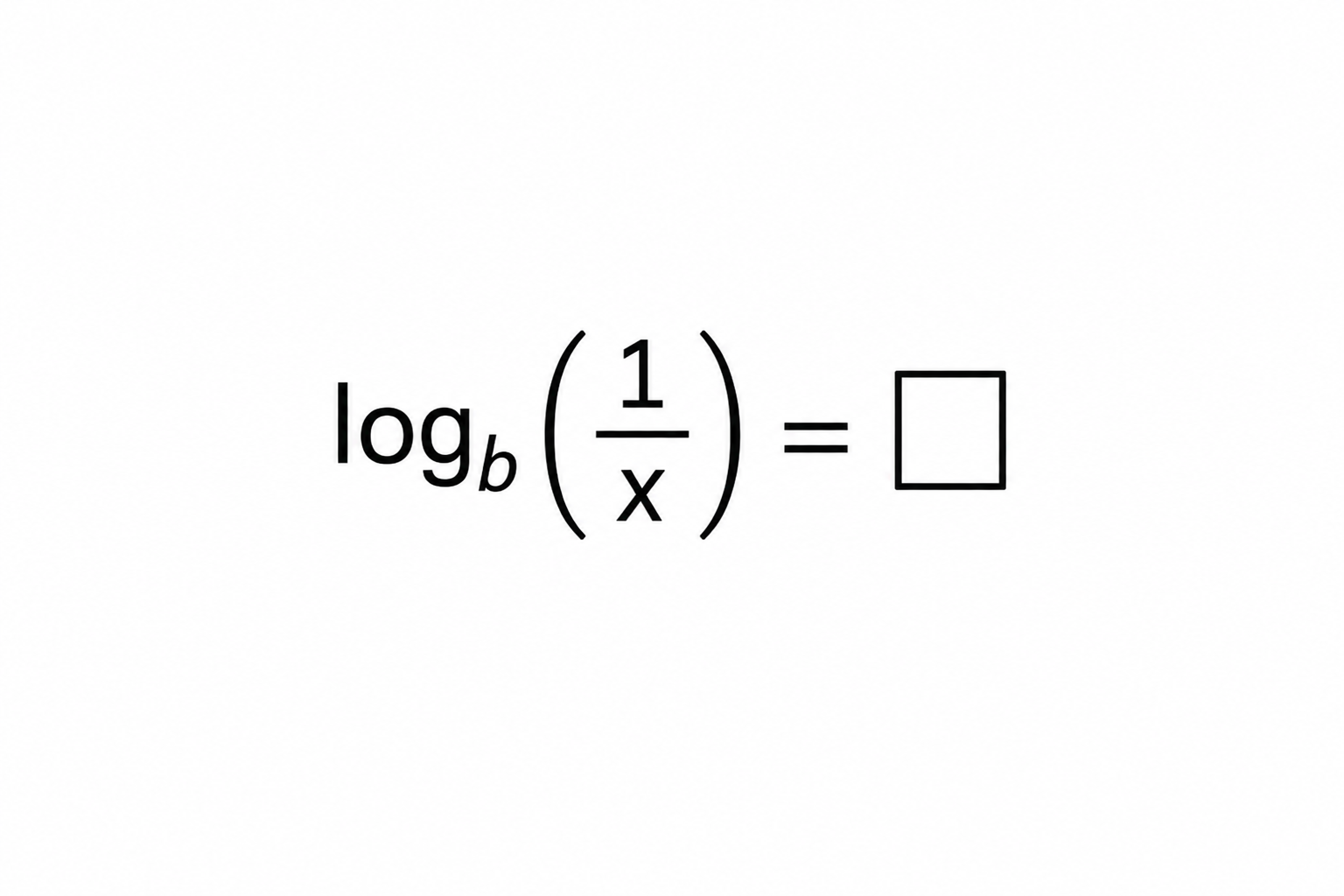
Which expression fills the empty box in the displayed identity? Assume b>0,\ b ≠ 1,\ x>0.
Choose the correct answer:
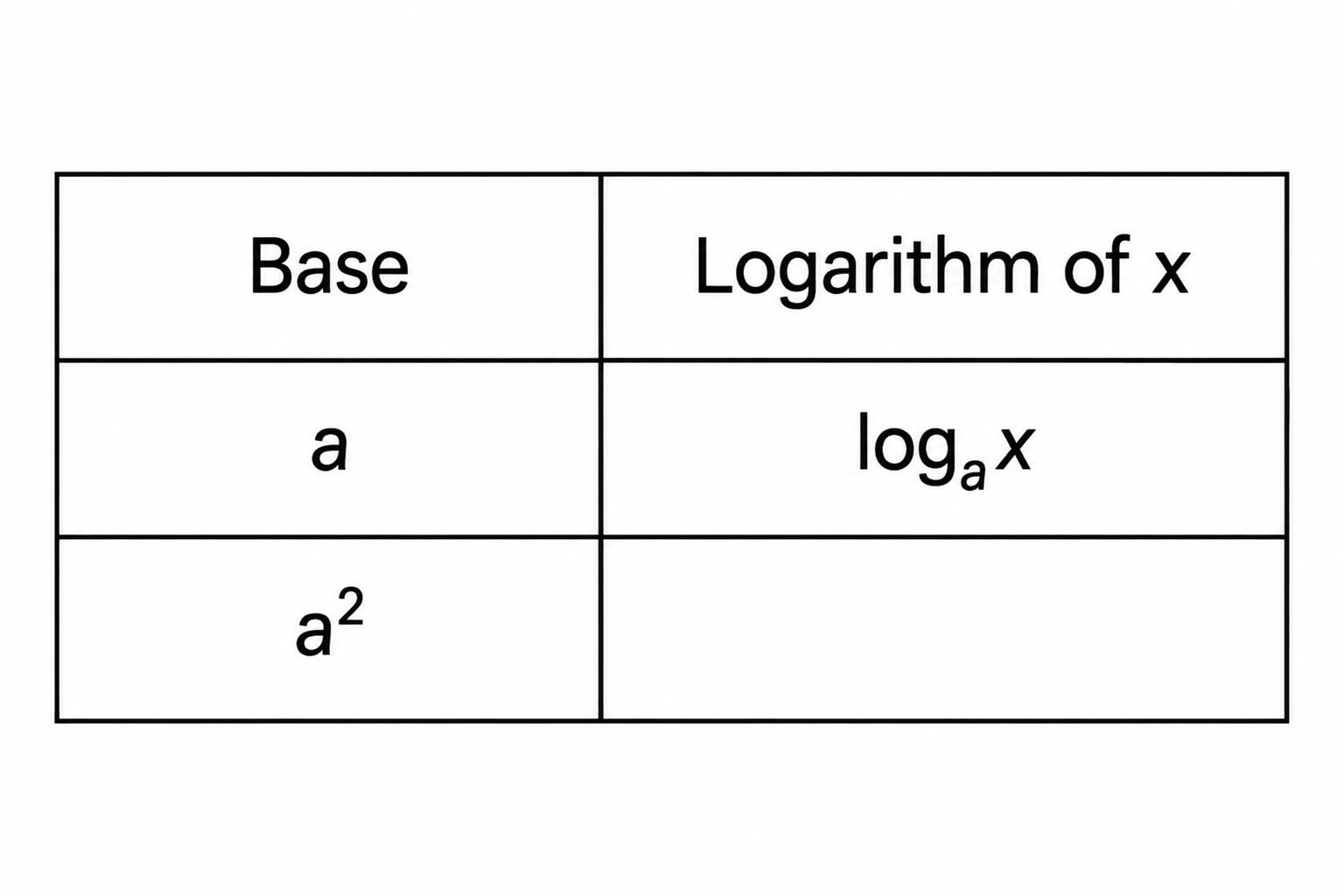
The table shows logarithms of the same positive number using different bases. Which expression belongs in the empty cell? Assume a>0,\ a ≠ 1,\ x>0.