Q1 Question
Points: 1
Choose the correct answer:
The function f(x) = e^(x) has all real numbers as its domain. Which statement correctly describes its inverse function?
Showing question 1 of 10
Choose the correct answer:
The function f(x) = e^(x) has all real numbers as its domain. Which statement correctly describes its inverse function?
Choose the correct answer:
The point (4,k) lies on the graph of y = ln x. Without finding a decimal value for k, which statement must be true?
Choose the correct answer:
Which property explains why the equation e^(x) = c has exactly one real solution for every positive number c?
Choose the correct answer:
Which ordering follows from the properties of the natural logarithm function, without using a calculator?
Choose the correct answer:
Which translation takes the graph of y = e^(x) onto the graph of y = e^(x + 2)?
Choose the correct answer:
For the graph of y = ln(x + 4), which option correctly gives both its domain and its vertical asymptote?
Choose the correct answer:
As x increases without bound, which statement describes the graph of y = e^( − x)?
Choose the correct answer:
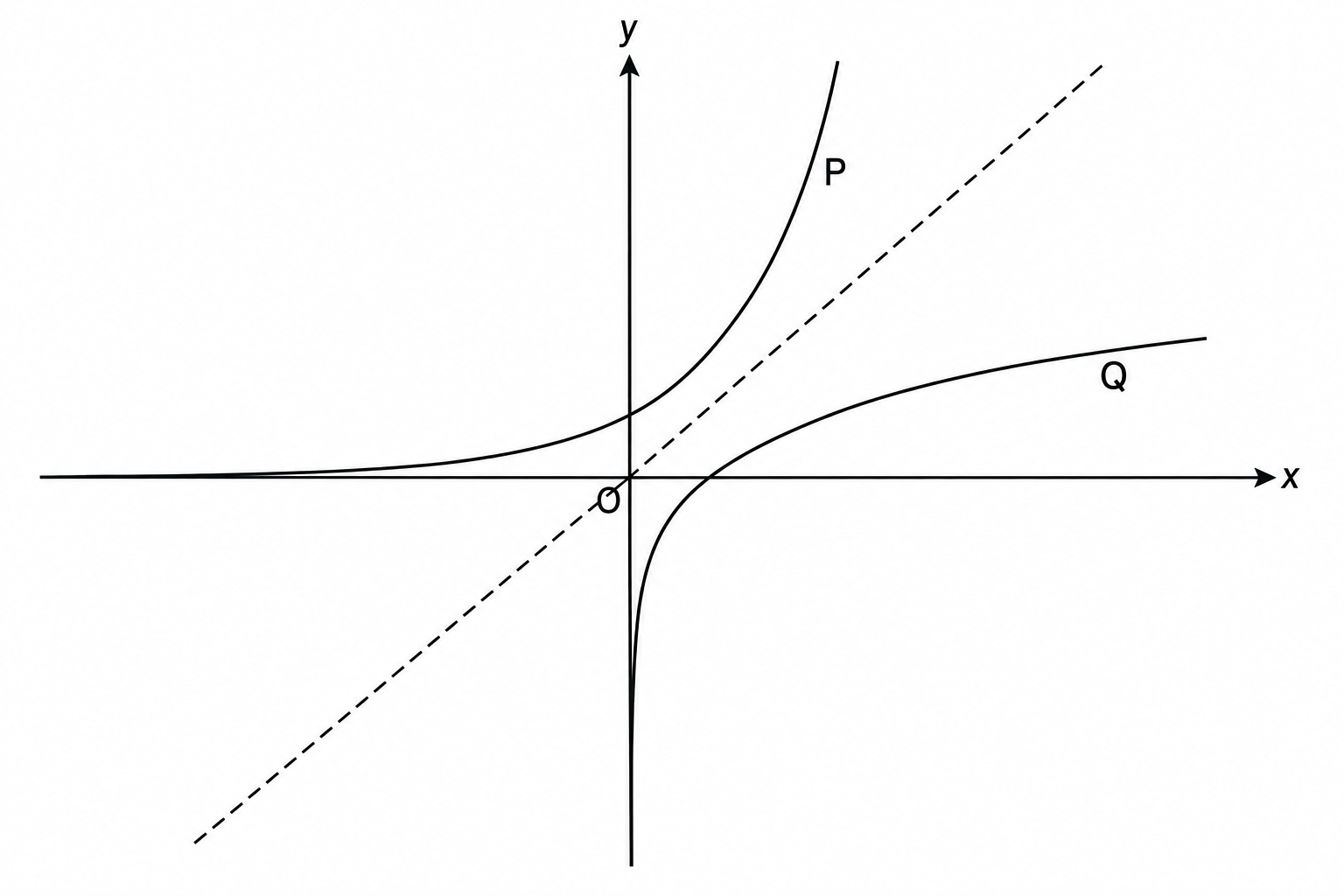
The sketch shows the graphs of y = e^(x) and y = ln x. The dashed line is a line of reflection that maps one graph onto the other. What is its equation?
Choose the correct answer:
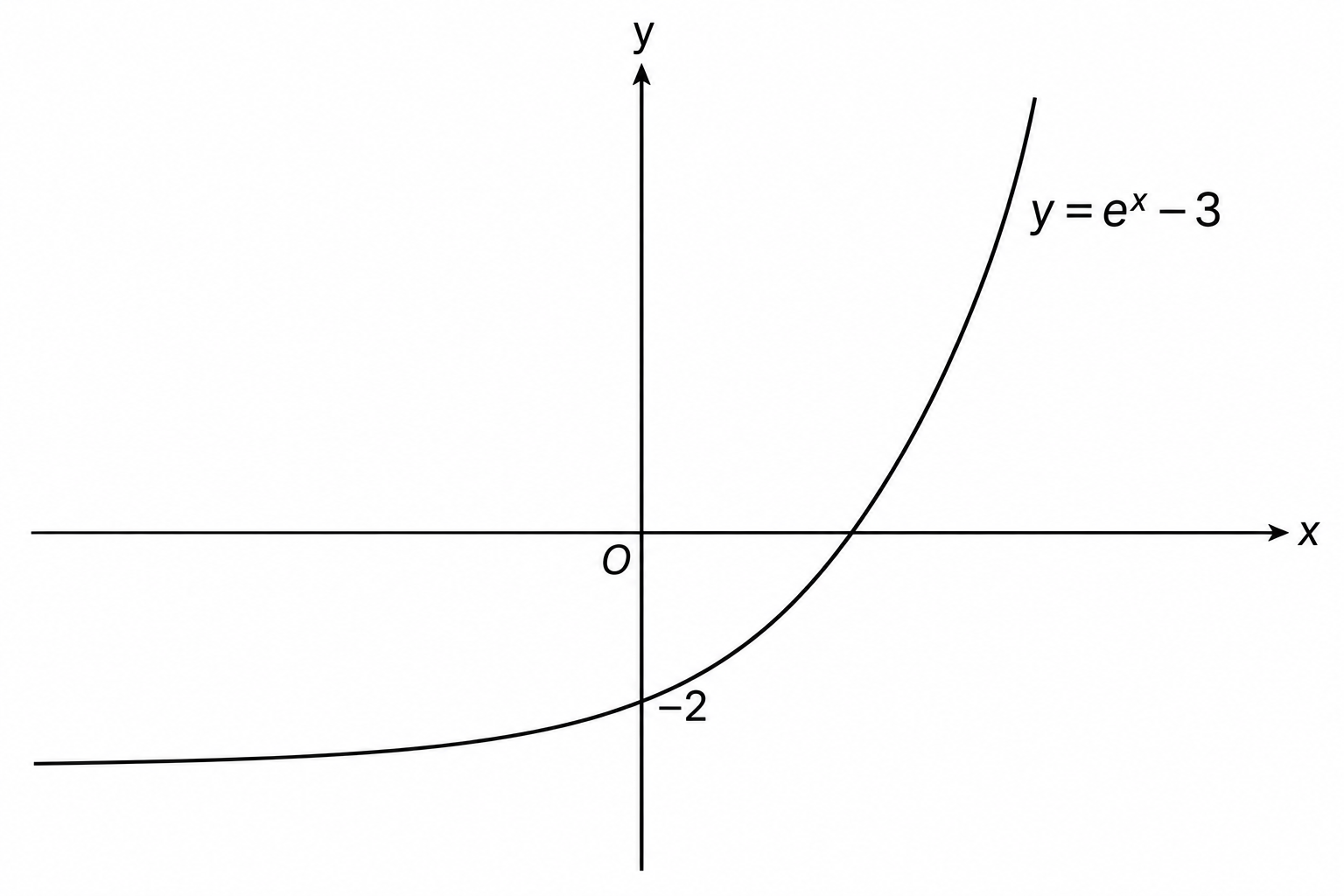
The sketch shows y = e^(x) − 3. Which equation describes its horizontal asymptote?
Choose the correct answer:
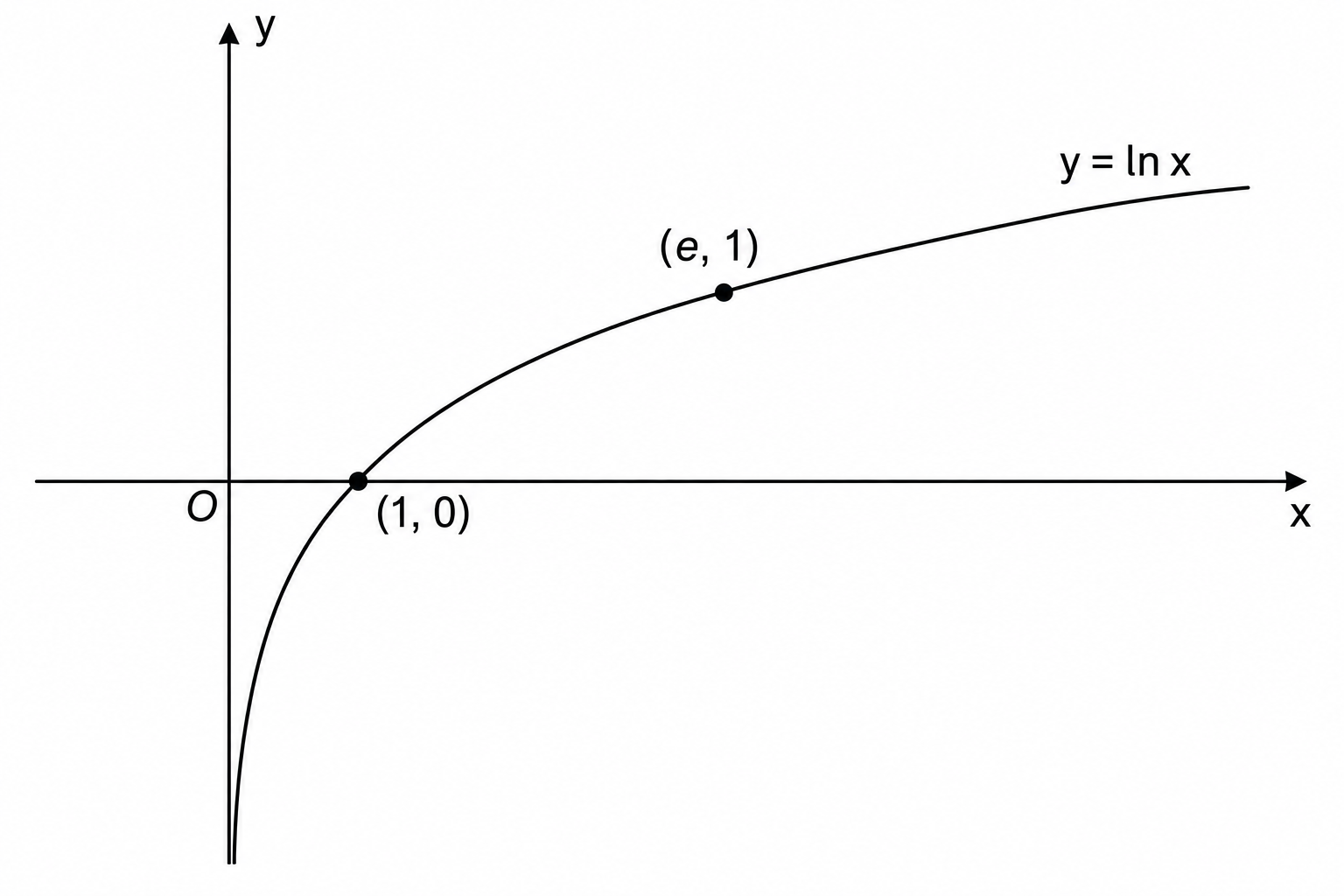
The sketch shows y = ln x. This graph is translated 2 units downwards. What is the horizontal-axis intercept of the translated graph?