Q1 Question
Points: 1
Choose the correct answer:
An angle measures 27^(\)circ. Which calculation gives the measure of its complementary angle?
Showing question 1 of 10
Choose the correct answer:
An angle measures 27^(\)circ. Which calculation gives the measure of its complementary angle?
Choose the correct answer:
Two angles on separate sheets of paper measure 38^(\)circ and 52^(\)circ. A student says they cannot be complementary because they do not share a vertex. Which response is correct?
Choose the correct answer:
Two angles are complementary. The smaller angle is increased by 9^(\)circ. What must happen to the other angle so that the angles remain complementary?
Choose the correct answer:
A student sorts angle pairs by their relationships. Which pair belongs in the complementary category rather than the supplementary category?
Choose the correct answer:
One angle is complementary to an angle measuring 34^(\)circ. Another angle is supplementary to that same angle. How does the supplementary angle compare with the complementary angle?
Choose the correct answer:
Two positive angle measures are complementary and unequal. Which statement must be true?
Choose the correct answer:
Each of two angles is complementary to an angle measuring 57^(\)circ. What can you conclude about the two angles?
Choose the correct answer:
The diagram shows a right angle divided into two angles. Which statement correctly explains the measure of the angle labeled a?
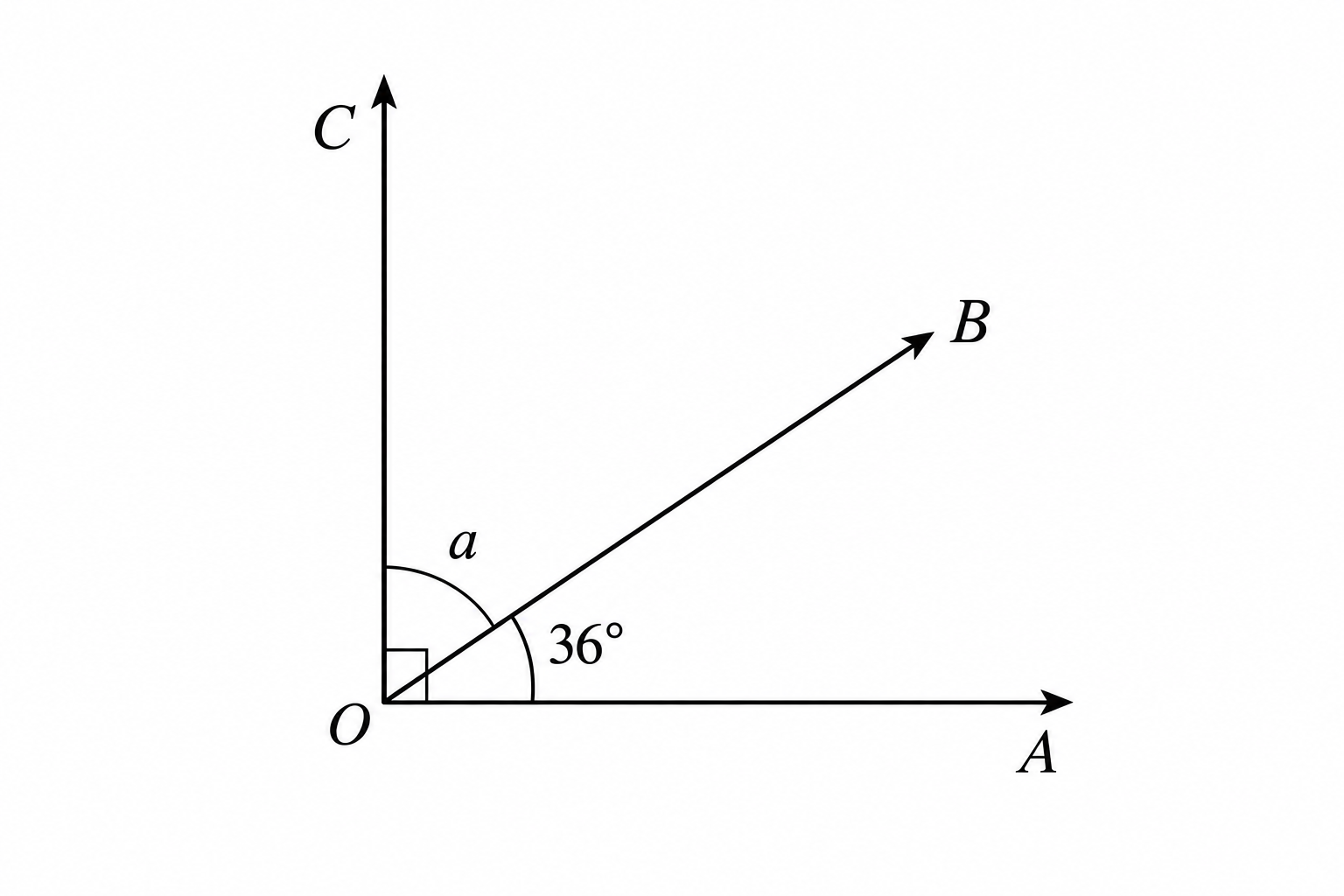
Choose the correct answer:
Use the right-angle mark and the straight line in the diagram. Which pair of angles is complementary?
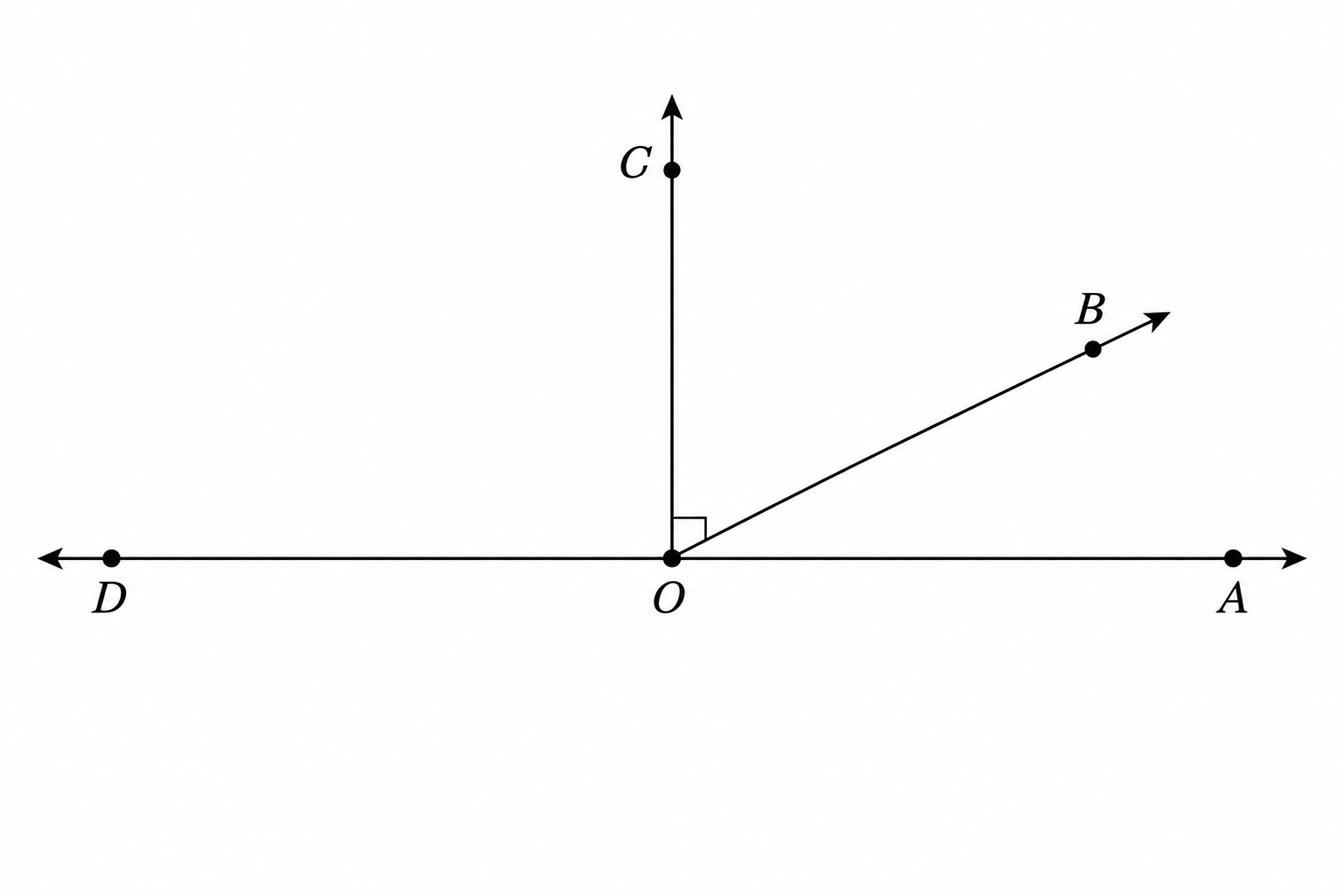
Choose the correct answer:
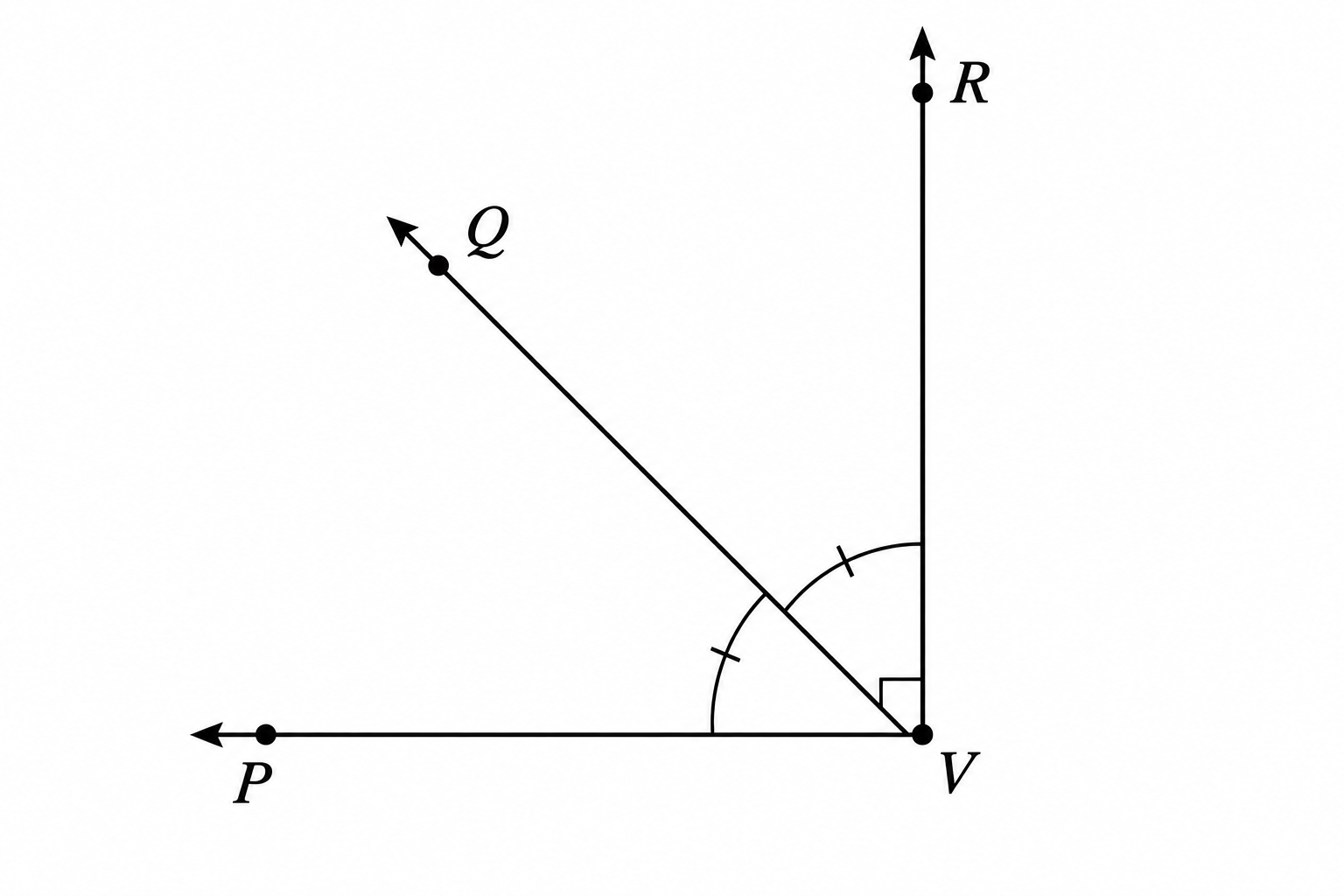
The matching angle arcs show that the two angles in the diagram are equal. A student labels one angle 40^(\)circ and the other 50^(\)circ. Which statement best explains whether these labels satisfy all the markings?