

HEALTH EDUCATION - STRESS MANAGEMENT
Stress Management Quiz
- Focuses on recognizing personal signs of stress and taking responsibility for managing it
- Emphasizes the importance of planning and scheduling to manage stress effectively
- Highlights the role of self-awareness and reflection in stress management
- Encourages seeking support from trusted adults or counselors as a responsible behavior
Start the 10-question quiz
Free, no sign-up needed. Your score shows instantly.
Here are the first 3 questions. Click “View all questions” to see the complete assessment.
Q1.
Q2.
Jordan has several assignments due next week. Why would making a schedule be a responsible stress-management behavior?
Q3.
After becoming stressed during group work, Maya says, “I cannot control what everyone does, but I can pause, breathe slowly, and explain what I need.” What does her statement show?
Q4.
Why can keeping a regular bedtime be part of responsible stress management?
Q5.
A student tries listening to music while studying but finds that it causes more distraction. Which response best shows an understanding of personal responsibility for managing stress?
Q6.
Why can asking a trusted adult or school counselor for support be a responsible personal health behavior?
Q7.
Luis rates his stress before and after using slow breathing. Why is comparing the two ratings useful?
Q8.
A student feels stressed and is tempted to respond by breaking objects. Why is choosing physical activity or talking with someone instead a more responsible behavior?
Q9.
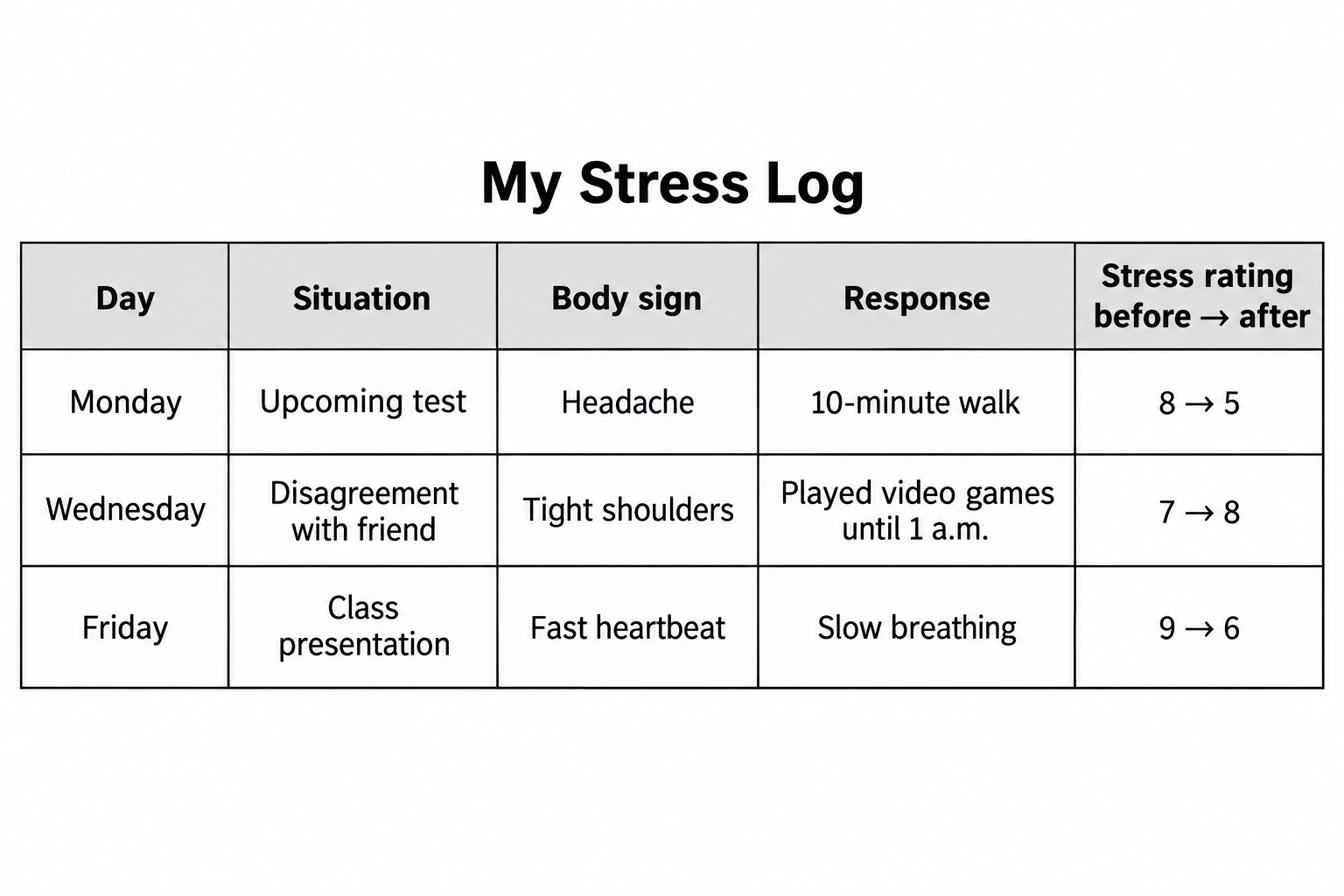
Study the stress log in the figure. Which conclusion best shows how the student can take responsibility for future stress-management choices?
Q10.
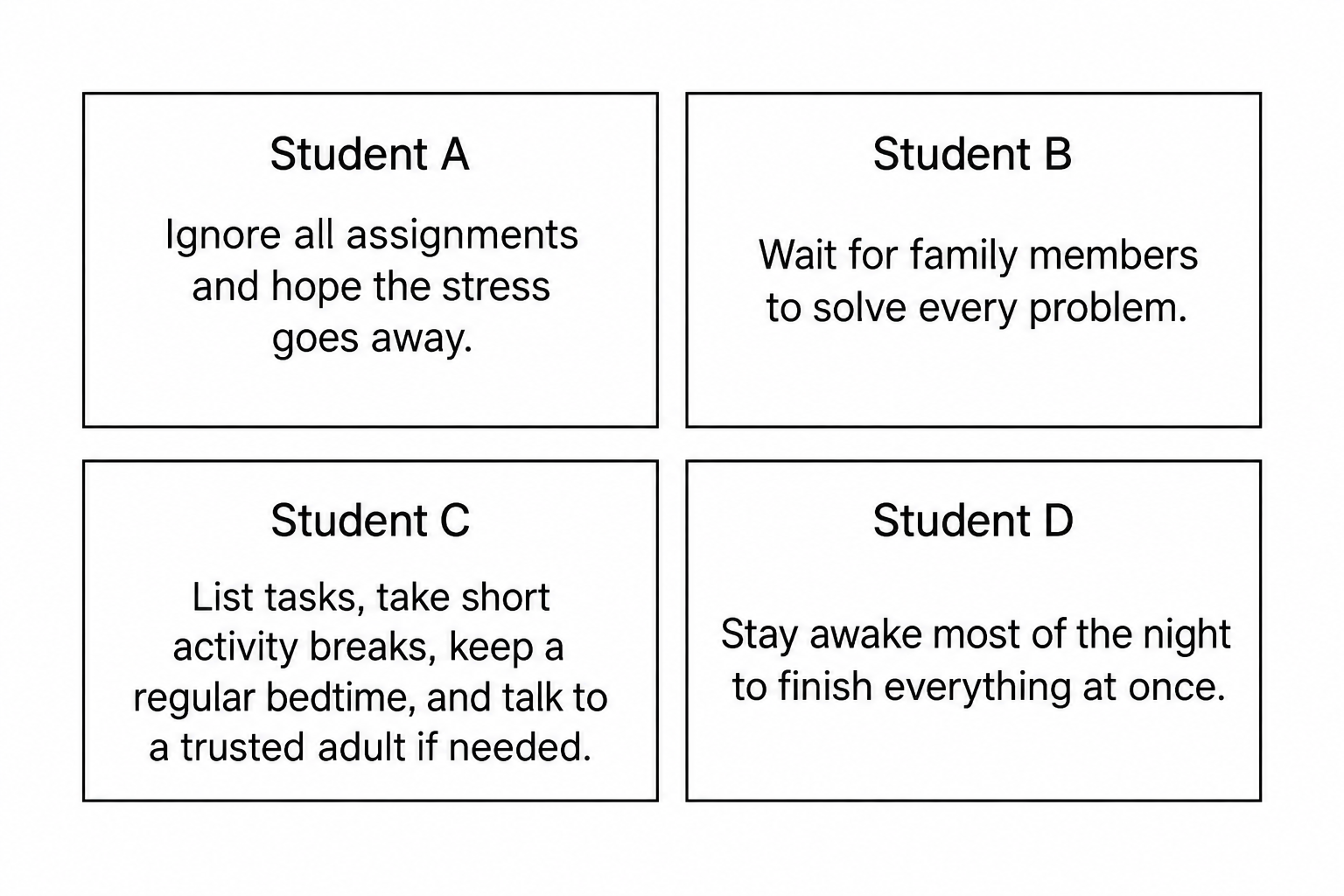
The figure shows four students responding to a stressful week. Which student best demonstrates an understanding of responsibility for personal stress-management behavior?
What this assessment covers
Concepts tested
- Recognizing personal signs of stress
- Importance of planning and scheduling
- Role of self-awareness in stress management
- Seeking support from trusted individuals
- Evaluating stress management techniques
Question Mix
- Medium questions included
Skills you build
- Identifying personal stress indicators
- Developing effective stress management plans
- Practicing self-reflection and awareness
- Communicating needs and seeking help
- Evaluating the effectiveness of stress management strategies