A coastal town is described as having mild winters, based on records collected over 30 years. One winter, the town has two days of snow. A reporter claims that the climate description must now be wrong. Which response best applies the difference between weather and climate?
Options:
Showing question 1 of 10
Q2 QuestionPoints: 1
Choose the correct answer:
A school is choosing a month for an annual outdoor sports event and deciding whether tomorrow's practice should go ahead. It has monthly rainfall averages from 30 years and a detailed forecast for tomorrow. How should the school use these sources?
Options:
Showing question 2 of 10
Q3 QuestionPoints: 1
Choose the correct answer:
During a five-day visit to an island, a student measures rainfall each day and calculates the average daily rainfall. The student labels the result 'the island's climate'. Which change would best address the problem with this label?
Options:
Showing question 3 of 10
Q4 QuestionPoints: 1
Choose the correct answer:
An old harbour diary says, 'Strong winds stopped fishing on three days this week.' A separate archive shows that strong winds occurred most often in winter across 35 years. A museum wants to explain what each source reveals. Which explanation should it use?
Options:
Showing question 4 of 10
Q5 QuestionPoints: 1
Choose the correct answer:
A weather station records warm, calm conditions at sunrise, followed by a sudden temperature drop and strong winds that afternoon. A student writes, 'The climate changed during the day.' Which replacement would make the statement scientifically accurate?
Options:
Showing question 5 of 10
Q6 QuestionPoints: 1
Choose the correct answer:
Two towns have the same average annual rainfall over 30 years. In one town, most rain falls in winter. In the other, rain is spread fairly evenly through the year. A student concludes that their rainfall climates are identical. Which judgement is best?
Options:
Showing question 6 of 10
Q7 QuestionPoints: 1
Choose the correct answer:
A travel guide states that a city's average afternoon temperature in July is 26 °C, using 30 years of records. A visitor therefore expects the temperature to be exactly 26 °C on the afternoon of 12 July. Which advice best corrects the visitor's reasoning?
Options:
Showing question 7 of 10
Q8 QuestionPoints: 1
Choose the correct answer:
A website adds today's observations to a weather-station archive. Its daily report changes, but its description of the area as having 'usually dry summers' remains the same. A reader says that keeping the climate description unchanged is inconsistent. Which explanation best resolves this?
Options:
Showing question 8 of 10
Q9 QuestionPoints: 1
Choose the correct answer:
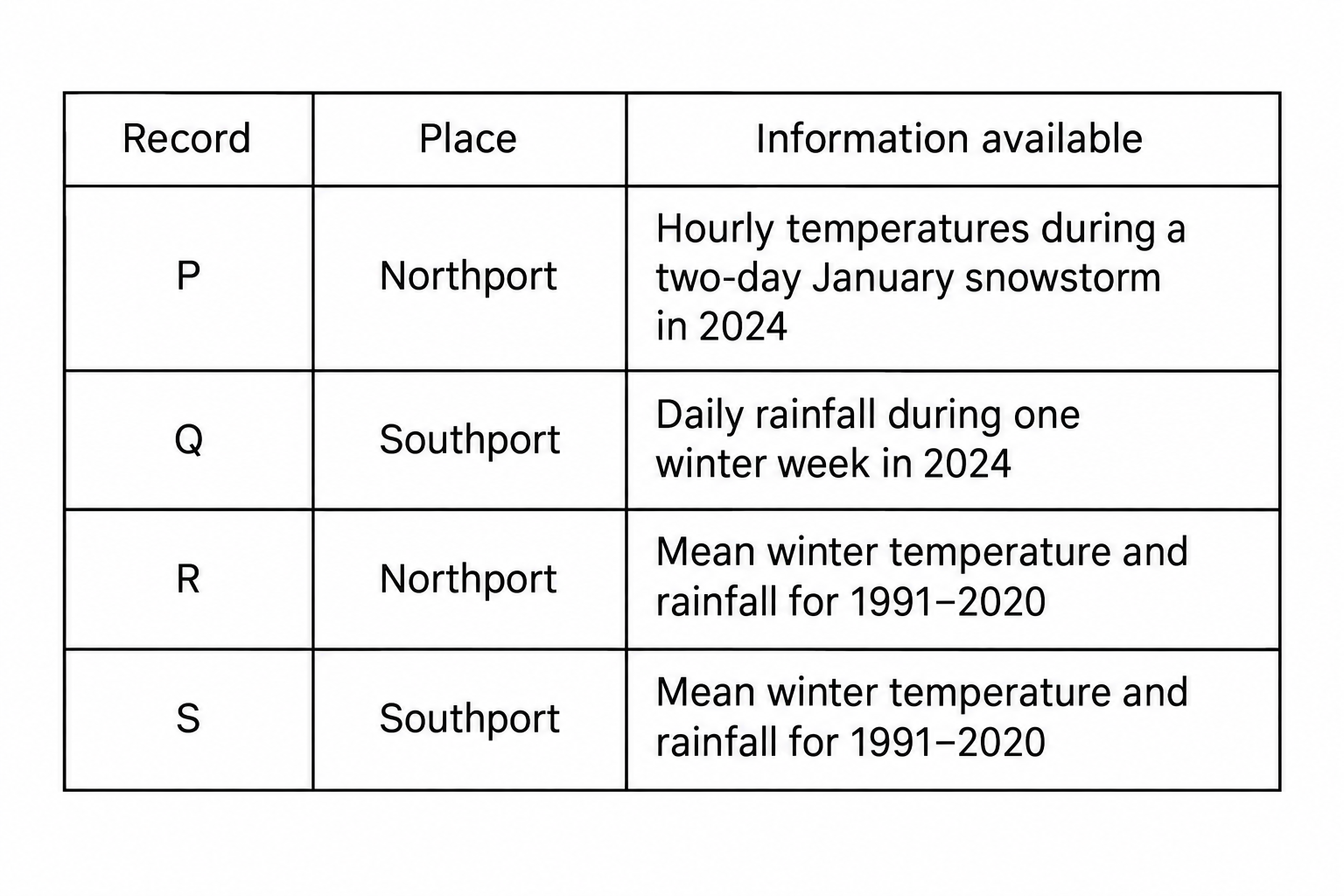
The figure shows four available records. A researcher needs to compare the winter climates of Northport and Southport, rather than their weather during particular events. Which pair provides the most suitable evidence?
Options:
Showing question 9 of 10
Q10 QuestionPoints: 1
Choose the correct answer:
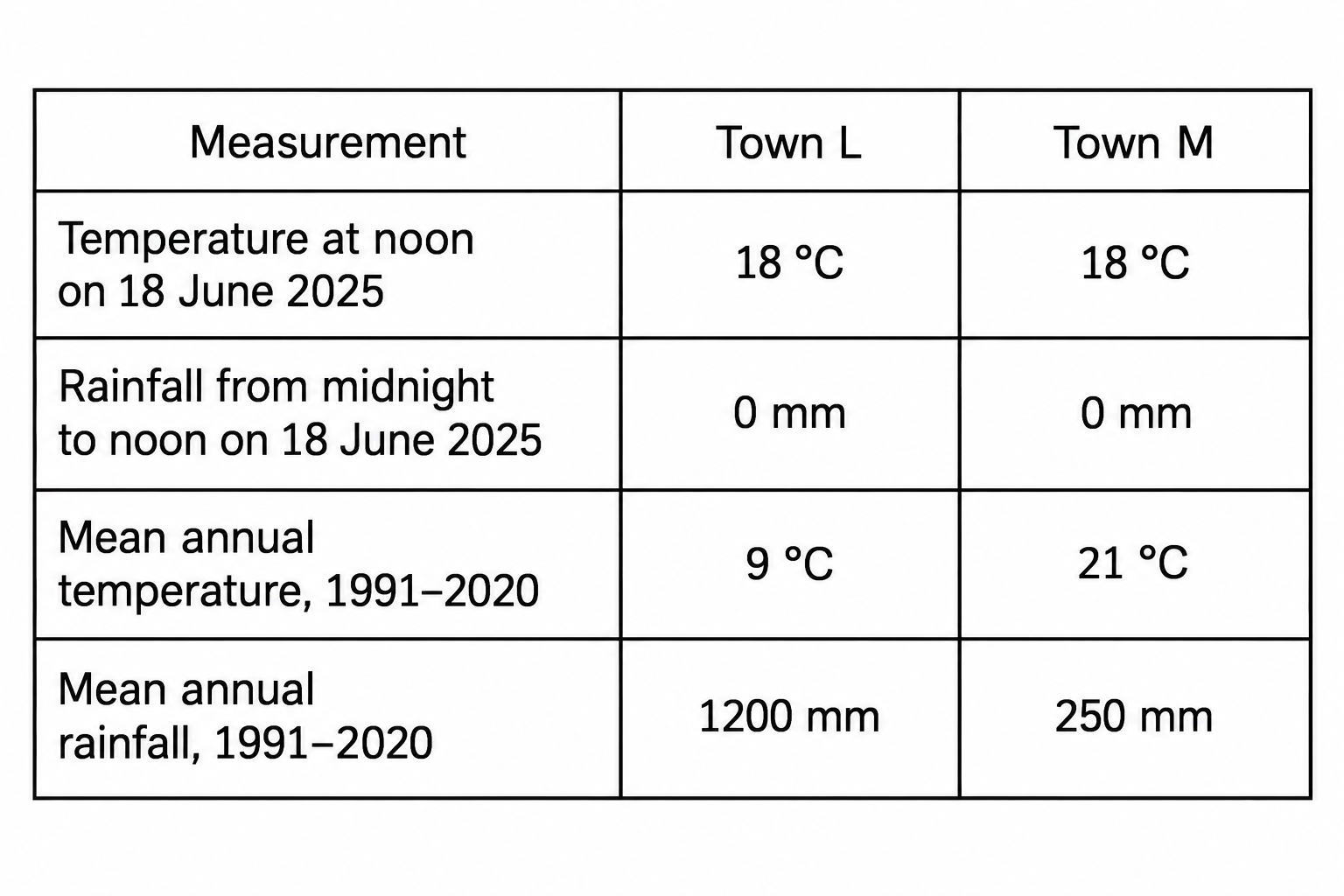
The figure compares observations from two towns. A student says, 'The towns have the same climate because their weather is the same today.' Which conclusion is best supported by the complete figure?