Q1 Question
Points: 1
Choose the correct answer:
Carbon dioxide contains two carbon–oxygen double bonds. Which statement explains why the molecule is linear?
Showing question 1 of 10
Choose the correct answer:
The bond angle in water is smaller than the bond angle in ammonia. Which explanation correctly uses electron-pair repulsion?
Choose the correct answer:
A student suggests that BF₃ is trigonal pyramidal because boron forms three bonds. Which response correctly explains the shape of BF₃?
Choose the correct answer:
Ammonia reacts with a hydrogen ion to form NH₄⁺. How does the arrangement of atoms around nitrogen change?
Choose the correct answer:
An isolated PF₅ molecule has a trigonal bipyramidal shape. Which statement correctly describes its axial and equatorial bonds?
Choose the correct answer:
In SF₆, sulfur has six bonding pairs and no lone pairs. Consider one S–F bond. How many of the other S–F bonds are at 90° to it, and how many are at 180° to it?
Choose the correct answer:
In ethene, H₂C=CH₂, each carbon atom is bonded to two hydrogen atoms and the other carbon atom. Why are the bond angles around each carbon approximately 120°?
Choose the correct answer:
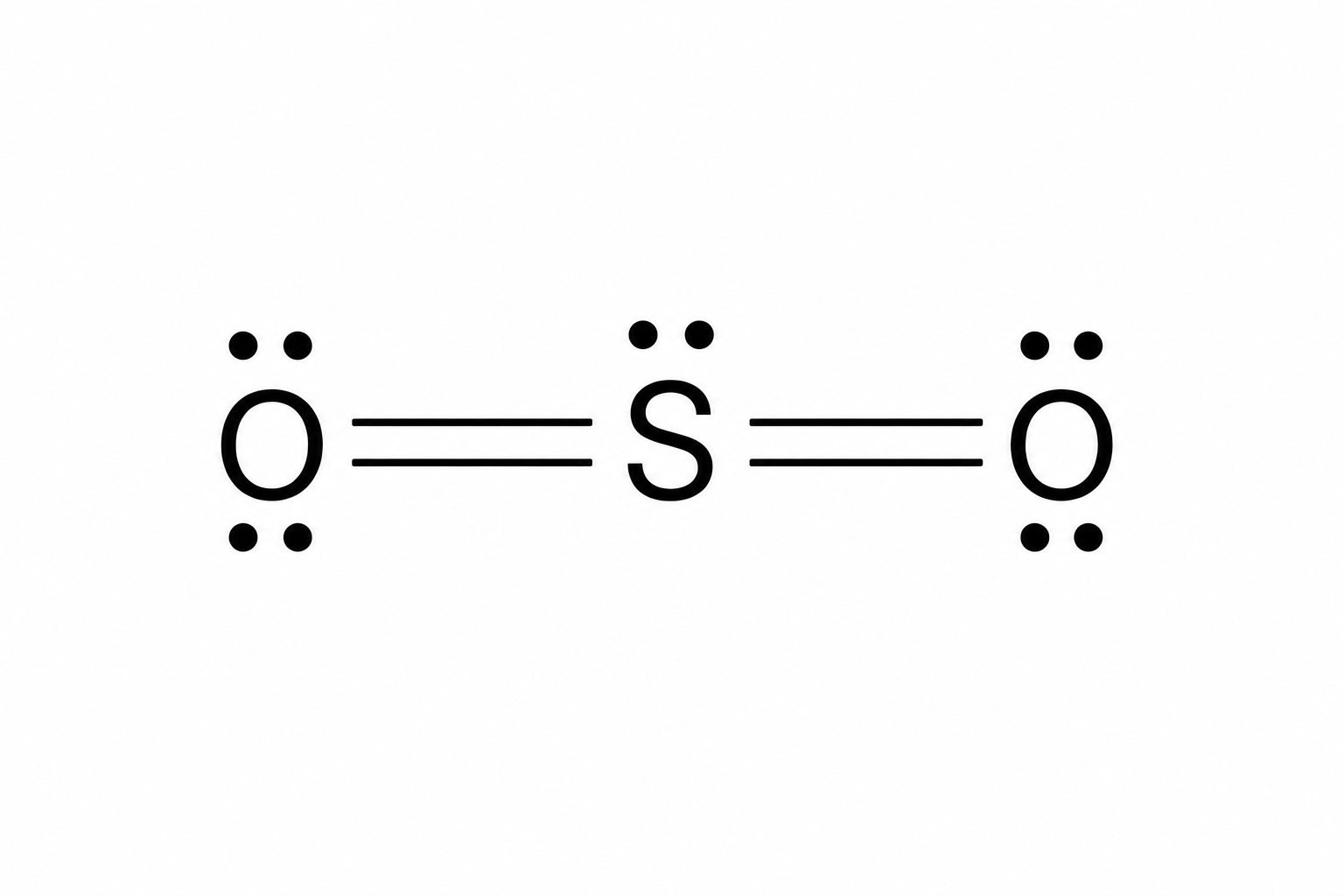
The diagram shows one electron-pair representation of SO₂. The positions on the page do not indicate its molecular shape. Which statement correctly predicts the shape around sulfur?
Choose the correct answer:
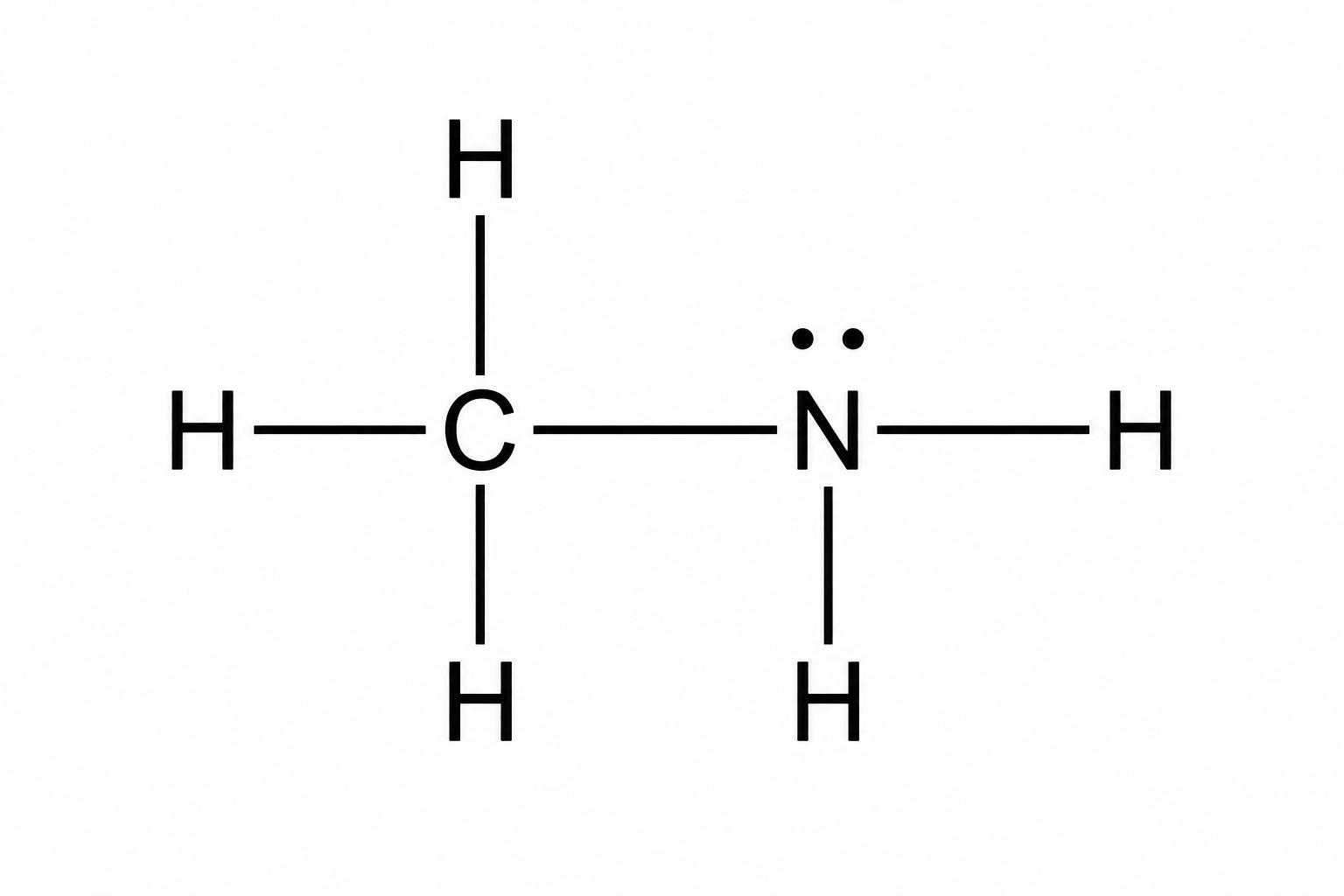
The displayed structure of methylamine is shown, including the lone pair on nitrogen. The bond directions on the page do not represent spatial angles. Which description gives the molecular shape around each labelled central atom?
Choose the correct answer:
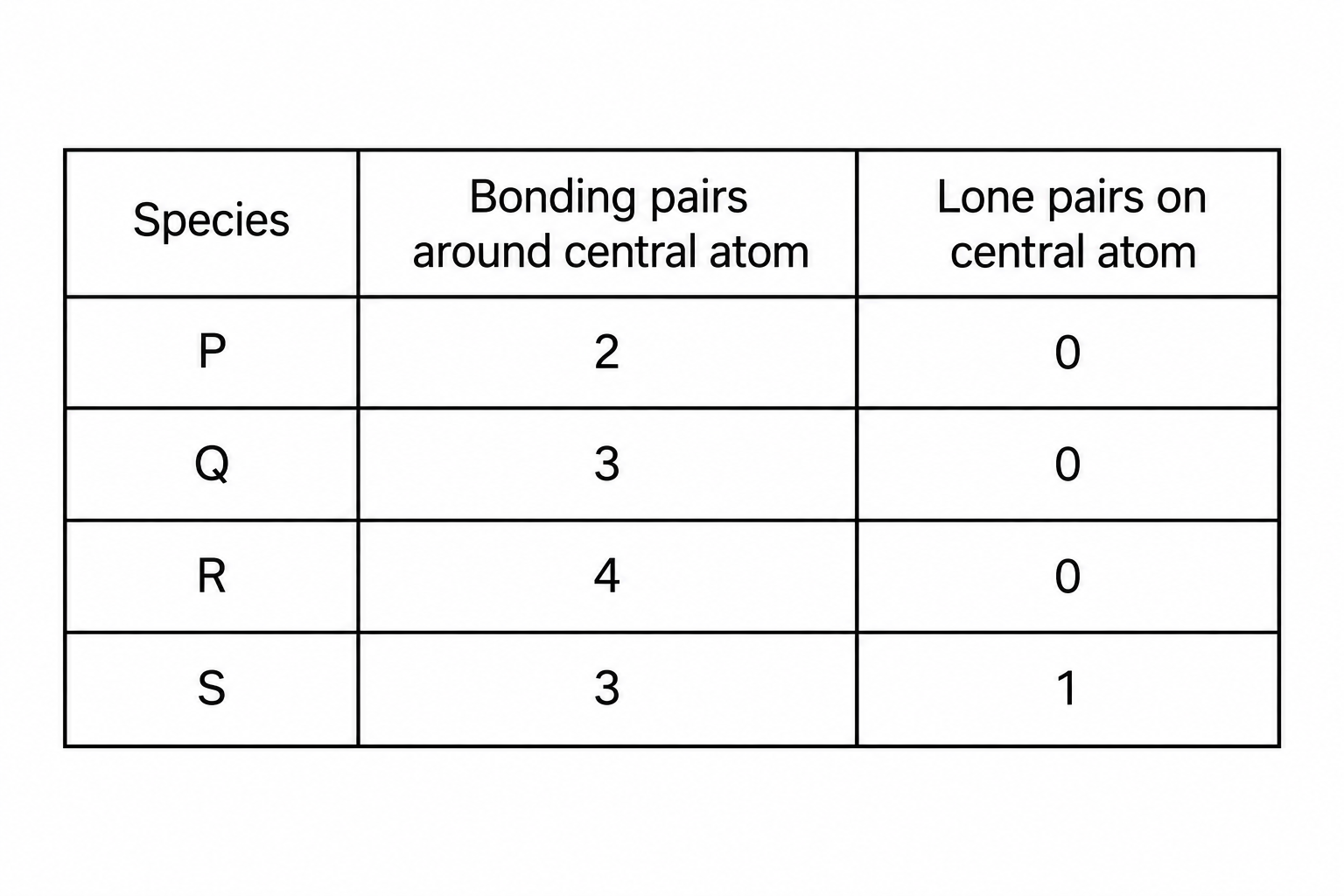
The table describes four species with only single bonds around their central atoms. Which statement correctly compares their electron-pair arrangements and molecular shapes?