Q1 Question
Points: 1
Choose the correct answer:
A sample contains 1 mol of neon atoms. Another sample contains 1 mol of oxygen molecules, O₂. Which comparison is correct?
Showing question 1 of 10
Choose the correct answer:
A student writes, ‘This sample contains one mole of hydrogen particles.’ Why should the student specify whether the particles are hydrogen atoms or hydrogen molecules?
Choose the correct answer:
A student claims that 1 mol of Mg²⁺ ions contains twice as many ions as 1 mol of Na⁺ ions because each magnesium ion has twice the positive charge. Which response is correct?
Choose the correct answer:
A sample containing 0.50 mol of N₂ molecules is compared with a sample containing 1.0 mol of separate nitrogen atoms. Which statement correctly compares the samples?
Choose the correct answer:
A sealed container holds 1 mol of liquid water. All the water evaporates without any molecules escaping or reacting. What happens to the amount of water molecules?
Choose the correct answer:
A sodium chloride sample contains 1 mol of Na⁺ ions and 1 mol of Cl⁻ ions. Which statement correctly describes the total number of ions in the sample?
Choose the correct answer:
A student argues, ‘One mole of any substance must have the same mass because it contains the same number of particles.’ Which explanation identifies the error?
Choose the correct answer:
A non-reacting mixture contains 0.25 mol of helium atoms and 0.75 mol of neon atoms. Which statement describes the particles in the mixture?
Choose the correct answer:
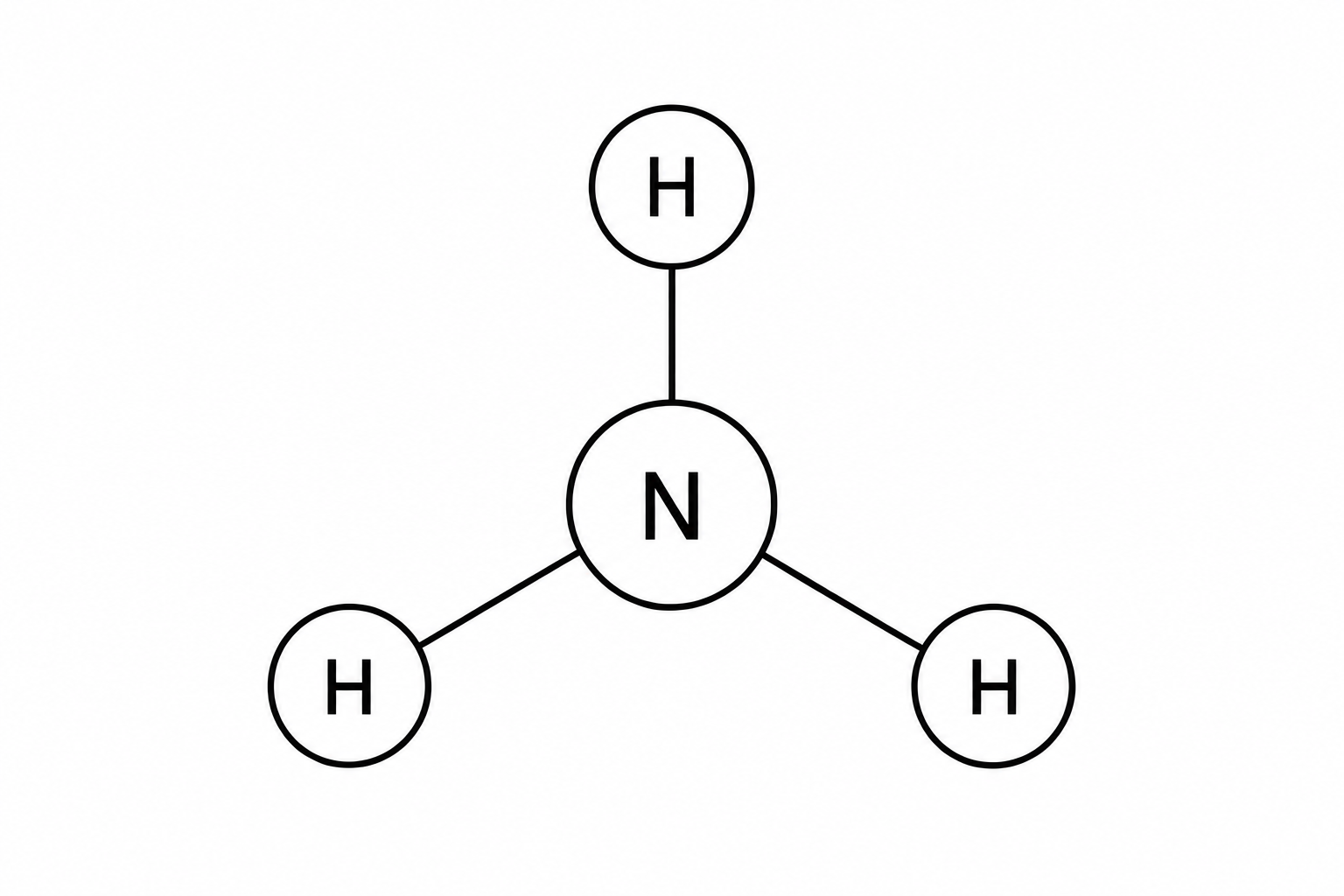
The diagram shows one molecule of a substance. A sample contains 6.02 × 10²³ molecules of this substance. Which statement correctly describes the sample?
Choose the correct answer:
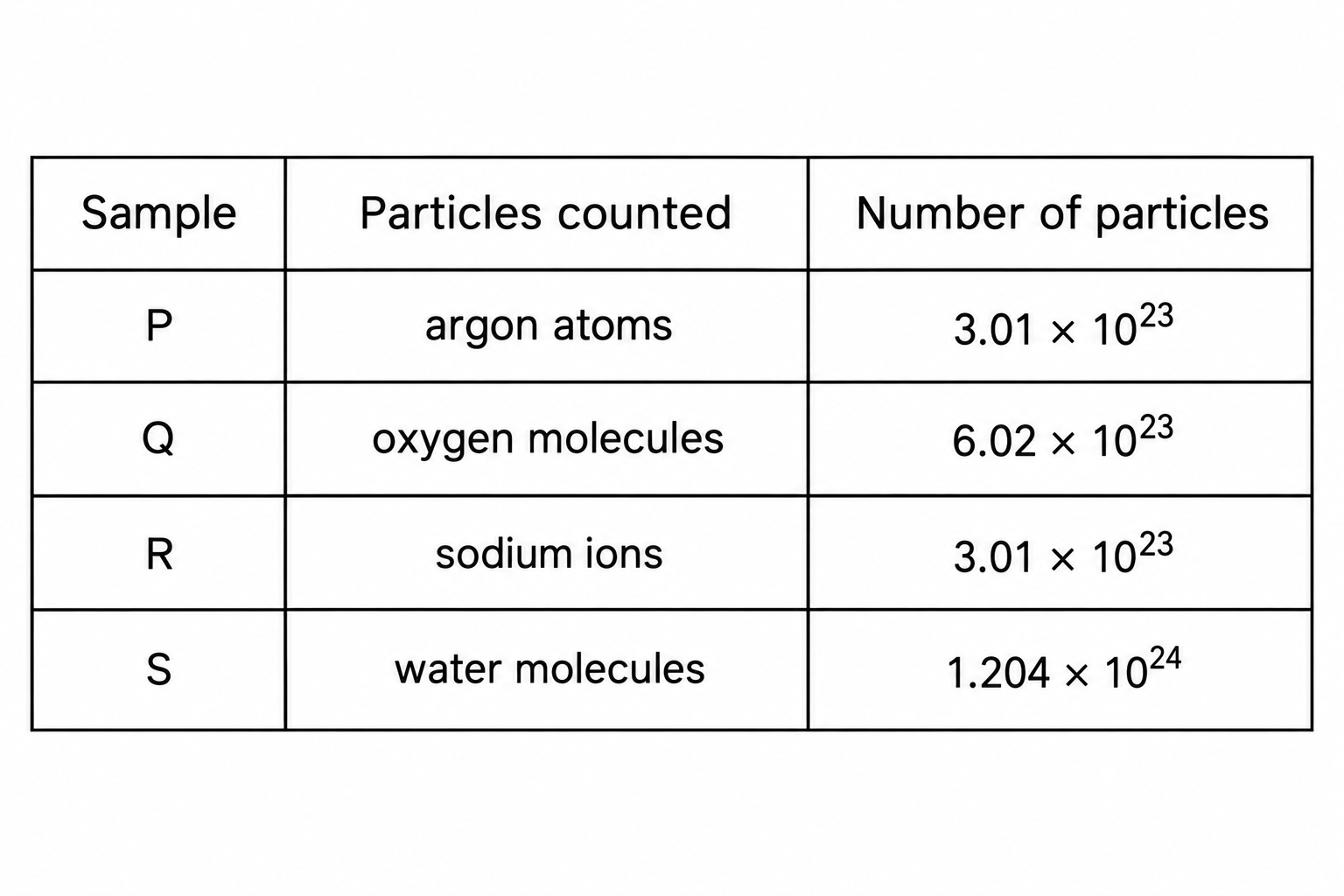
The table gives the numbers and types of particles in four samples. Which two samples contain the same amount, in moles, of the particles specified in the table?