Q1 Question
Points: 1
Choose the correct answer:
A calcium atom has the electron arrangement 2,8,8,2. Which change forms a calcium ion with a full outer electron shell?
Showing question 1 of 10
Choose the correct answer:
A fluorine atom gains an electron to form a fluoride ion. Why is the particle formed an anion?
Choose the correct answer:
A sodium atom contains 11 protons, 12 neutrons and 11 electrons. It forms a sodium ion, Na⁺. Which description explains why the ion is still sodium?
Choose the correct answer:
Four particles have the proton and electron numbers given below. Which particle is a cation?
Choose the correct answer:
An atom X forms X³⁺ and an atom Y forms Y²⁻. Which statement correctly describes the formation of both ions from their atoms?
Choose the correct answer:
A neon atom and a sodium ion, Na⁺, each have the electron arrangement 2,8. Why is the sodium particle positively charged while the neon atom is neutral?
Choose the correct answer:
One magnesium atom loses two electrons when it forms Mg²⁺. Each chlorine atom gains one electron when it forms Cl⁻. If all the electrons lost by this magnesium atom are gained by chlorine atoms, what is formed?
Choose the correct answer:
A student says, ‘An aluminium atom becomes Al³⁺ because each of its three outer electrons changes from a negative charge to a positive charge.’ Which correction is accurate?
Choose the correct answer:
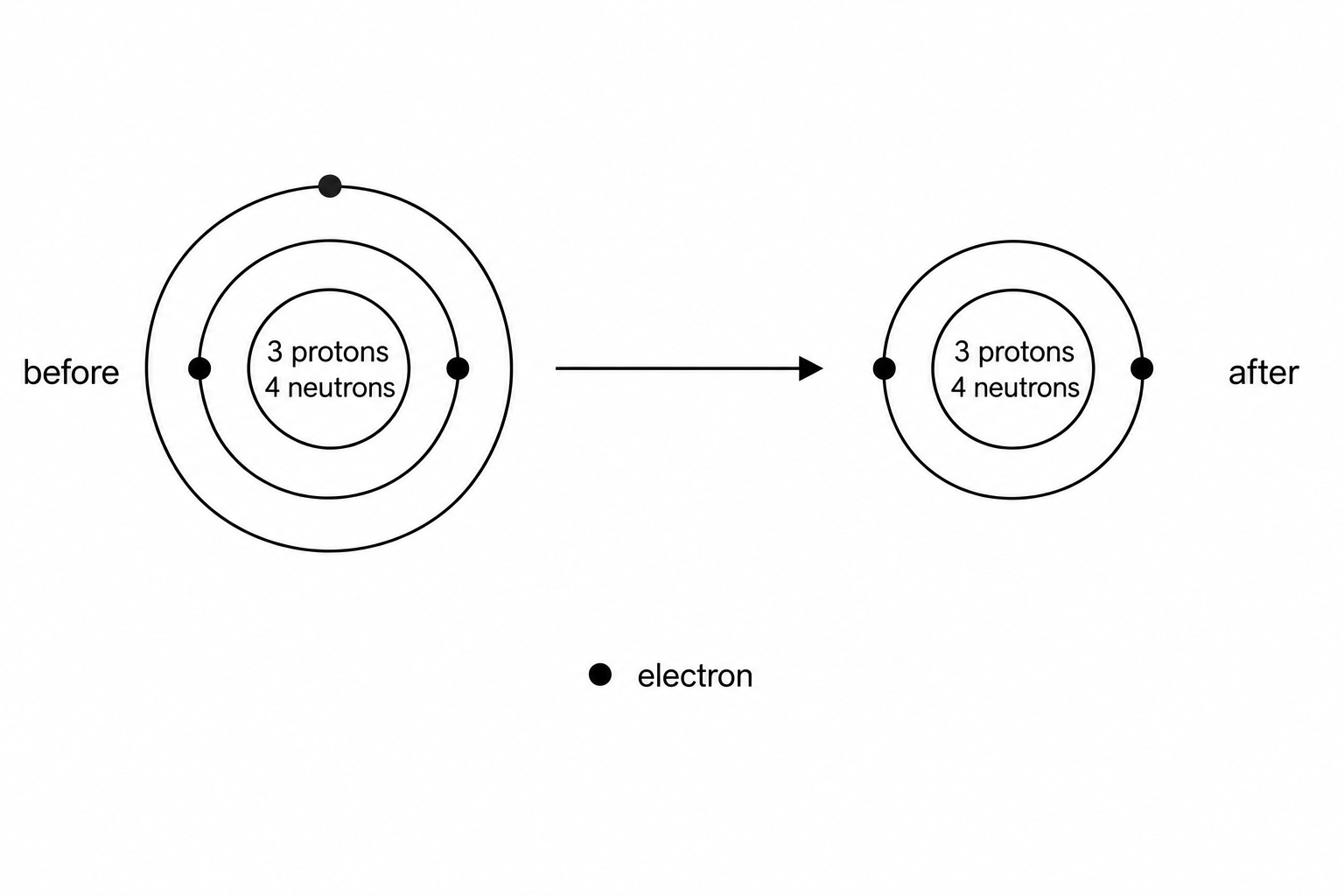
The diagram shows the particles in an atom before and after an ion forms. Which statement explains the change shown?
Choose the correct answer:
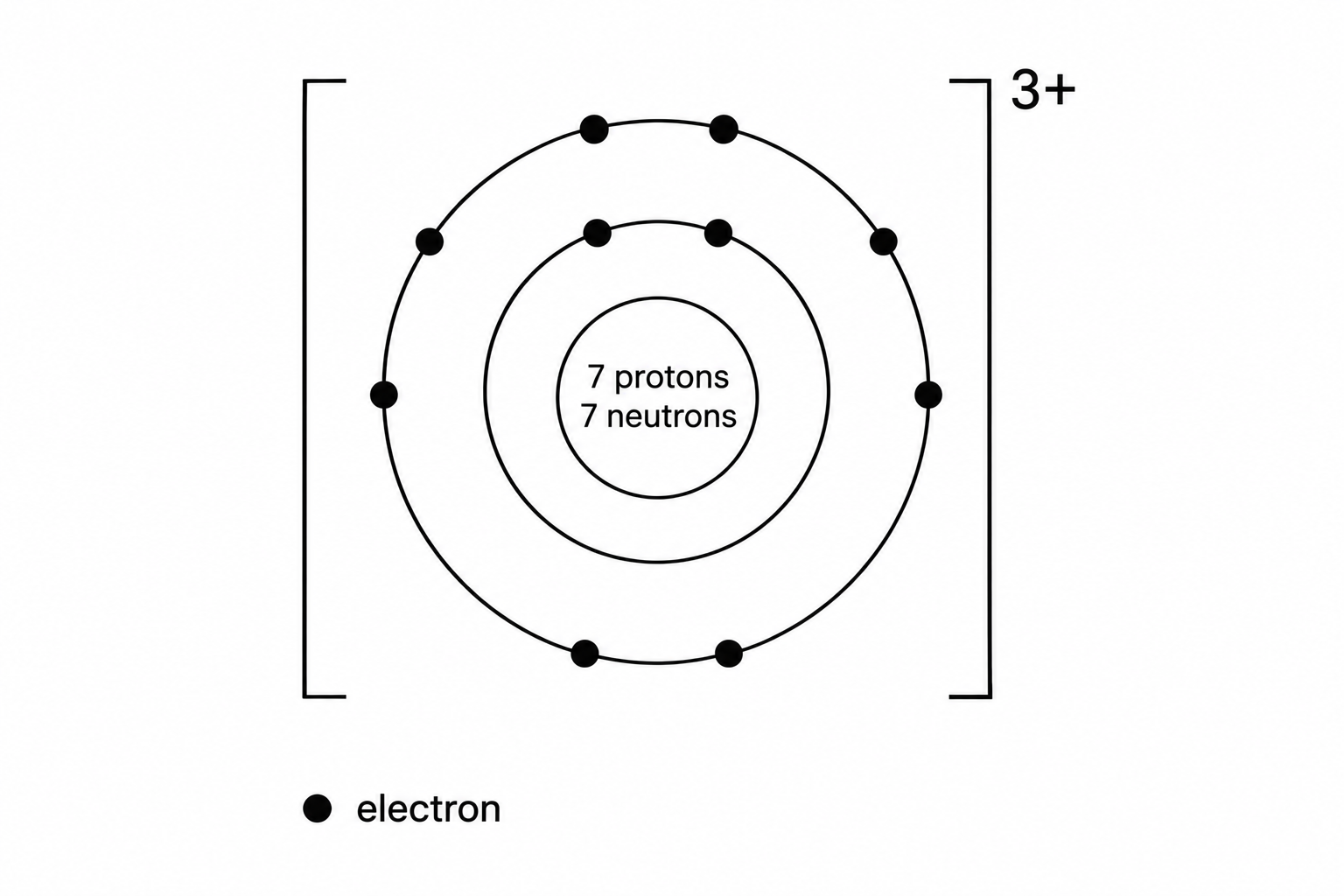
A student draws the model shown for an ion formed from a nitrogen atom. The electron arrangement is correct, but the charge label is incorrect. Which correction should be made?