A pedigree shows that two unaffected parents have an affected daughter and an unaffected son. The characteristic is autosomal recessive. The unaffected son later has a child with an affected woman. What is the probability that this child is affected?
Options:
Showing question 1 of 10
Q2 QuestionPoints: 1
Choose the correct answer:
An X-linked recessive characteristic appears in a pedigree. An affected man has an unaffected daughter, P. P and an unaffected man have an unaffected daughter, Q. Q has a child with an affected man. What is the probability that this child is an affected daughter? Assume equal probabilities of male and female births.
Options:
Showing question 2 of 10
Q3 QuestionPoints: 1
Choose the correct answer:
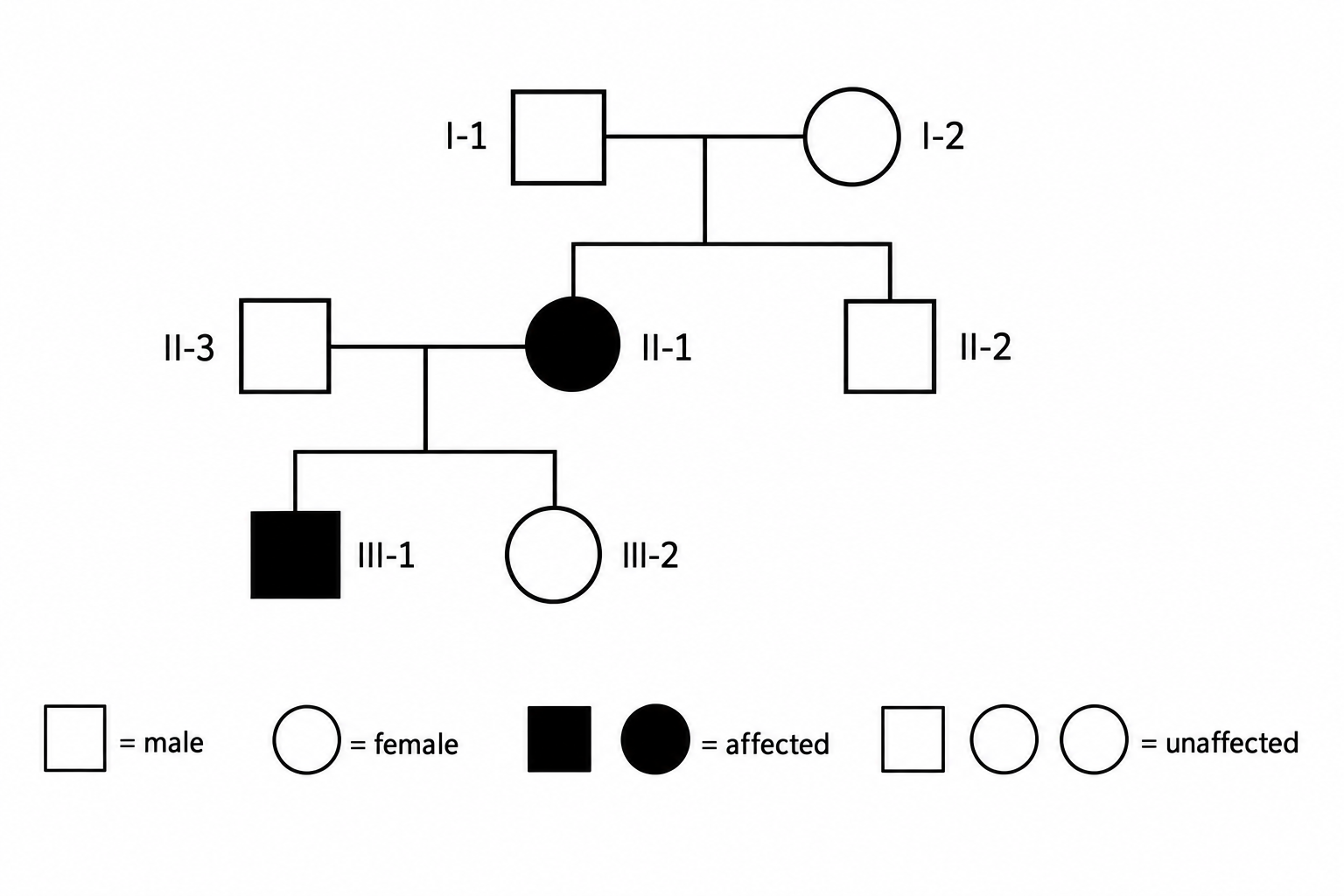
A characteristic is autosomal dominant and is always expressed when its allele is present. An affected grandmother and an unaffected grandfather have an affected daughter and an unaffected son. The affected daughter and an unaffected man then have an affected son. Which statement correctly identifies all the affected relatives whose genotypes can be determined from this pedigree?
Options:
Showing question 3 of 10
Q4 QuestionPoints: 1
Choose the correct answer:
A pedigree records an X-linked dominant characteristic that is always expressed when its allele is present. An affected father and an unaffected mother have an affected daughter. This daughter has children with an affected man. What proportion of their children is expected to be affected? Assume equal probabilities of male and female births.
Options:
Showing question 4 of 10
Q5 QuestionPoints: 1
Choose the correct answer:
In a pedigree, two affected parents have an unaffected son and an affected son. The affected son later has an unaffected daughter with an unaffected woman. Which inheritance pattern is consistent with both generations? Assume one gene with two alleles, complete expression of the characteristic and no new mutations.
Options:
Showing question 5 of 10
Q6 QuestionPoints: 1
Choose the correct answer:
Two unrelated families have the same autosomal recessive characteristic. In one pedigree, an unaffected woman has an affected father. In the other, an unaffected man has an affected mother. The unaffected woman and man form a couple. What is the probability that their first child is affected and their second child is unaffected?
Options:
Showing question 6 of 10
Q7 QuestionPoints: 1
Choose the correct answer:
A pedigree shows an X-linked recessive characteristic. An affected woman and an unaffected man have a son, P. P has children with an unaffected woman whose mother is affected and whose father is unaffected. One of their children is an unaffected daughter, Q. Q later has children with an unaffected man. Which prediction is correct?
Options:
Showing question 7 of 10
Q8 QuestionPoints: 1
Choose the correct answer:
The pedigree shows an autosomal recessive characteristic. Which individual could be either homozygous dominant or heterozygous?
Options:
Showing question 8 of 10
Q9 QuestionPoints: 1
Choose the correct answer:
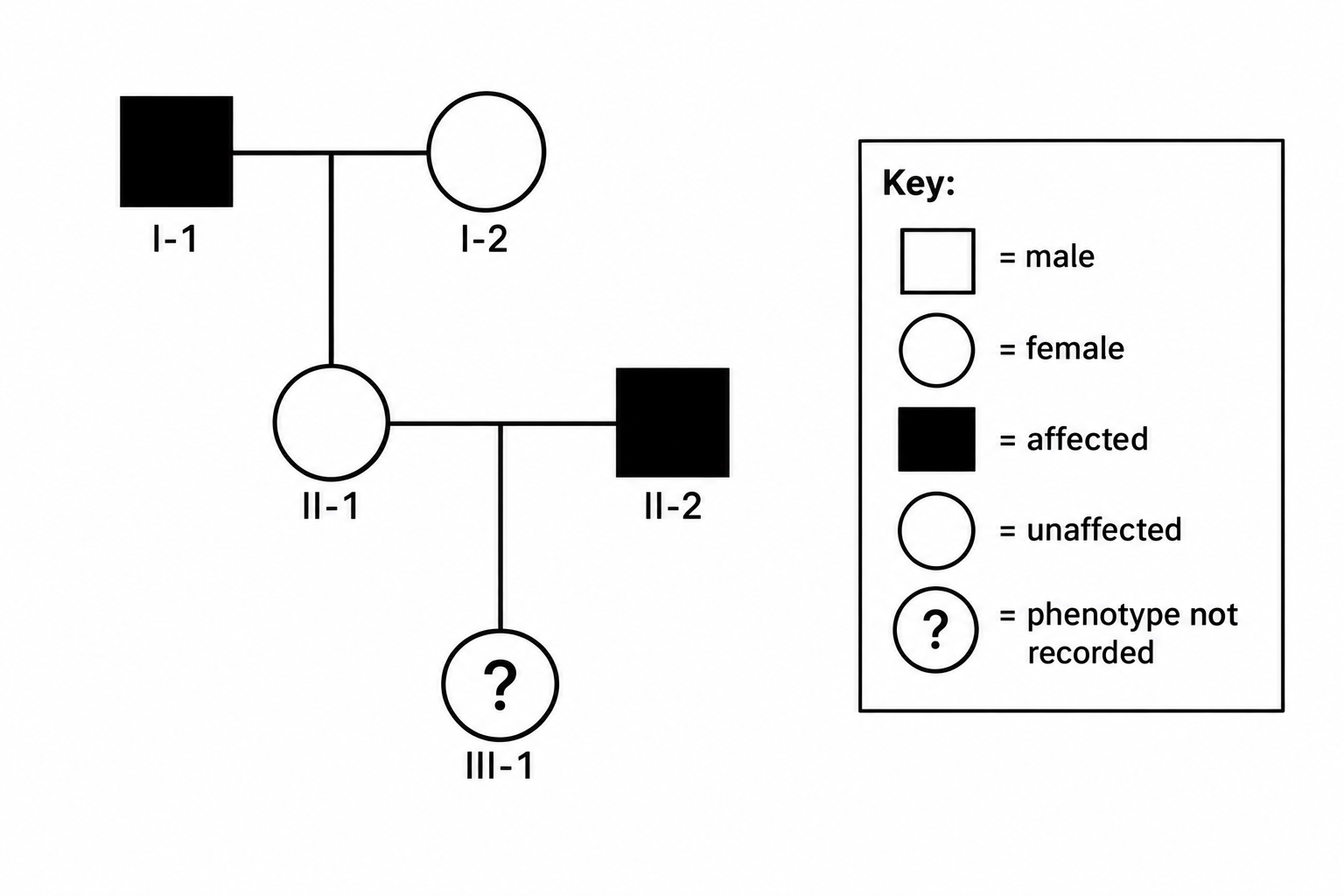
The pedigree shows an X-linked recessive characteristic. The phenotype of daughter III-1 has not been recorded, as indicated by the question mark. If III-1 has a son with an unaffected man, what is the probability that this son is affected?
Options:
Showing question 9 of 10
Q10 QuestionPoints: 1
Choose the correct answer:
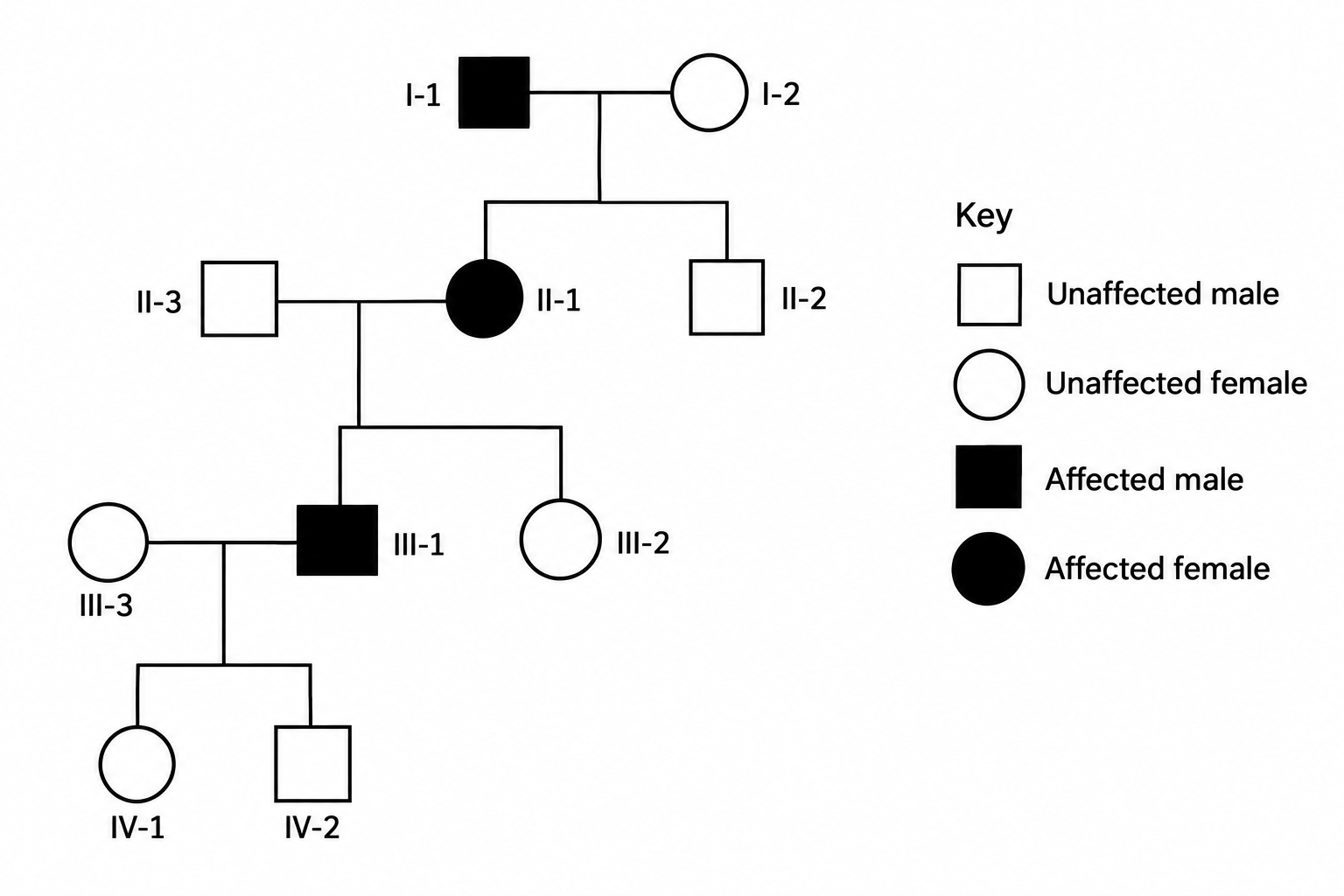
This pedigree was drawn to show an X-linked dominant characteristic that is always expressed when its allele is present. Exactly one individual's affected or unaffected status was recorded incorrectly. There are no new mutations. Which individual's status must be changed to make the whole pedigree consistent with this inheritance pattern?