A skeletal muscle contains muscle tissue, connective tissue, nerves, and blood vessels. Why is the entire muscle considered an organ rather than a single tissue?
Options:
Showing question 1 of 10
Q2 QuestionPoints: 1
Choose the correct answer:
After an injury, the motor nerve leading to a person's hand muscle no longer carries signals. The muscle and its blood supply remain intact. Why might the person be unable to move that muscle voluntarily?
Options:
Showing question 2 of 10
Q3 QuestionPoints: 1
Choose the correct answer:
The diaphragm is a muscle beneath the lungs. When it contracts, the chest cavity becomes larger and air moves into the lungs. Which explanation best connects this muscular action to the needs of other body cells?
Options:
Showing question 3 of 10
Q4 QuestionPoints: 1
Choose the correct answer:
The wall of the small intestine contains smooth muscle as well as tissue that absorbs digested nutrients. How do these tissues work together to support the body's other organs?
Options:
Showing question 4 of 10
Q5 QuestionPoints: 1
Choose the correct answer:
A disease weakens the contraction of cardiac muscle in the heart. Which explanation best describes how this could reduce the performance of otherwise healthy leg muscles during exercise?
Options:
Showing question 5 of 10
Q6 QuestionPoints: 1
Choose the correct answer:
When a person becomes cold, the nervous system can trigger shivering, which consists of repeated skeletal muscle contractions. How does this interaction help the body?
Options:
Showing question 6 of 10
Q7 QuestionPoints: 1
Choose the correct answer:
An athlete tears a tendon connecting a calf muscle to the heel bone. The muscle can still contract, but the athlete has difficulty raising the heel. Which explanation best accounts for this result?
Options:
Showing question 7 of 10
Q8 QuestionPoints: 1
Choose the correct answer:
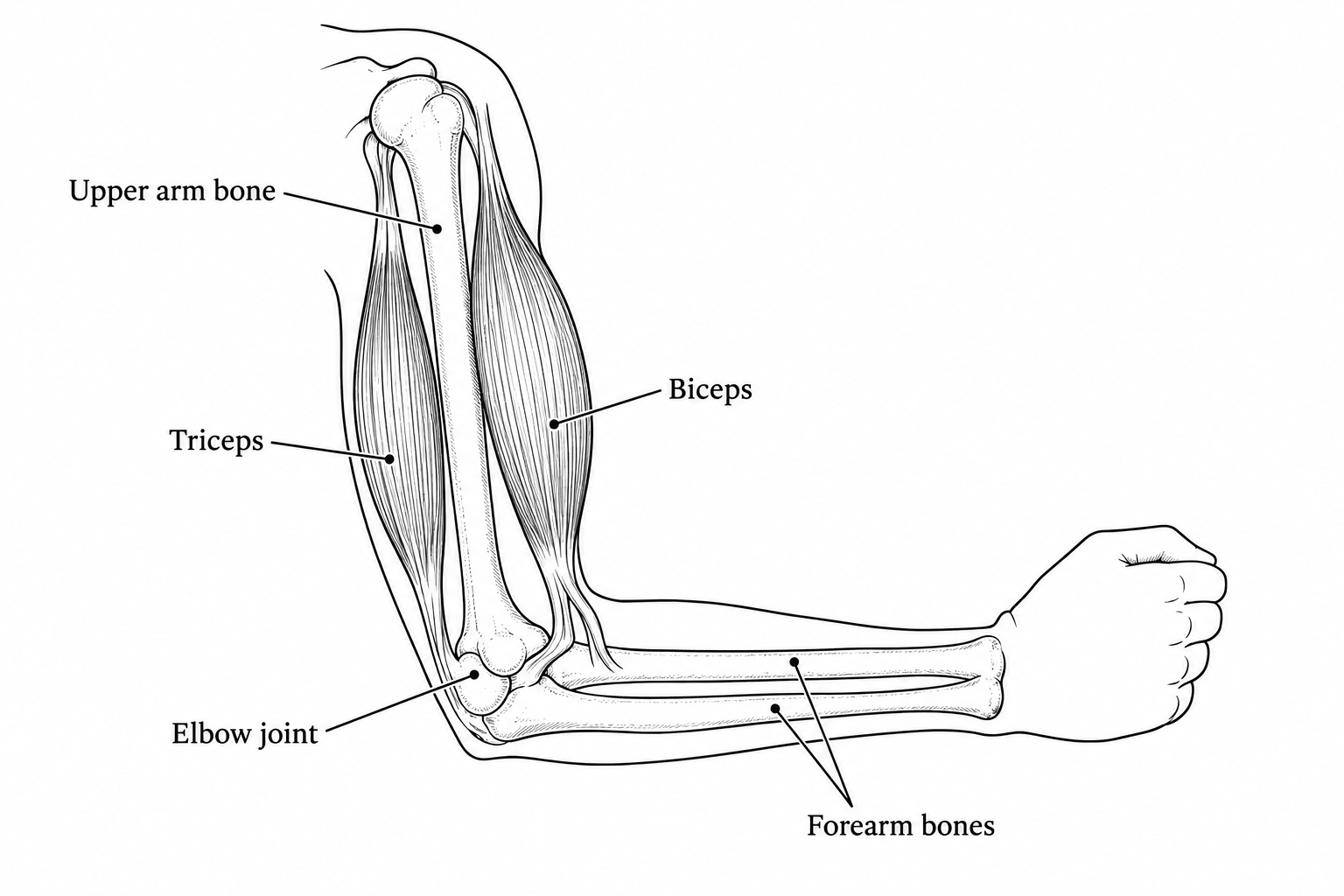
The diagram shows two muscles attached across the elbow joint. Why does bending and then straightening the elbow require coordinated activity of both muscles?
Options:
Showing question 8 of 10
Q9 QuestionPoints: 1
Choose the correct answer:
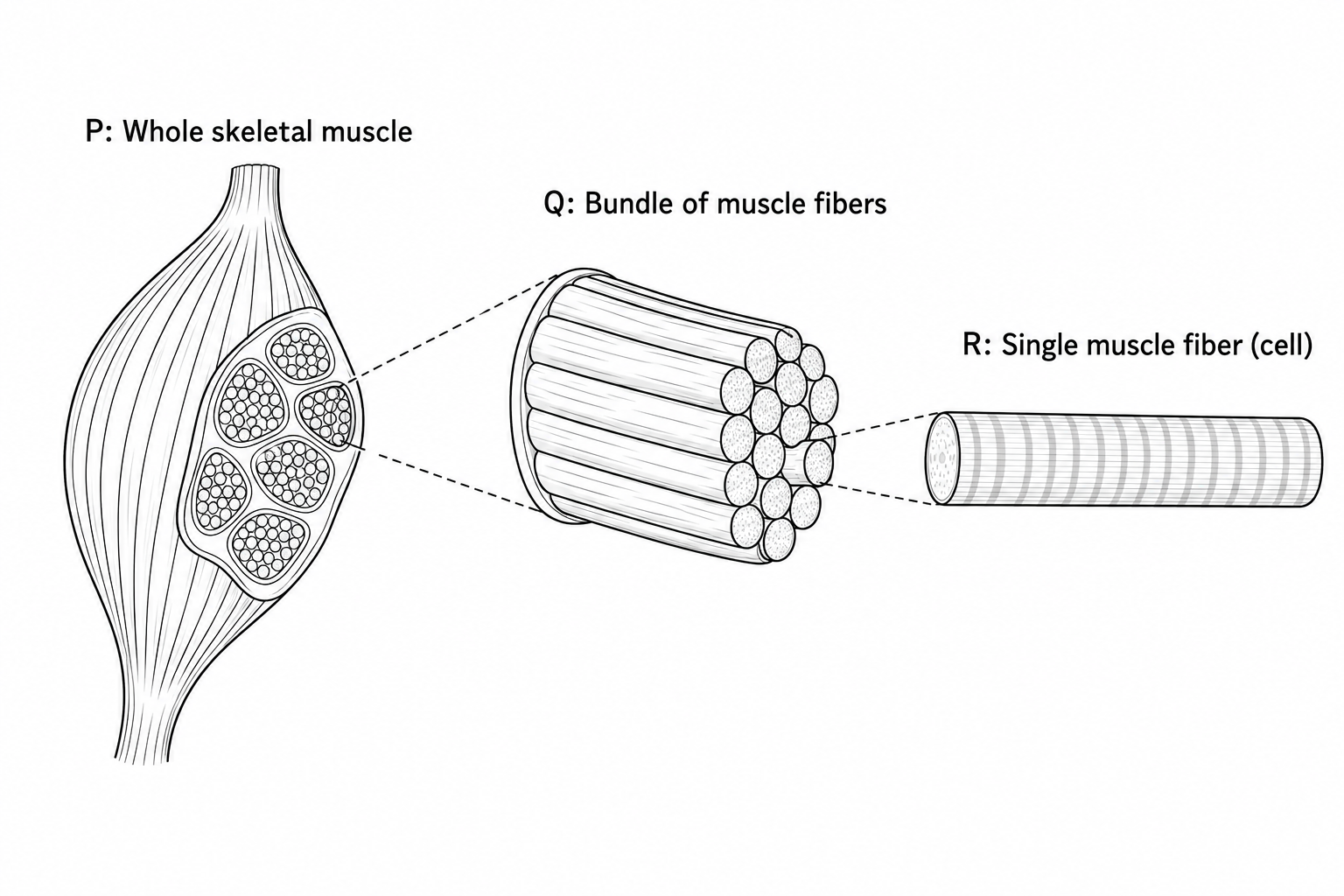
The diagram shows structures within a skeletal muscle at increasing magnification. Which statement best explains how the organization shown supports movement of the whole muscle?
Options:
Showing question 9 of 10
Q10 QuestionPoints: 1
Choose the correct answer:
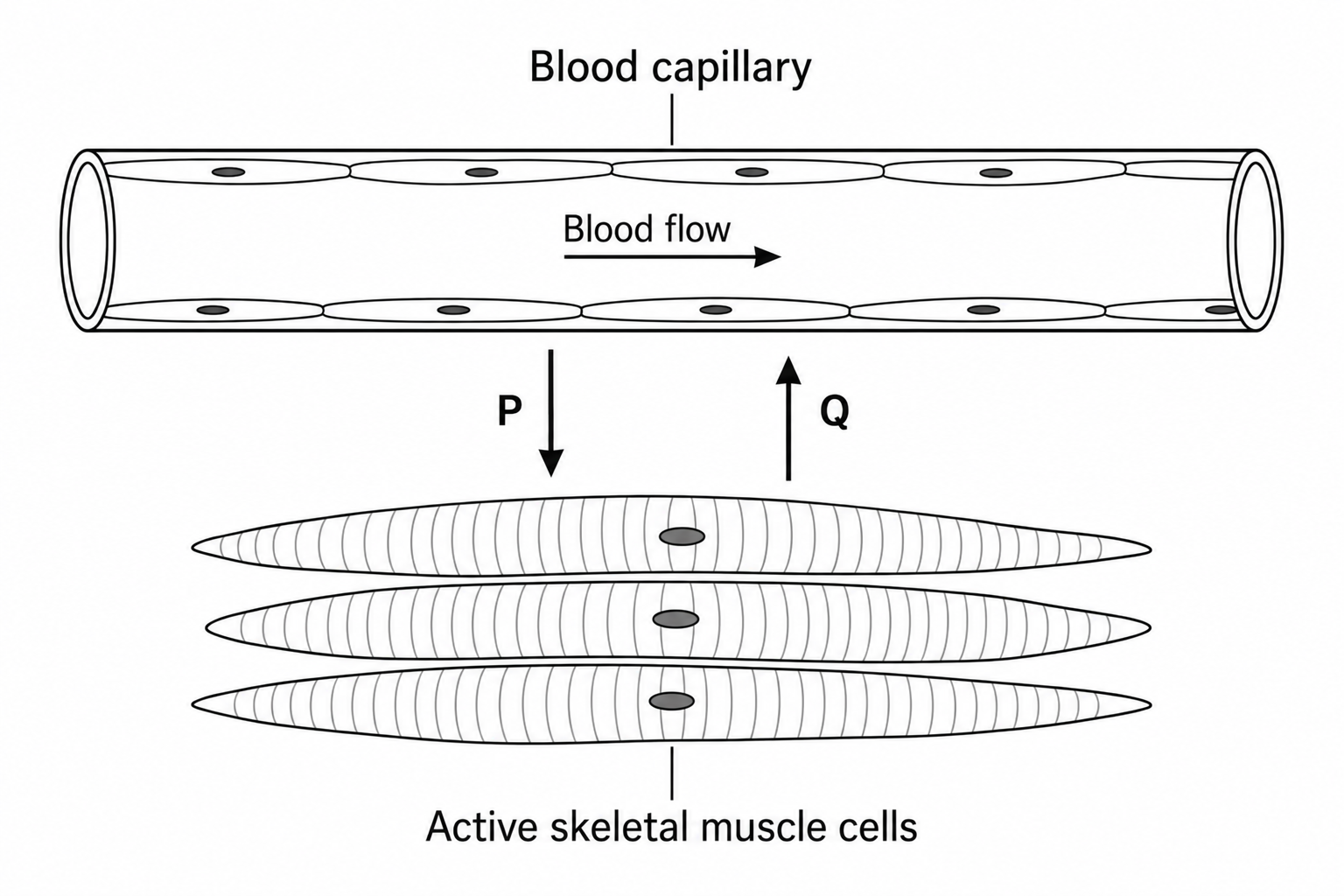
The diagram models exchange between a blood capillary and active skeletal muscle cells. Arrow P shows materials moving toward the muscle cells, and arrow Q shows a material moving toward the blood. Which explanation best matches these exchanges?