A river divides a population of flightless beetles. After many generations, beetles on opposite banks differ in their courtship chemicals. The river later changes course, bringing the populations together. Individuals survive equally well in both habitats, but females usually reject males from the other population. Which explanation best accounts for the persistence of two genetically distinct populations after contact?
Options:
Showing question 1 of 10
Q2 QuestionPoints: 1
Choose the correct answer:
Two groups of fruit flies occupy the same orchard. One group feeds and mates on an early-fruiting host; the other feeds and mates on a late-fruiting host. Their adult emergence periods overlap very little. Researchers suggest that host use and emergence time are jointly reducing gene flow. Which experimental outcome would most strongly support this explanation rather than an inability of the groups to produce fertile offspring?
Options:
Showing question 2 of 10
Q3 QuestionPoints: 1
Choose the correct answer:
Two fish forms live and breed together in a lake. Females choose males using differences in colour. Under clear-water conditions, mating between forms is rare, although their hybrids are viable and fertile. Suspended sediment then makes the male colours difficult to distinguish, without changing survival or breeding locations. If this condition persists, which outcome is most likely?
Options:
Showing question 3 of 10
Q4 QuestionPoints: 1
Choose the correct answer:
A grass population extends across adjacent metal-contaminated and uncontaminated soils. Wind carries pollen freely across the boundary. Metal-tolerant plants survive best on contaminated soil, while non-tolerant plants produce more seeds on uncontaminated soil. A heritable change that advances flowering appears among the metal-tolerant plants. Which condition would allow this change to promote speciation despite continued pollen dispersal?
Options:
Showing question 4 of 10
Q5 QuestionPoints: 1
Choose the correct answer:
A small number of lizards colonise an island from a mainland population. Sea conditions prevent further movement between them. Many generations later, researchers find that island and mainland lizards produce fertile offspring when paired without a choice, but almost always choose partners from their own population when given a choice. Which conclusion best applies these findings to speciation?
Options:
Showing question 5 of 10
Q6 QuestionPoints: 1
Choose the correct answer:
In a freely interbreeding moth population, a heritable variant causes some females to release a different mating pheromone. All moths use the same habitat and breeding season. Initially, few males respond to the new pheromone. Which additional heritable change would most directly allow the variant group to persist and develop behavioural isolation?
Options:
Showing question 6 of 10
Q7 QuestionPoints: 1
Choose the correct answer:
A road has separated two woodland rodent populations for many generations. Their allele frequencies now differ, but experimental encounters show random mating between populations and fully fertile offspring. A wildlife bridge is built, and many rodents cross and reproduce on either side. Assuming no strong differences in selection between the woodlands, what is the most likely effect on the speciation process?
Options:
Showing question 7 of 10
Q8 QuestionPoints: 1
Choose the correct answer:
Two flower-scent forms of a plant grow intermixed and flower at the same time. Bees usually visit one scent form repeatedly before returning to their nests. Pollen transferred by hand between forms produces as many fertile offspring as pollen transferred within forms. A new bee species that switches frequently between scent forms becomes abundant. Which prediction best follows?
Options:
Showing question 8 of 10
Q9 QuestionPoints: 1
Choose the correct answer:
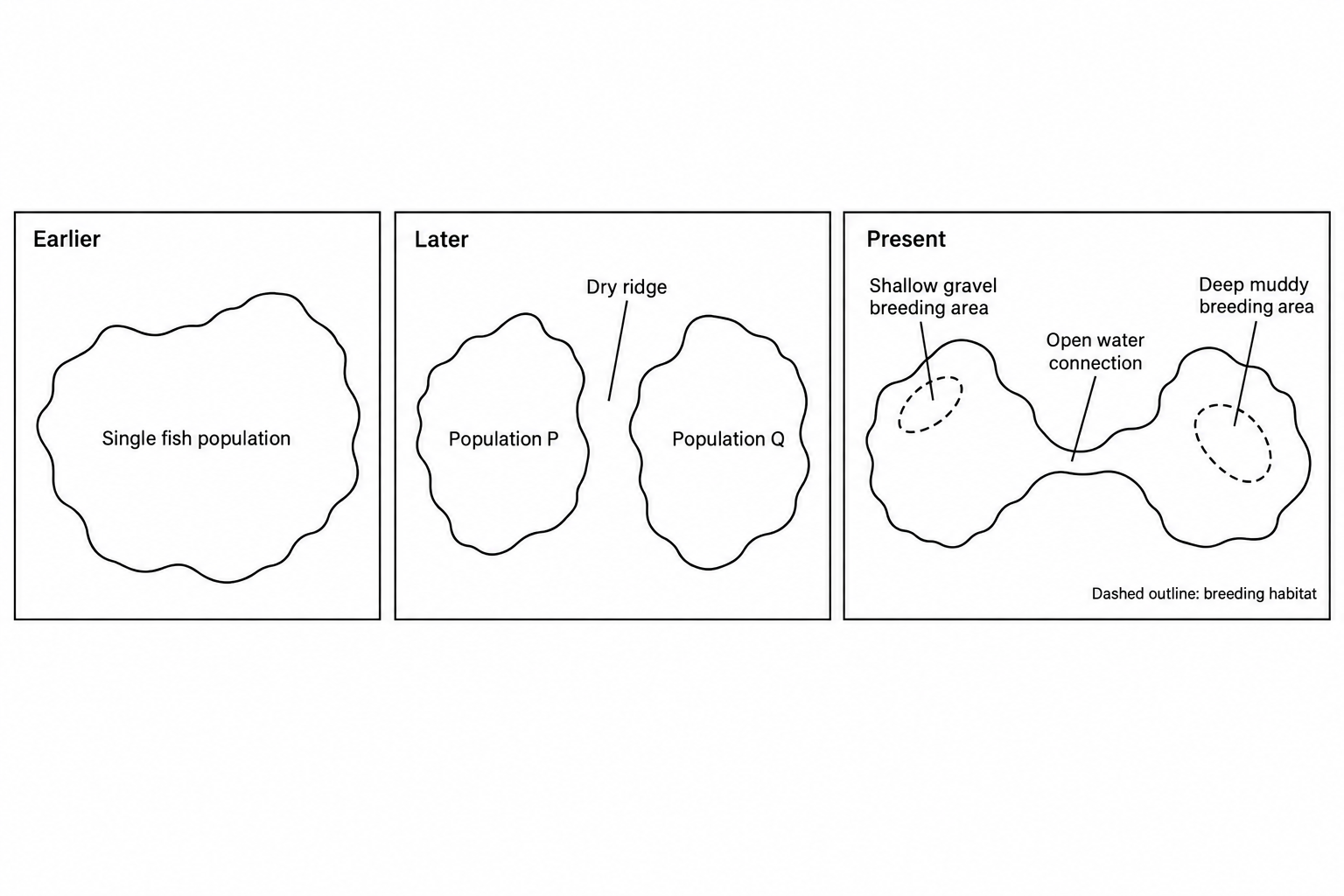
The maps show three stages in the history of a freshwater fish population. Fish cannot cross dry land. At the present stage, fish descended from population P breed only in shallow gravel areas, while fish descended from population Q breed only in deep muddy areas. Adults of both groups feed throughout the connected lake. Which explanation best accounts for the origin and present maintenance of their genetic separation?
Options:
Showing question 9 of 10
Q10 QuestionPoints: 1
Choose the correct answer:
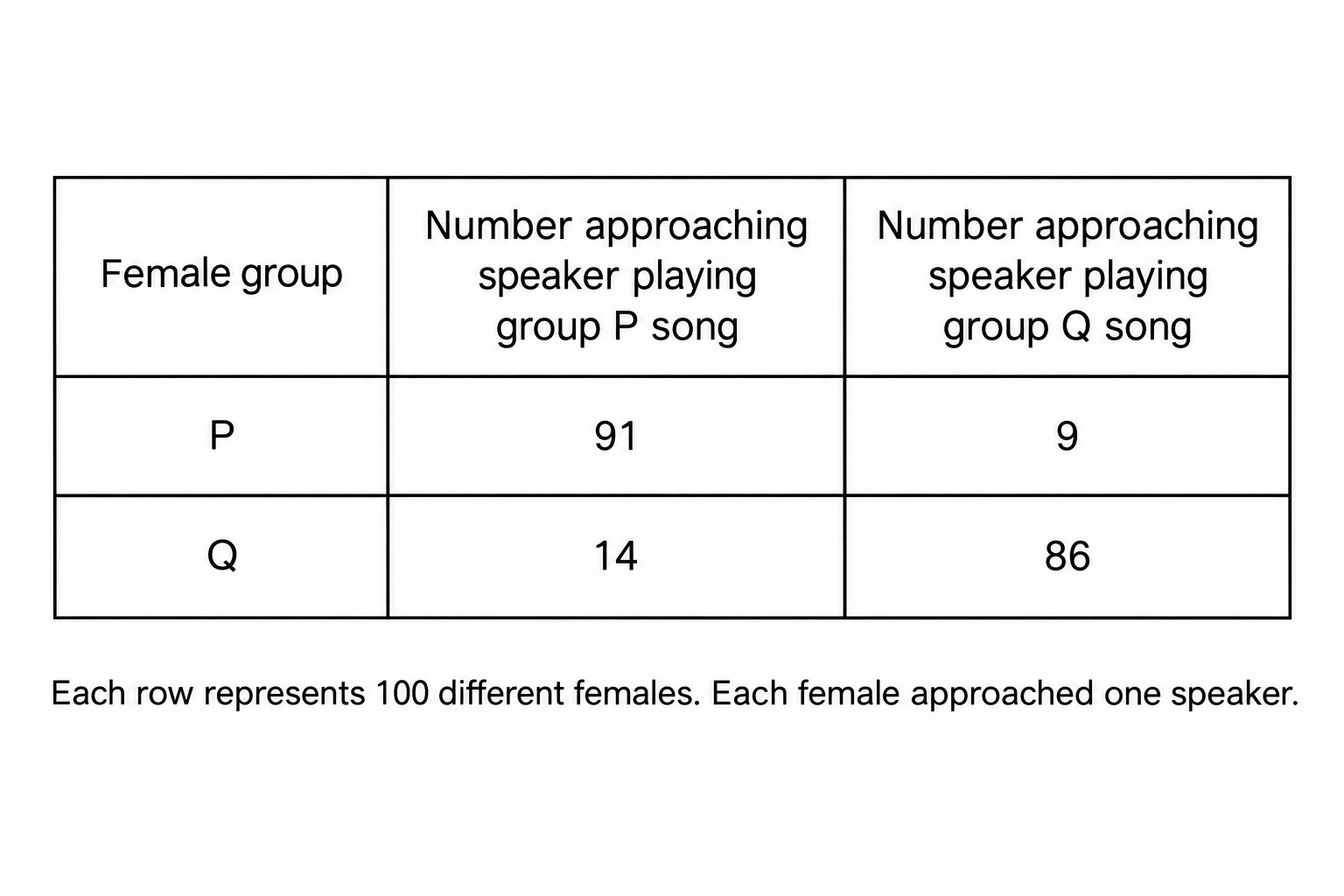
Two cricket groups occupy the same grassland and breed during the same weeks. They have been reared for several generations under identical conditions, but males retain different songs. The table shows results from separate trials in which females were offered two loudspeakers playing different songs. Loudspeaker positions were exchanged between trials. Direct observations show that females normally mate only after approaching a singing male. Which field manipulation would most directly test whether the behavioural difference shown could maintain genetic isolation without geographical separation?